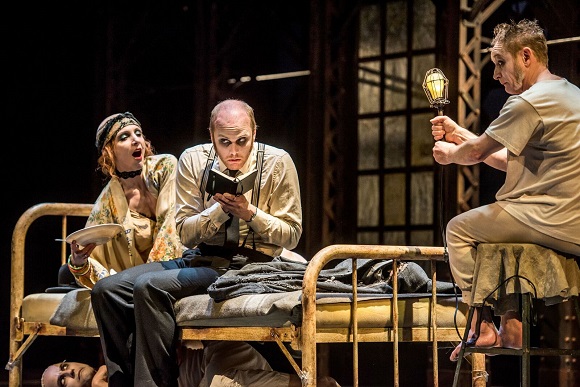
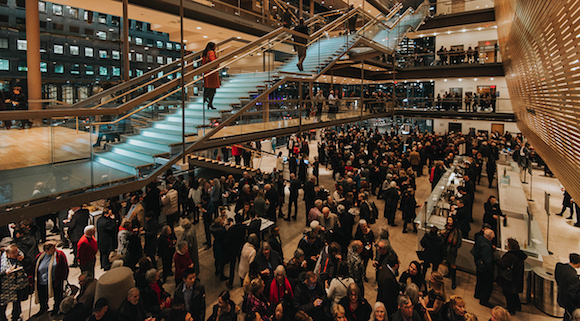
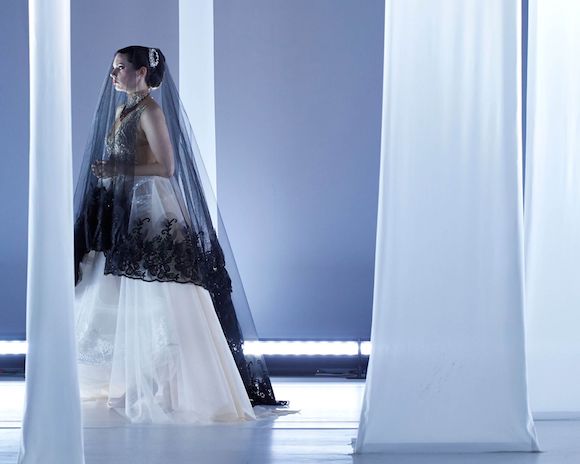
 The basic format for Songbook is now well established. Tapestry hire an experienced singer and pianist (Natalya Gennadi and Topher Mokrzewski) who work for a week with a larger group of young singers and pianists to create a show of a dozen or so scenes from Tapestry’s 38 year history. There’s a distinct leaning toward more recent works; the oldest last night was created in 2003, probably because the LIBLAB is such a rich source of suitable material. Last night’s selection was also decidedly dark, with lots of death and angst, only a couple or three lighter pieces and nothing flat out comic.
Tapestry Songbook VIII
Reply
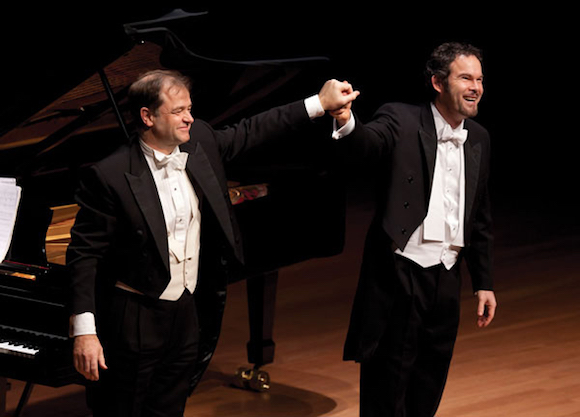
 Last night’s Soundstreams concert at Trinity St. Paul’s riffed off the basic idea of Bach’s Musical Offering; getting musicians to create music on a theme with a high improvisory element. The line up was the Gryphon Trio (Roman Borys, cello; James Parker, piano; Annalee Patipatanakoon, violin), SlowPitchSound (aka Cheldon Paterson); turntables, Dafnis Prieto; drum kit, Scott Good; trombone, conductor and Roberto Occhipiniti; bass. Things started out with SlowPitchSound remixing prerecorded fragments of the Musical Offering with live interventions by the trio. It was interesting and fun though whether it revealed “secret messages” I really couldn’t tell. The turntables reappeared between items in the rest of the program in very short fragments that seemed too cursory to have much to say.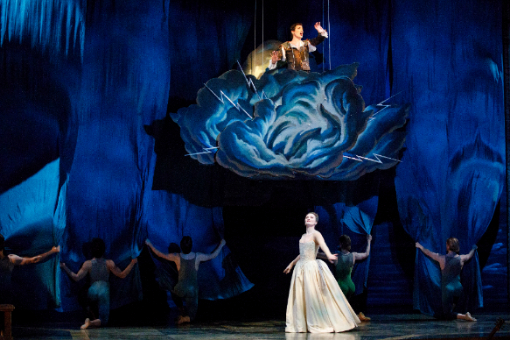
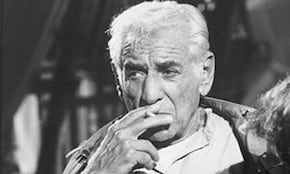 Last night the RCM celebrated the 100th anniversary of Leonard Bernstein’s birth with a suitably themed concert at Koerner Hall. The first half consisted of a performance of all the Anniversaries. These are short piano pieces; only a minute or two long, that Bernstein composed late at night. Each is dedicated to a friend or family member and many were reused later in longer works. There are somewhere between 20 and 30 of them and last night they were played in sets of three, four or five with introductions before each set by the composer’s eldest daughter Jamie complete with photos etc. The playing by Sebastian Knauer was idiomatic, virtuosic and sensitive. The introductions were informative, engaging and mercifully short. The music covered a vast range of moods and styles though all of it very Bernstein; that is to say tonal and obviously American. I was particularly struck by the brooding piece he wrote for his younger daughter some years after the death of her mother and by the earlier piece, dedicated to his wife Felicia Montealegre, that had Copland all over it and was none the worse for that. It was actually a rather brilliant way to showcase the man in a 45 minute or so concert segment.