 So you have sung the Queen of the Night exactly 2,327 times; high Fs and all, and you are sick to death of it and the Misogyny it rode in on. What do you do? Well, obvs you create a one woman show that teeters between mocking opera stereotypes of women and something much darker. At least that’s what Teiya Kasahara did as part of Tapestry Opera’s Tap This: A Queerated Opera Series presented in conjunction with Pride.
So our favourite inked butch dyke coloratura comes on in a foofy dress complete with Dollarama coronet and wand and starts to sing the heck out of that aria – you know, the one they sing at weddings. But then it rapidly morphs into a diatribe; first in German, then in heavily accented English, about the role, how women are portrayed in opera, occasionally veering into how women; sopranos in particular, are seen/treated in the opera world(*) before switching up into dress pants and a wing collared shirt with studs (despite pianist David Eliakis’ increasingly frantic pleas of “no pants”). Along the way there are jokes, some killer singing and some very sharp reminders of what it’s like to be a strong, athletic, queer woman in a world that expects its sopranos to behave as if they are romantically dying of TB on-stage and off. It’s a very moving and rather disturbing 45 minutes that I really can’t do full justice to. It’s a very brave show and I hope Teiya puts it on again. More people need to see it.
(*)It’s odd that it should come just after I first encountered Kiri Te Kanawa live for surely few sopranos have been as sexually objectified. I don’t know how many people remember Bernard Levin’s Times column written after her ROH debut in 1971 but it’s probably the only time the Thunderer was printed using drool.



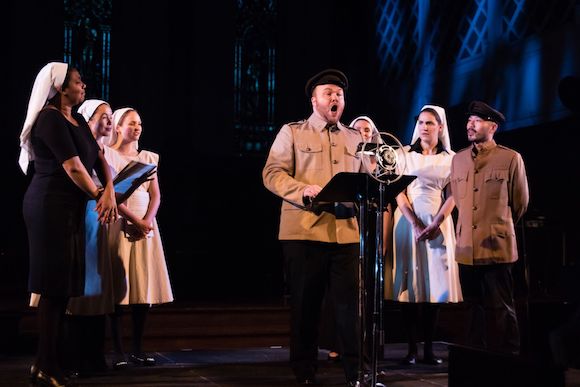
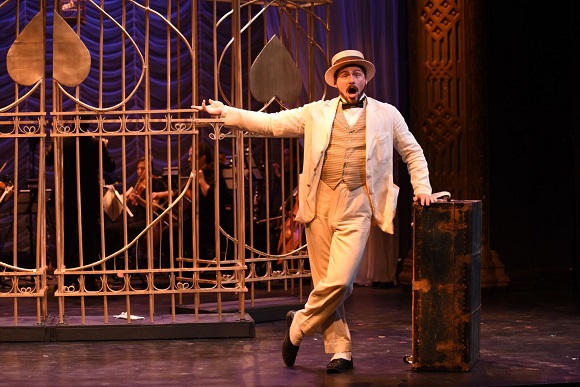
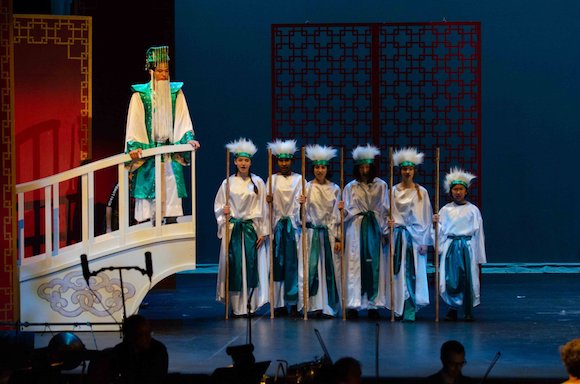
 Bramwell Tovey and the Vancouver Symphony were in town last night for a one night stand at Roy Thomson Hall. My reason for going was primarily to see Marion Newman sing Ancestral Voices; a work composed for her by Tovey. It’s the composer’s contribution to the sesqui and it deals with the Dominion of Canada’s troubled relationship with the original peoples of this land. The four movements trace an arc from an imagined pre colonial “Arkady” cleverly using a Keats text that deals with a clearly not Canadian imagined state of nature through to Charles Mair’s The Last Bison; a very early warning of what happens when Man and Nature get out of balance. Then comes the most chilling part; an excerpt from a letter in the government archives about residential schools”…separate, isolate, educate; dominate, assimilate; Sow the seeds and forcibly, effectively; Kill the Indian in the child.” It concludes with fragments of letters from Harper and Trudeau cut with parts of the UN Declaration on Indigenous Peoples.
 I’m not sure that I had ever heard anything by Heinrich Schütz before this afternoon but I’m glad that I have now. His St. John Passion formed the first half of the closing concert of the Toronto Bach Festival at St. Barnabas on the Danforth this afternoon. Written in 1666, towards the end of his life ,it’s steeped in the Lutheran tradition. There’s no orchestra. The main burden of the Gospel is taken by the Evangelist as narrator in a style not very far from the Anglican traditional style of singing metrical psalms. The emphasis is on the text; indeed on The Word. Members of the chorus contribute in similar style as Jesus, Pilate and so on. The narrative is interspersed with polyphonic choruses with sparse organ accompaniment perhaps hinting at an even older tradition where the meaning of the words mattered less.

