Enjoyable Puccini double bill opens Opera 5’s Toronto Opera Festival

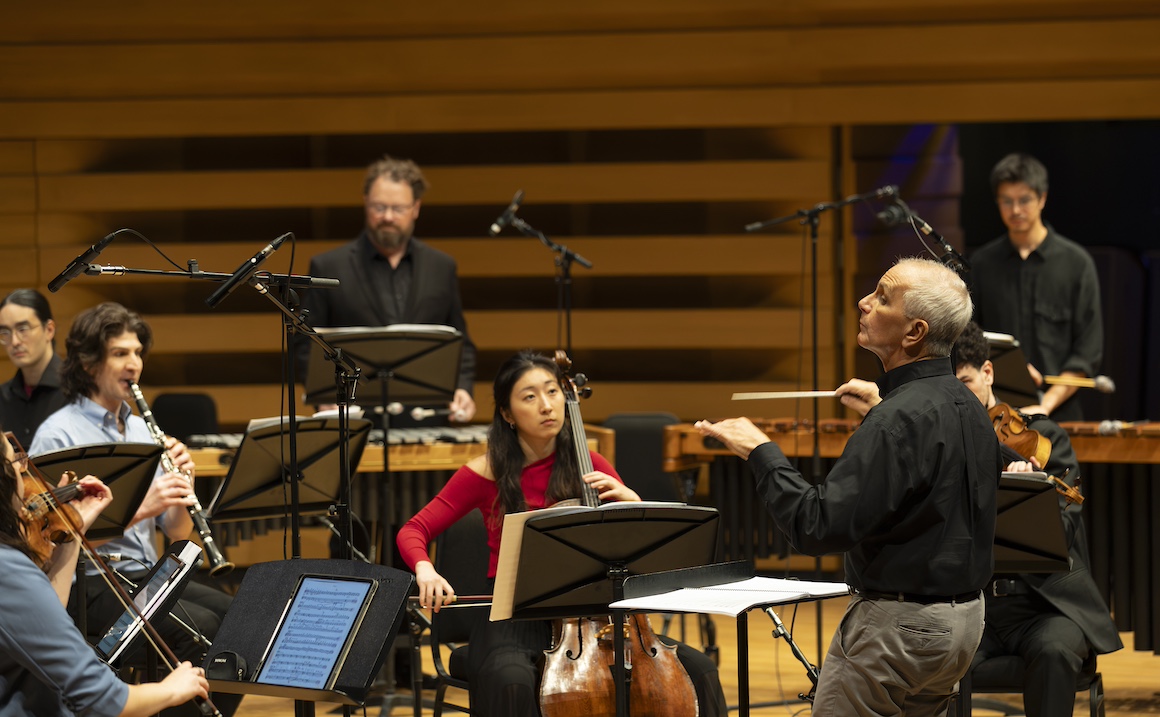
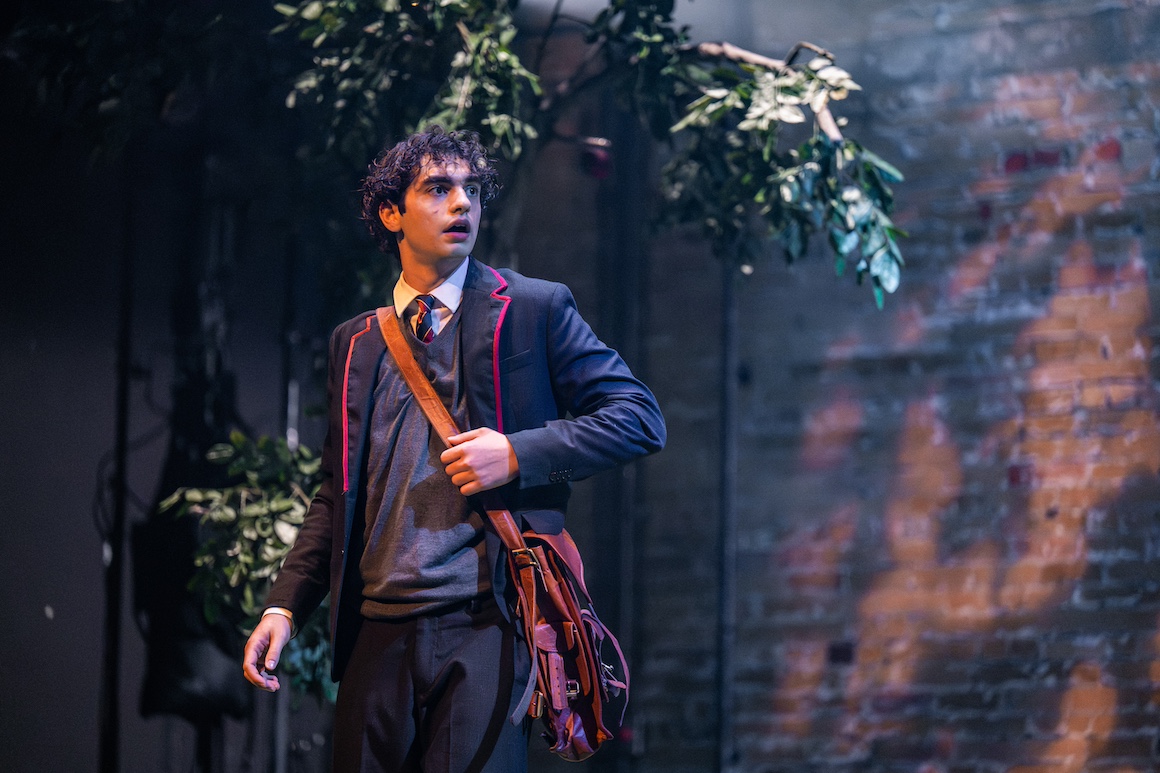
Opera 5 opened the Toronto Opera festival on Wednesday at Theatre Passe Muraille with a Puccini double bill; the rarely seen Suor Angelica and perennial crowd pleaser Gianni Schicchi. Both were presented fully staged in productions by Jessica Derventzis with accompaniment by a chamber ensemble (string quartet, bass, harp, piano) conducted by Evan Mitchell.

Continue reading

Voices Lifted

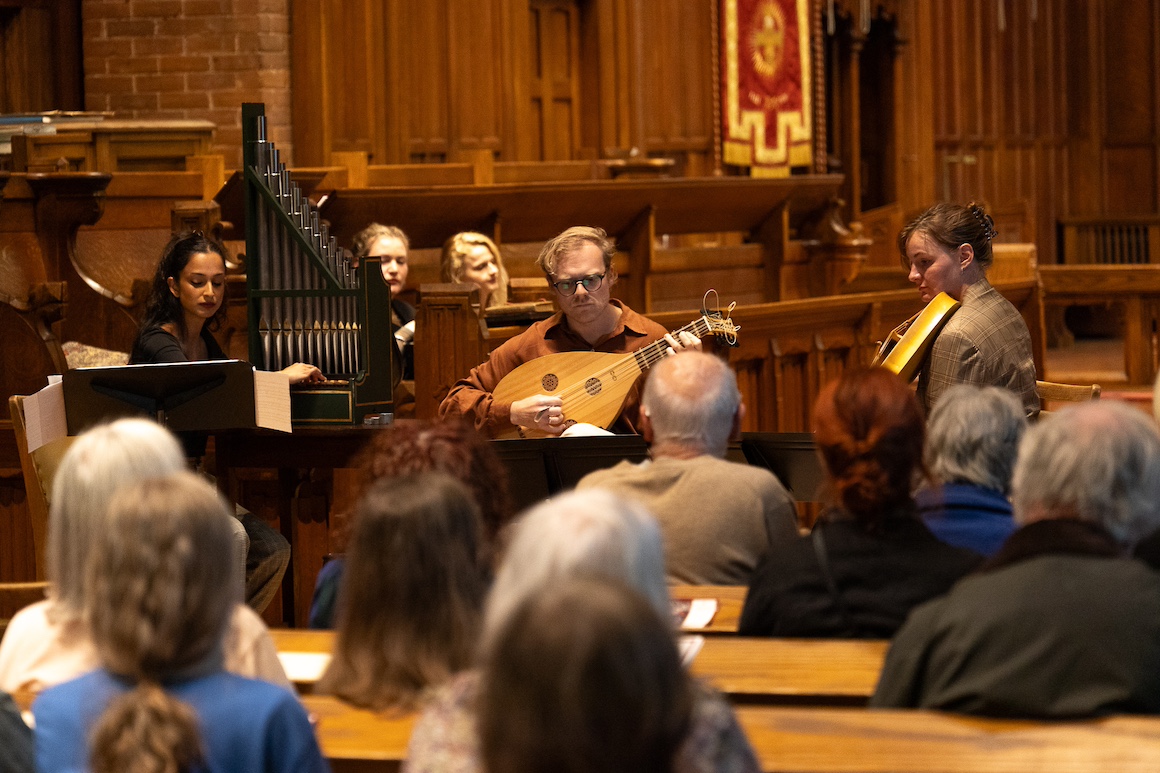
The final concert of this year’s Toronto Bach Festival was Voices Lifted; a presentation of four of Bach’s chorale cantatas at Eastminster United. These pieces typically use the classic Lutheran chorale text sung quite simply to bookend material reworked from biblical sources into a mixture of arias, recitatives and duets. The chorale parts were sung here with two singers to each part. Accompaniment was a small period instrument ensemble anchored by Christopher Bagan on organ and conducted by John Abberger.

Continue reading

Kaffeehaus

Kaffeehaus is the Toronto Bach Festival’s somewhat less formal concert. It played twice on Saturday at Church of the Holy Trinity and we caught the evening show. It’s set up to replicate Herr Zimmermann’s coffee house in Leipzig with RH Thomson playing Zimmermann. It’s staged in the round with a central stage surrounded by cafe style tables with extra seating around the edges. Coffee (not recommended!), tea, wine and beer are available. It’s quite a fun concept though the “in the round” set up means one is looking at people’s backs rather a lot!

The main work on the programme was Bach’s cantata Hercules am Scheidewege, BWV 213 with various other pieces and interventions by Herr Zimmermann inserted between numbers. There was some excellent singing from countertenor Nicholas Burns as Hercules, soprano Sherezade Panthaki as Pleasure, tenor Asitha Tennekoon as Virtue and bass Stephen Hegedus as Mercury. A small ensemble including valveless horns provided excellent accompaniment. Toronto has some excellent baroque musicians and with the likes of John Abberger, Julie Wedman and Chris Bagan performing it was as good as one would expect. It was also quite imaginatively set up with some singing from the periphery as well as the stage creating an antiphonal effect.

Additional music included the overture from Handel’s Hercules, the Pachelbel Canon and Telemann’s Concerto for Four Violins played extremely well by four young violinists from UoT’s Collegium Musicum.

Don Giovanni and domestic violence

The first production by Benevolence Opera Project took place on Friday evening at the Redwood Theatre. It was a benefit for the Redwood Shelter for women and children fleeing abuse. One could argue that the choice of Mozart’s Don Giovanni was a bit odd in the circumstances but it certainly got conversation going around the issues!

Continue reading

How many Indigenous artists does it take to make an opera Indigenous?

How many Indigenous artists does it take to make an Opera Indigenous? That was one of many questions up for discussion at Stories Don’t Die presented by the Artists of Indians on Vacation at the Terminal Theatre on Saturday afternoon. The backdrop to all this of course is the withdrawal of Edmonton Opera from their role in the creation and presentation of Ian Cusson and Royce Vavrek’s Indians on Vacation in February following the not entirely unexpected “revelation” that Thomas King; author of the novel on which the opera is based, is not Indigenous as he had long claimed. Edmonton Opera chose, unilaterally, to pull out after a protest by a small group of Indigenous activists in Edmonton. To the protesters, the false claim by Thomas King was reason enough to cancel an opera they hadn’t seen but is it? The Artists of Indians on Vacation clearly believe otherwise and Stories Don’t Die makes a strong case for its survival and further development.

Continue reading

In Terra Pax

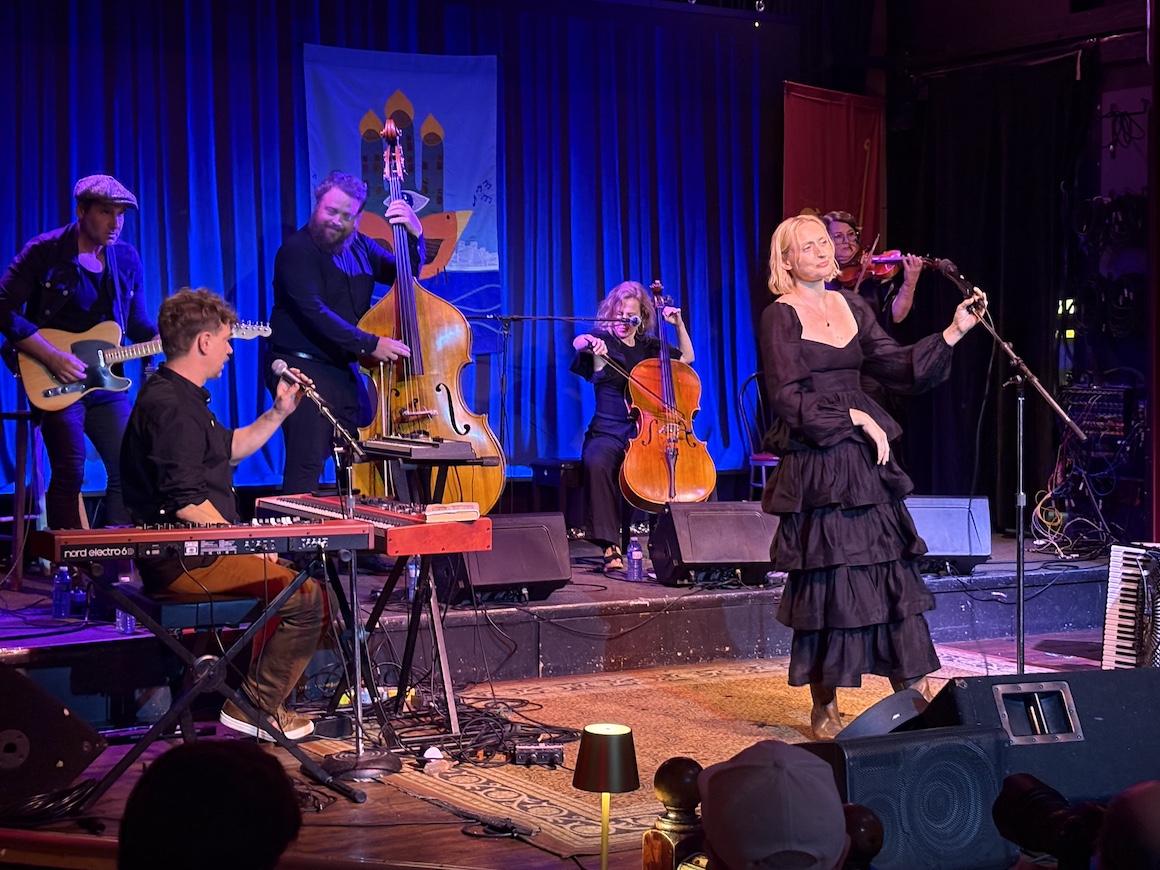
The last Soundstreams concert of the season took place at the Jane Mallett Theatre on Saturday evening. In Terra Pax: Lamenting the losses of war was curated by Anna Pidgorna. While by no means only about the Russian invasion of Ukraine that was a strong thread running through the concert.

Continue reading

Operamania II

I really enjoyed Operamania at the Great Hall last November so I was rather looking forward to Operamania II at The Parkdale Hall on Friday evening. Basically it was the same folks; Opera Revue augmented by Greg Finney, Ryan Downey and Queen Hezumuryanga plus the four wrestlers of Junction City Wrestling and much of it was the same fun material so it should have been a blast.

The Junction City Wrestlers at the first Operamania -. photo credit: Gerry Hubley @justwrestlingca
Continue reading

Opera Pub back at the Tranzac

Maeve Palmer

I finally made it to AtG’s Opera Pub for the first time in a long time.  Ladst couple of times I went it was at the Drake and that just felt so wrong!  It’s now at the Tranzac which just makes all kinds of sense.  It’s a decent size, it has a pretty good bar and it’s easily accessible on the the TTC.  And it feels like a pub, not the lobby of a five star hotel.  Also it has lots of AtG history including the original La Bohème (2011) and the 2017 remount.  Stay there please AtG. Continue reading

A Night in Venice

Toronto Operetta Theatre’s last show of the season is Johan Strauss II’s A Night in Venice with the libretto lightly updated by Guillermo Silva-Marin; who also directs.  It opened on Friday evening at the Jane Mallett Theatre.  Loyal fans will not be disappointed.  It’s a typical frothy, colourful TOT offering with chamber ensemble and singing that ranges from very decent to really rather good.

Continue reading

Opera Atelier’s Pelléas et Mélisande is a very mixed bag

Opera Atelier opened a production of Debussy’s symbolist opera Pelléas et Mélisande at Koerner Hall on Wednesday evening with direction by Marshall Pynkoski and choreography by Jeannette Lajeunesse Zingg.  Let’s start by making it clear that this is not an attempt to present the opera as it was seen or heard when it premiered in 1902 or even to try and reproduce that aesthetic with more modern technology which, I think, is what’s usually meant by “Historically Informed Performance” (HIP).  The extent to which any recent Opera Atelier production is HIP is a discussion perhaps left for another day.

Continue reading