Lieder Nachmittag

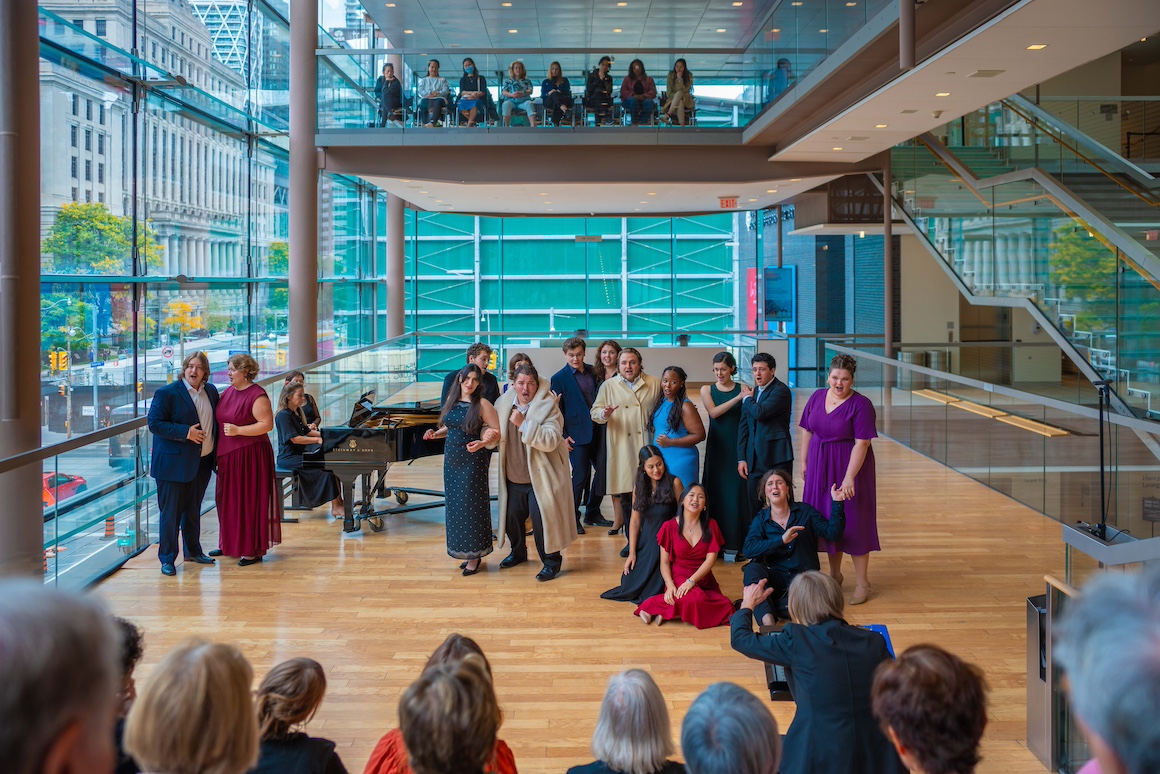
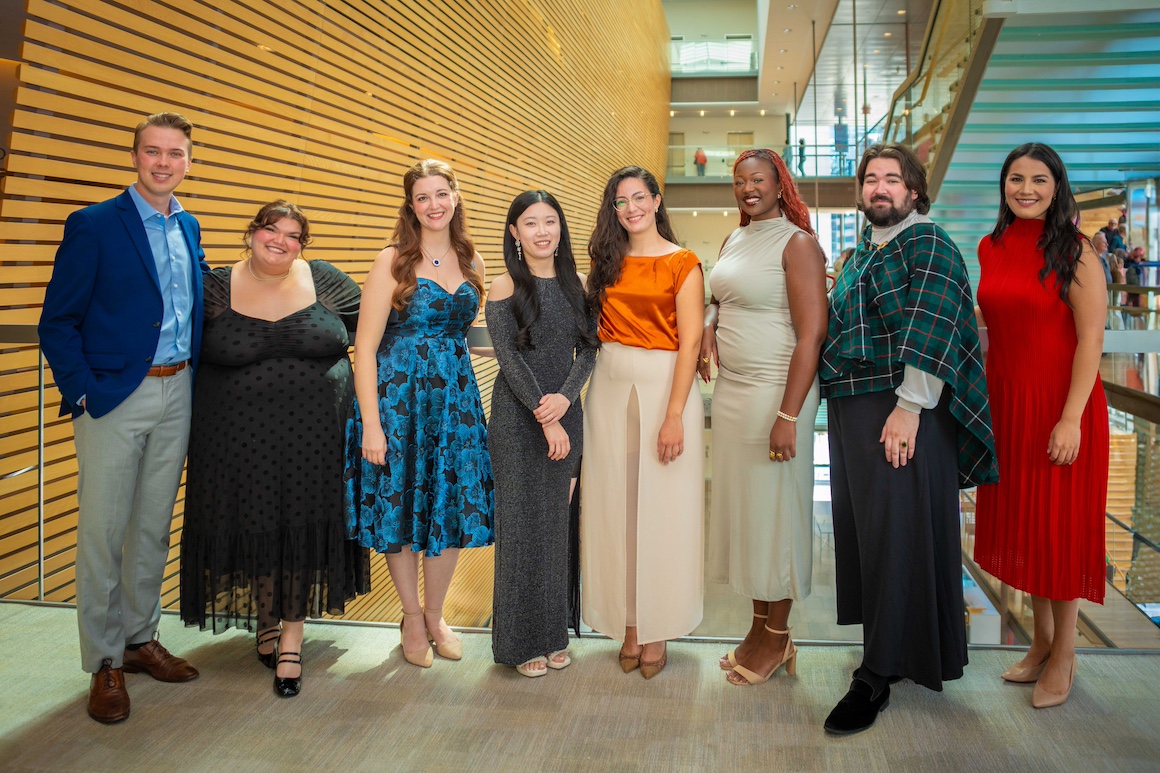
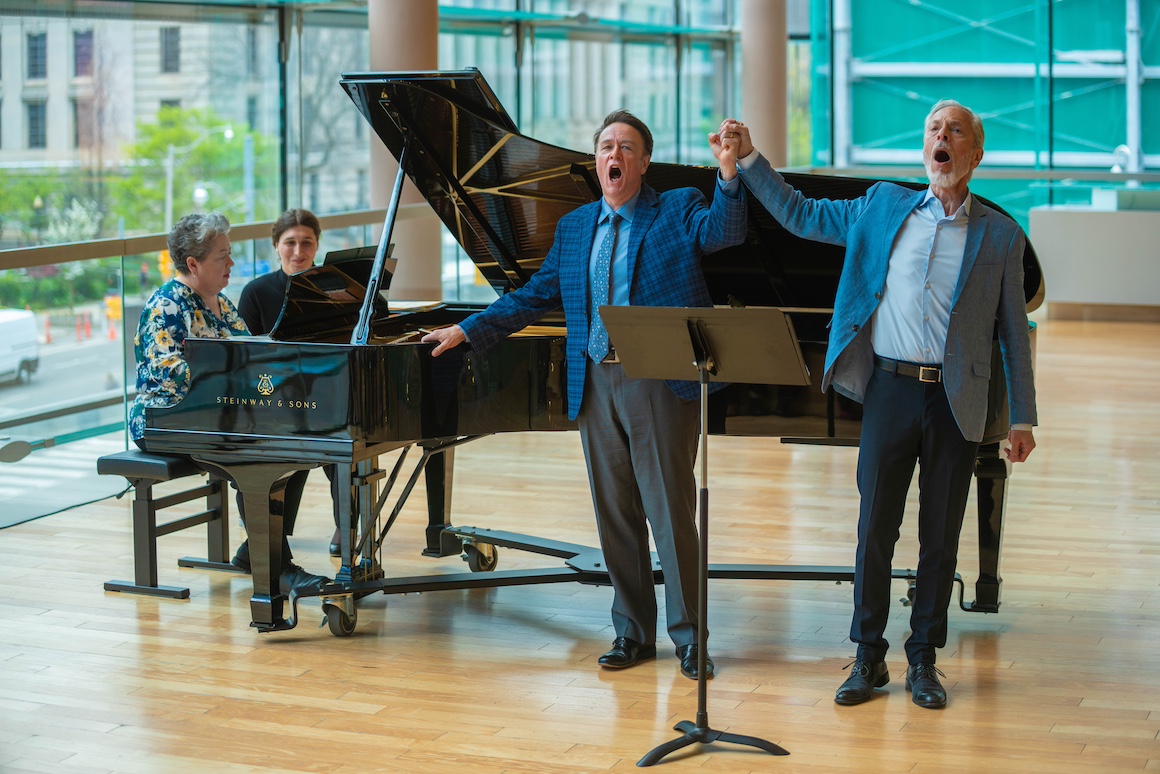
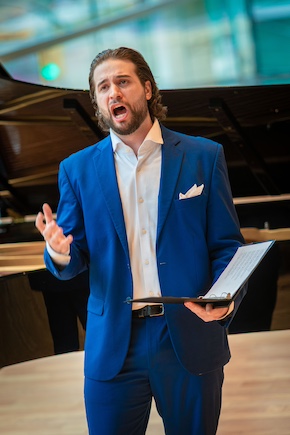
Thursday’s RBA concert featured members of the Ensemble Studio singing German Lieder.  First up were tenor Angelo Moretti and pianist Kimly Wang with Beethoven’s An die ferne Geliebte.  Although this is probably the first true “song cycle” in German I feel it doesn’t get done nearly as often as the better known Schubert and Schumann cycles and it’s really pretty interesting.  I think it was also my first time hearing Angelo sing in German and he’s really very good.  This was a well articulated, rather beautifully sung set with equally skilled accompaniment. Continue reading

Midday mélodies: Canada meets France

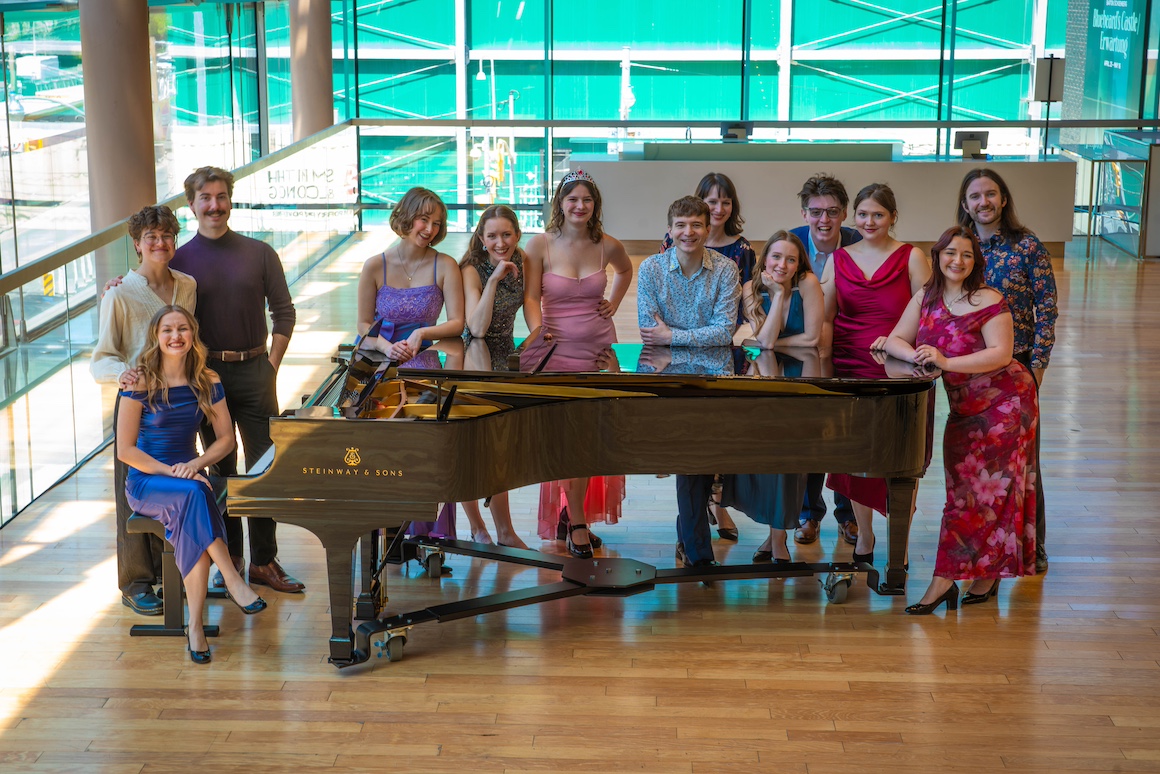
Tuesday’s concert in the RBA was given by students from the France-Canada Academy of Vocal Arts currently being hosted by the UoT Faculty of Music. The music was a range of mélodies, all in French, by French and Canadian composers.

Continue reading

Music and Theatre in March

Here is what’s on the radar so far.:

Music

  • March 3rd at noon in the RBA the UofT Faculty of Music: France-Canada Academy of Vocal Arts have their annual collaborative recital.
  • March 12th to 15th UoT Opera are performing Britten’s Rape of Lucretia at Harbourfront Centre.

Continue reading

Payadora in the RBA

Last Wednesday’s lunchtime’s concert in the RBA was given by Payadora Tango Ensemble with guest vocalist Elbio Fernandez.  I’ve been following pretty much every musical initiative from the dynamic duo of Rebekah Wolkstein and (Grammy winner) Drew Jurecka for a while now.  From the Venuti String Quartet, to Schmaltz and Pepper (of course) to Justin Gray’s Grammy winning Immersed and Wednesday’s avatar Payadora Tango Ensemble.

Continue reading

Luca Pisaroni in the RBA

Bass-baritone Luca Pisaroni is currently appearing as Basilio in The Barber of Seville at the COC.  On Tuesday he gave a noon hour recital in the RBA accompanied by Hyejin Kwon.  There were two halves to the programme; Schubert’s Schwanengesang D.957 and a set of six Italian songs by Francesco Paolo Tosti.

Despite having seen Pisaroni live twice before in recital I’d never heard him sing German Lieder so the Schubert was especially interesting.  It was good.  He can be as dramatic or as lyrical as he needs to be with quite a range of dynamics and colour.  “Der Atlas” was powerful and emphatic while “Das Fischermädchen” was really rather lovely.  “Der Doppelgänger” was very controlled with any temptation to over sing it resiosted.  I also noted some really interesting piano playing in “Die Stadt”. Continue reading

… and the back half of February

Here are some more things to see in the second half of February…

  • Lunchtime concerts:  On the 17th in the RBA there’s a preview of the GGS spring double bill and on the 25th in the same space there’s a concert by the Canadian Art Song Project.  On the 26th at Metropolitan United Teresa Tucci is presenting a mixed bill of opera, art song and musical theatre.
  • On the 20th (repeat performance on the 28th) at Arrayspace, the Happenstancers have a sort of mini-show (jjust three performers) of works by Brahms, Faure, Ades, Kurtag, Lori Freedman and Saariaho. There is a rather cool, one minute, promo video.
  • Also on the 20th; the fourth anniversary of the latest Russian aggression against Ukraine, there’s a film and CD launch at the Tranzac for the “Daughters of the Donbas” project which is concerned with the kidnap by the Russian state of Ukrainian children from the occupied territories.
  • On the 27th CanStage open Little Willy; a puppet based Romeo and Juliet at Berkeley Street.  It runs until April 5th.
  • On the 28th Sinfonia Toronto have a concert at George Weston Recital Hall that includes two world premiers; Colin Eatock’s Four Song Offerings on texts by Tagore and Petros Shoujounian’s Sinfonietta.

Simply Mozart

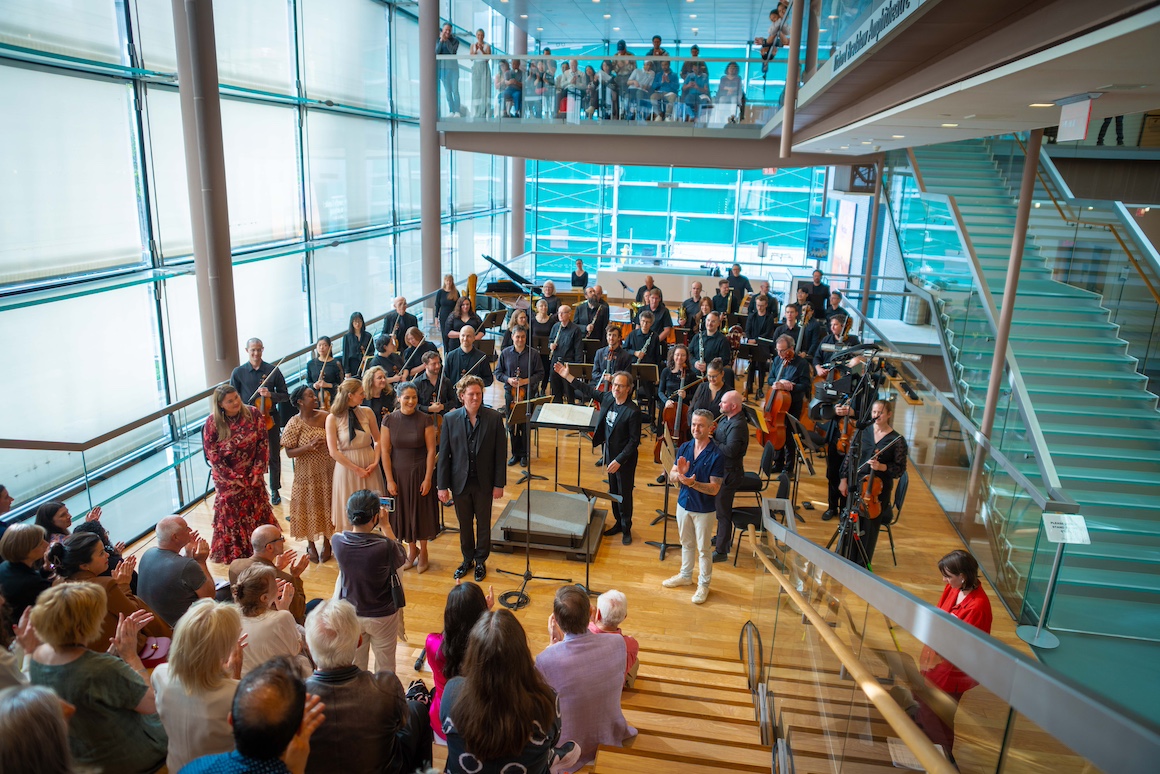
Thursday’s noon hour in the concert was a really great idea; combine the COC Ensemble Studio with the COC Orchestra for an all Mozart concert.  Mozart’s Symphony No.35 in D major (Hafner) was split into into its four movements with pairs of arias inserted between the movements to create what Johannes Debus, conducting, described as an opéra imaginaire.  It worked really well.

Continue reading

Pictures from the Private Collection of God

Tuesday’s lunchtime recital in the RBA, the first of 2026, was given by Israeli mezzo-soprano Michal Aloni and pianist Alona Milner.  All the music, most of it Hebrew language art song, was by composers who either emigrated to Palestine/Israel or who were born there.  In their excellent introductions Michal and Alona enumerated three waves or generations of composers:

  • Those who were trained in Europe in the early 20th century who left Germany (or parts adjacent) for obvious reasons after 1933 such as David Zehavi and Paul Ben-Haim.
  • Those who emigrated later; often as children, whose musical formation was in the new state like Yehezkel Braun.
  • Those who were born and/or educated in Israel somewhat later represented here by Stella Lerner and Aharon Harlap.

Continue reading