
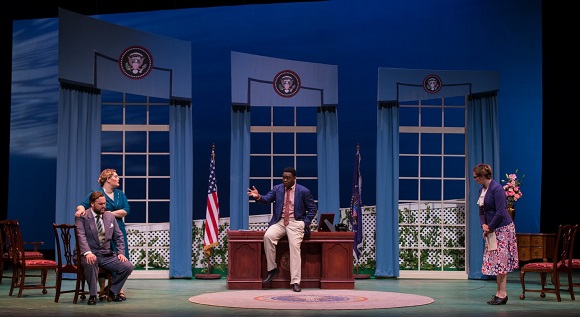
Victor Davies’ The Ecstasy of Rita Joe opened last night in a production by Guillermo Silva-Marin at the Jane Mallett Theatre. It’s based on the play by George Ryga that caused a stir when it opened in Vancouver in 1967. The play was described as indirect and allusive with no clear narrative thread by the critics back then and was praised perhaps more for tackling the subject than for its intrinsic merits which were far from universally appreciated. Interestingly, as is so often the case in Canada, although rarely performed it has attained “classic” status. One word Victor Davies uses to describe the play is “expressionistic” but curiously rather than taking that as a jumping off point for the music (as Strauss and Berg did) he decides it’s an inappropriate idiom for “the lyric approach needed for the melody to unfold”. Why one needs “melody to unfold” in a disturbing tale of a young native woman’s descent into a hell of sexual abuse, alcohol, drugs, prison and, ultimately, her murder and why that melody should be couched in 1940s jazz/swing terms wasn’t obvious to me.

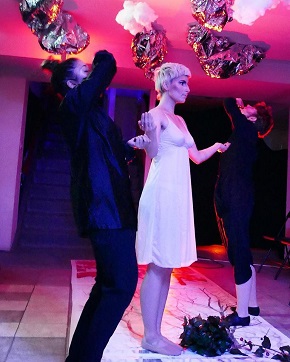 FAWN Chamber Creative presented a new piece last night at Kensington Hall. It was called Belladonna and was billed as a “queer, techno opera” to a libretto by Gareth Mattey who apparently specialises in this genre. “”Queer, techno pastoral” might have been nearer the mark. Basically, sheep tending person of uncertain gender/orientation meets another such. A supernatural being of some sort intervenes. There are hallucinogenic berries (“tripping hither, tripping thither?”). “Exploration” ensues. I was unclear on whether or not it had a happy ending. I’m not sure it matters.
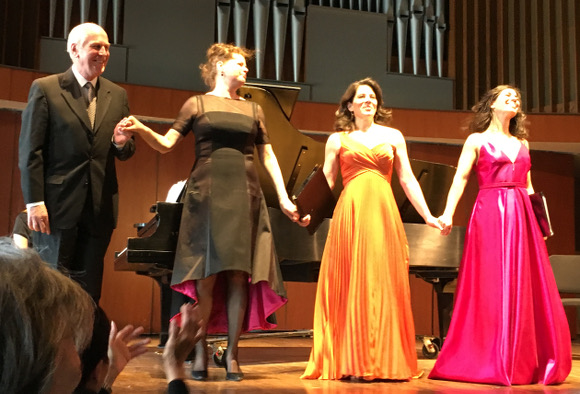


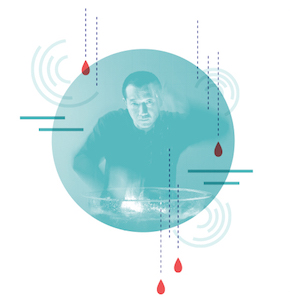 Tan Dun’s Water Passion After St. Matthew, given last night by Soundstreams at Trinity St. Paul’s is very Tan Dun. The work is in nine movements and scored for chorus, soprano and bass-baritone soloists, violin, cello, electronics and lots of percussion. And bowls of water and rocks. The texts broadly follow the Passion story finishing with a final Resurrection movement in which water is the symbol of rebirth, recycling and spiritual completeness. There are also ritual elements. Bowls of water laid out in a cruciform pattern are lit from beneath. The musicians change position and the players, especially the percussionists, perform hieratic gestures with the water bowls and their contents. It also involves a complex and dramatic lighting plot.
 Handel’s Alexander’s Feast is an oratorio to a text by Newburgh Hamilton based closely on an earlier Dryden St. Cecilia’s Day ode. The basic plot is that Alexander is feasting in captured Persepolis with his mistress Thaïs. Inflamed by the music of Timotheus he decides to burn down the city in revenge for his fallen soldiers. Cecilia descends from Heaven and substitutes music for the king’s barbarous intentions. There are solo and choral numbers and a couple of duets and there are two concerti; one for triple harp representing Timotheus’ lyre playing and an organ concerto for St. Cecilia. It’s all quite tuneful and interesting if not as inspired as some of the better known oratorios.
