
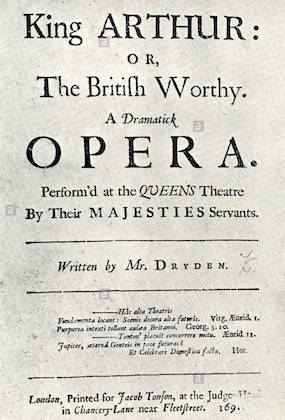
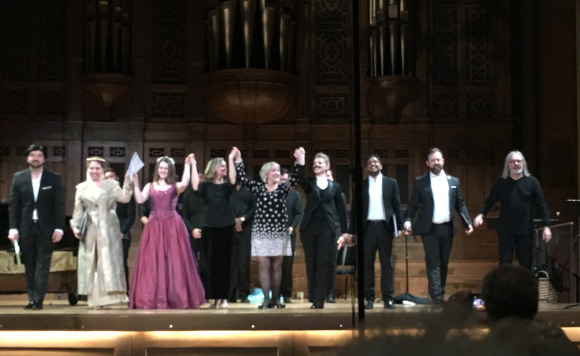
 Last night various bits of the early music side of the UoT Faculty of Music, plus guests, put on a performance of Purcell’s King Arthur at Trinity St. Paul’s. I’m pretty familiar with the piece from both audio and video recordings (though this was my first time live) but it was clear last night that most people really don’t know the work and I suspect that the way the work was presented was not especially helpful for them.
The program contains detailed notes by director Erik Thor about his thoughts on presenting a “problem piece” without really explaining why King Arthur is a problem or why he made the choices he made. We are told it’s about conquest and erasure but not how and why it differs from what most people seem to expect when they see the title King Arthur. In short, it’s a highly fictionalised version of the very old Welsh stories about the resistance of the (Christian) Britons to the (Pagan) Saxons. Forget Geoffrey of Monmouth, Tennyson, TE White and Monty Python. Oddly, Merlin, perhaps the one character anyone would recognise, is cut here. The work itself is also a bit incoherent largely because Dryden (the librettist) tried to recast what was originally a court spectacular to the glory of Charles II as something that would work in the theatre and pass the censorship under William and Mary!
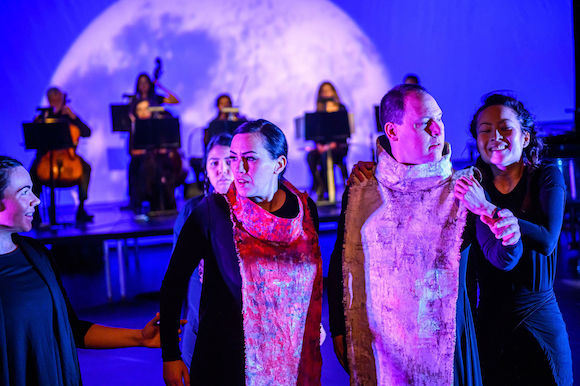
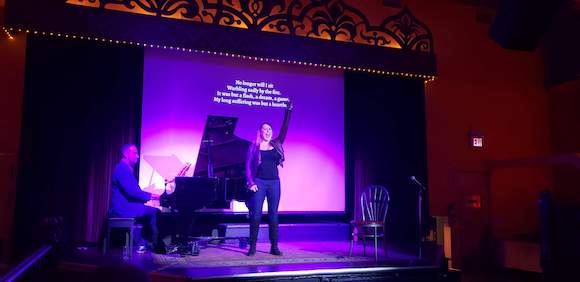
 How, collectively, we remember is a cultural act defined by both choices and the general milieu in which the remembering takes place(*). Sometimes this results in stories being distorted and “misremembered”. The story of Shanawdithit, the last survivor of the Beothuk people is, perhaps, one such story. Her life and death, the final act in the campaign of genocide against her people is still “remembered” in Newfoundland culture but how much do we really know? The “evidence” boils down to a handful of sketches by Shanawdithit, annotated by one William Cormack; pretty much the only white person to show her any kindness or to display any interest in her people. Dean Burry and Yvette Nolan’s new opera; a co-production of Tapestry Opera and Opera on the Avalon asks what we know and how we know it. I attended a workshop presentation of the incomplete work yesterday.
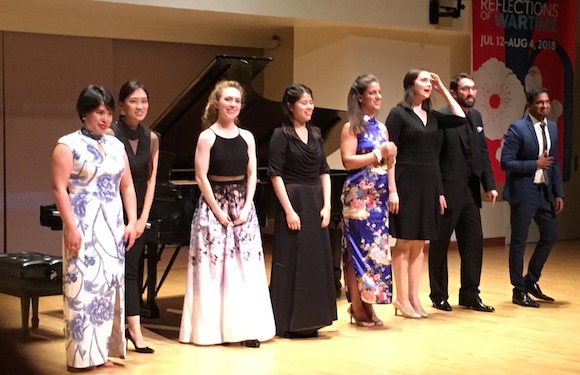
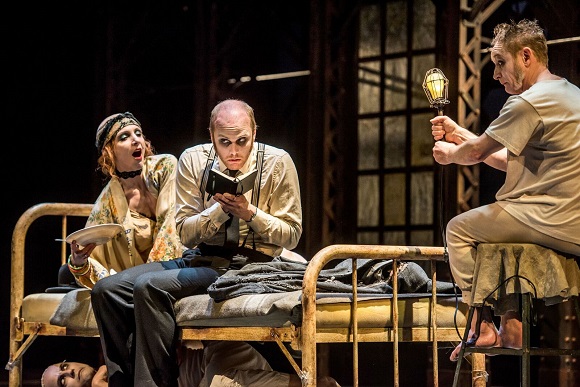
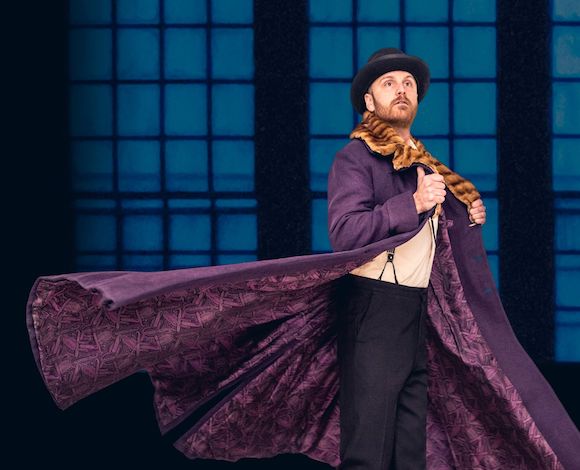
 The first performance of Against the Grain Theatre’s Bound took place at the Jackman Studio at the COC. It’s the first public airing of the piece in piano score, as a workshop, so it’s not the finished product. The performance was followed by a lively discussion about the work’s potential and future avenues to explore.

