
The King’s Grief is the latest show from the Happenstancers who performed it at Redeemer Lutheran on Friday and Saturday evenings. Like pretty much all Happenstancers’ shows it takes a number of works with multiple acts/movements/etc and combines them in unconventional ways. This programme was built around Judith Weir’s King Harald’s Saga, Thomas Adès’ Court Studies, from The Tempest and the only three songs that survive by Lady Mary Dering with some Oliver Knussen, George Benjamin, John Dowland and Colin Matthews thrown into the mix.
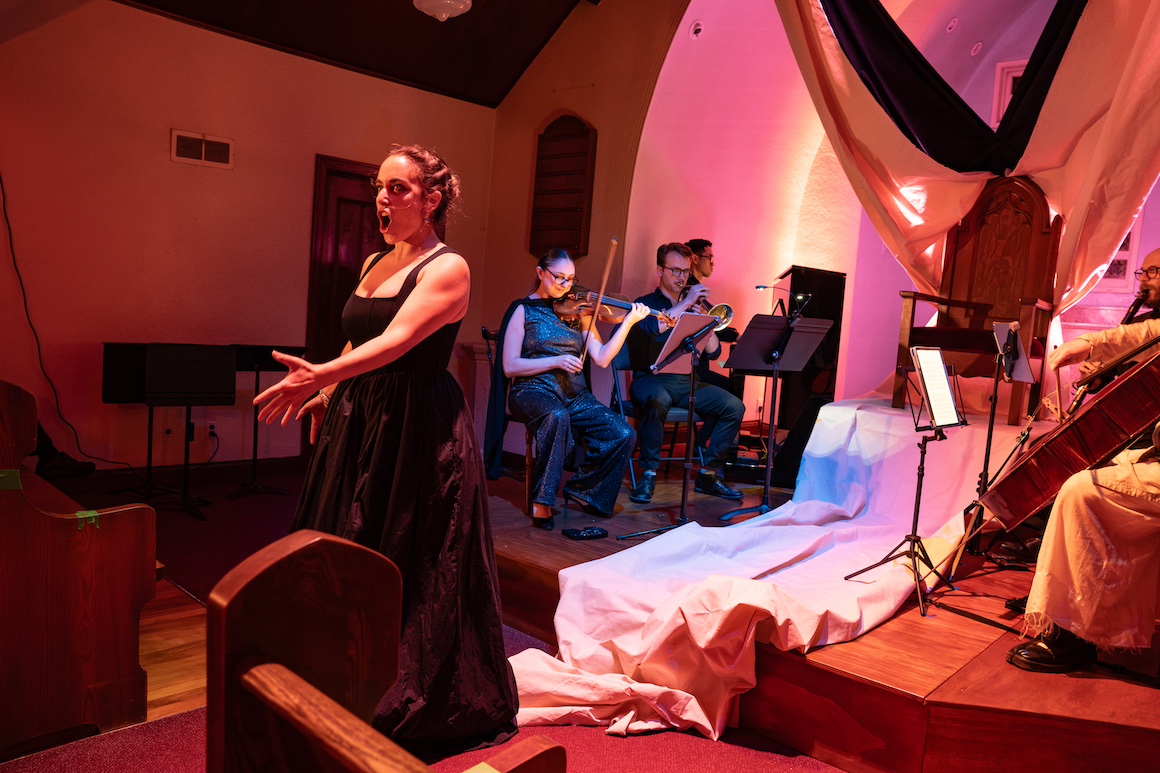
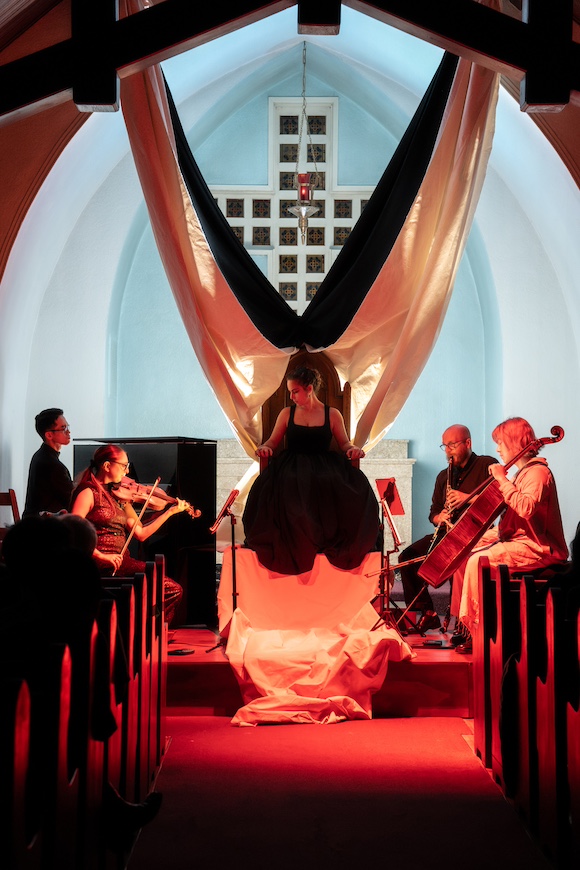
For me the most interesting part was the Weir; split here into three parts. It’s a piece for soprano containing both spoken and sung text and it was performed here by Reilly Nelson. It tells the story of Harald Hardrada’s ill fated attempt to claim the English throne in 1066 and ii’s structured like a series of news bulletins. The show ran with that ideas with each part being introduced by a recording of the intro to a 1950s(?) BBC radio broadcast… “Now here is the 10.30 News but first the Time Signal… beeeep”. Then Reilly performed in a very creditable version of 1940s/50s RP in both the spoken and sung sections; the latter very dramatically. And it was staged with Reilly seated on Hardrada’s throne and making occasionally forays down the aisle of the church complete with highly atmospheric lighting (Billy Wong). Just a fantastic concept and a spectacular performance.
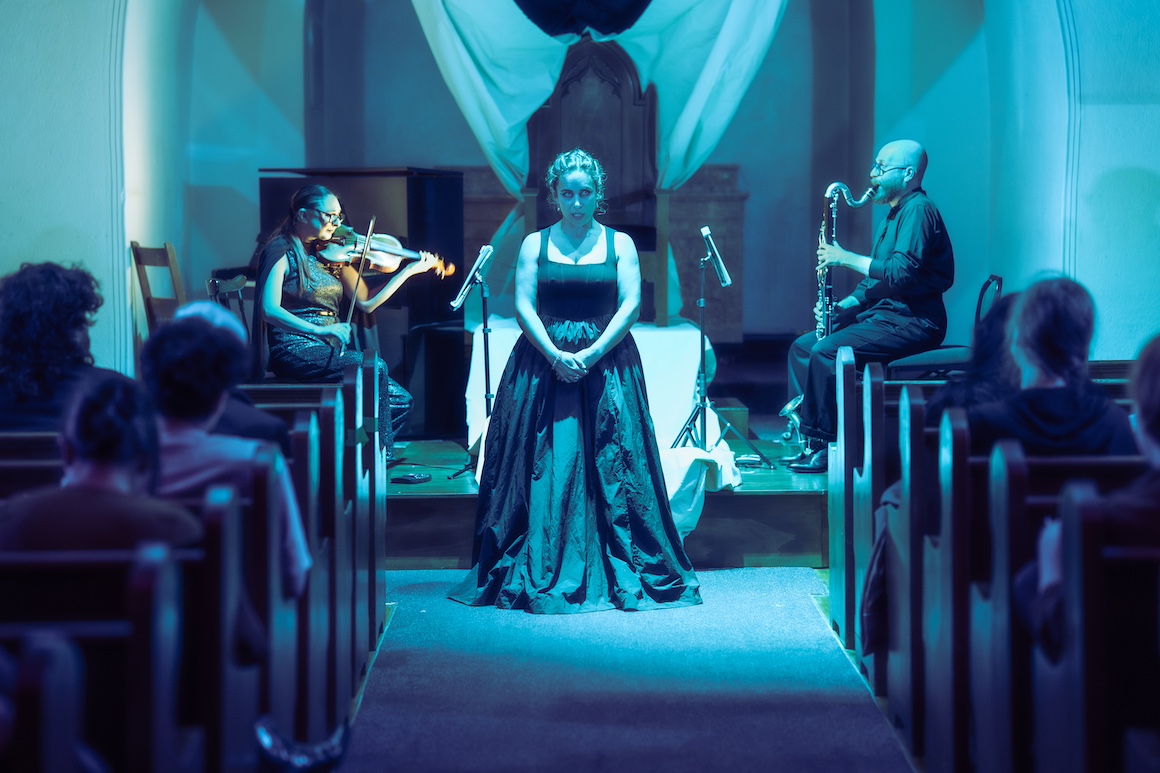
Reilly also sang the Dering songs in arrangements by Thierry Tidrow. The accompaniment to each was different with all the instrumentalists; Julia Mirzoev – violin, Peter Eom – cello, Joonghun Cho – piano, Brad Cherwin – clarinets and Declan Scott – flugel horn, involved in “When first I saw”; just cello in “And is this All” and a combo of bass clarinet and violin in “A False Designe to be Cruel”. These songs date from the middle of the 17th century but were sung more emphatically (but with perfect diction) than one might expect which worked pretty well with the modern accompaniments.
 Most of the rest of the programme was contemporary pieces for piano, violin, cello and clarinet of which the Adès Tempest studies were the most substantial. These are pretty abrasive, chromatic pieces and were played absolutely beautifully. The big surprise was Dowland’s Lachrimae arranged for bass clarinet, flugel horn, cello and violin. Very unusual textures (to put it mildly!).
This was one of the most satisfying Happenstancers’ concerts I’ve attended. They are all always challenging and they always take risks; most of which come off!. This time I felt everything came together to make a highly satisfactory whole; a really cleverly arranged programme, fantastic singing from Reilly, highly skilled instrumentalism and a show that ran with minimal breaks, despite changes of line up; thanks to highly efficient stage management by Hoi Tong Keung. Good stuff!
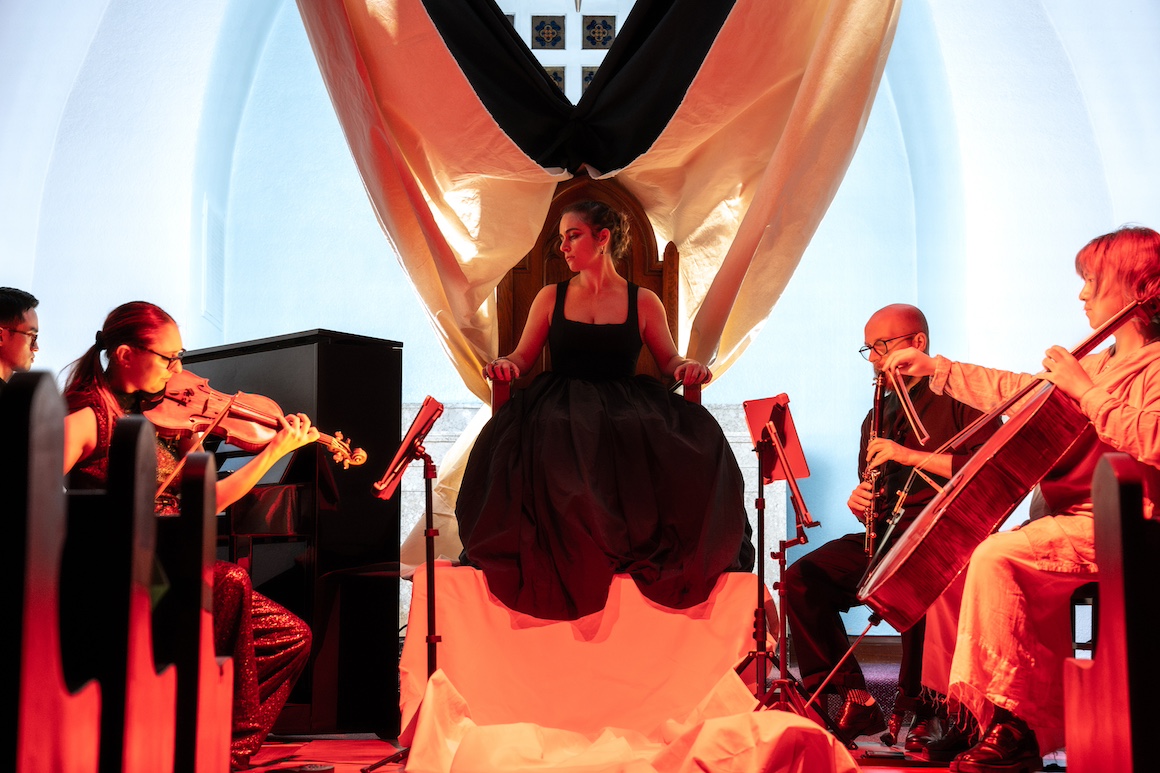
Photo credit: Thomas Li

