The King’s Grief

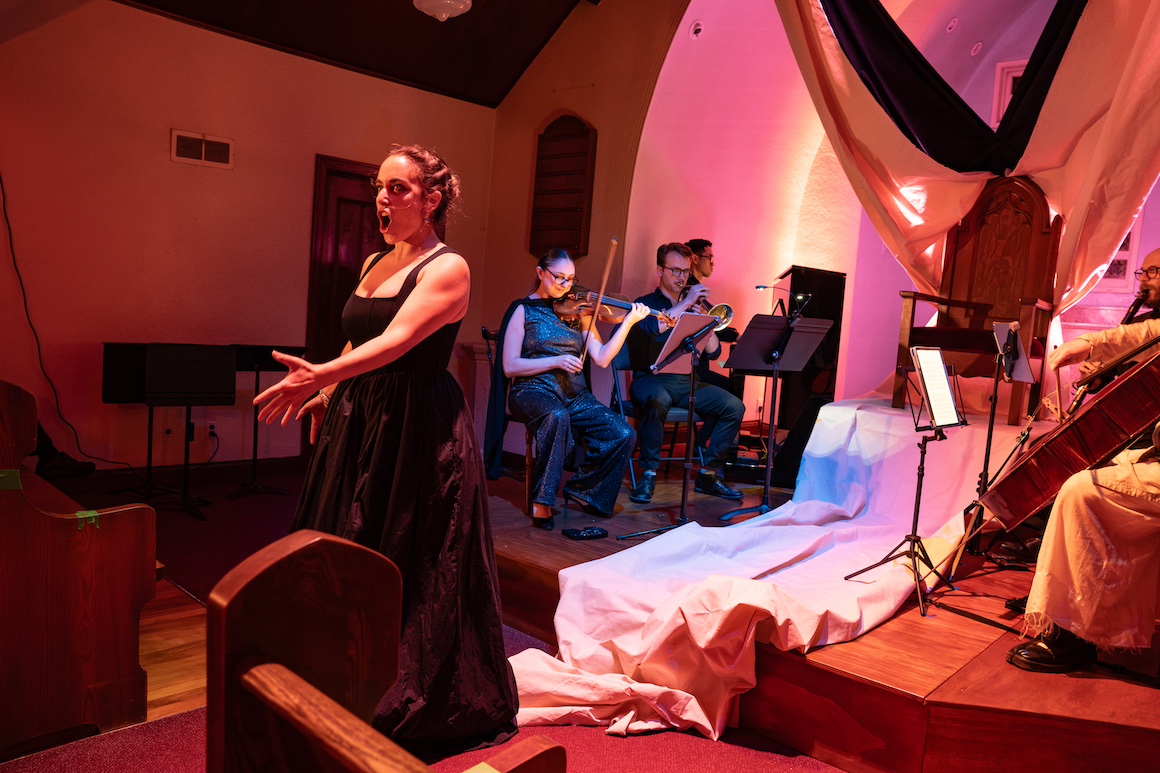
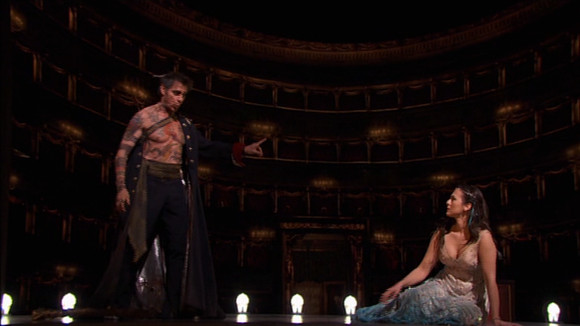
The King’s Grief is the latest show from the Happenstancers who performed it at Redeemer Lutheran on Friday and Saturday evenings. Like pretty much all Happenstancers’ shows it takes a number of works with multiple acts/movements/etc and combines them in unconventional ways. This programme was built around Judith Weir’s King Harald’s Saga, Thomas Adès’ Court Studies, from The Tempest and the only three songs that survive by Lady Mary Dering with some Oliver Knussen, George Benjamin, John Dowland and Colin Matthews thrown into the mix.

Continue reading →

Orlando: Ema Nikolovska and Sean Shibe

Orlando is a touring programme which mezzo-soprano Ema Nikolovska and guitarist Sean Shibe brought to Koerner hall on Thursday evening. For some background on the show see my interview with Ema earlier this month. As promised it was more of an “experience” than a conventional song recital. The overarching theme, sometimes obvious, sometimes less so, was Virginia Woolf’s Orlando.

Continue reading →

The Happenstancers – Die Nacht/Der Mond

The Happenstancers; this time consisting of Brad Cherwin – clarinets, Peter Eom – cello, and Joonghun Cho – piano, performed at Arrayspace on Saturday night.  The programme, entitled Die Nacht/Der Mond, was built around two of that relatively rare species; the clarinet trio, with various pieces by contemporary composers rounding out the line up.

Continue reading →

The Two Deaths of Ophelia

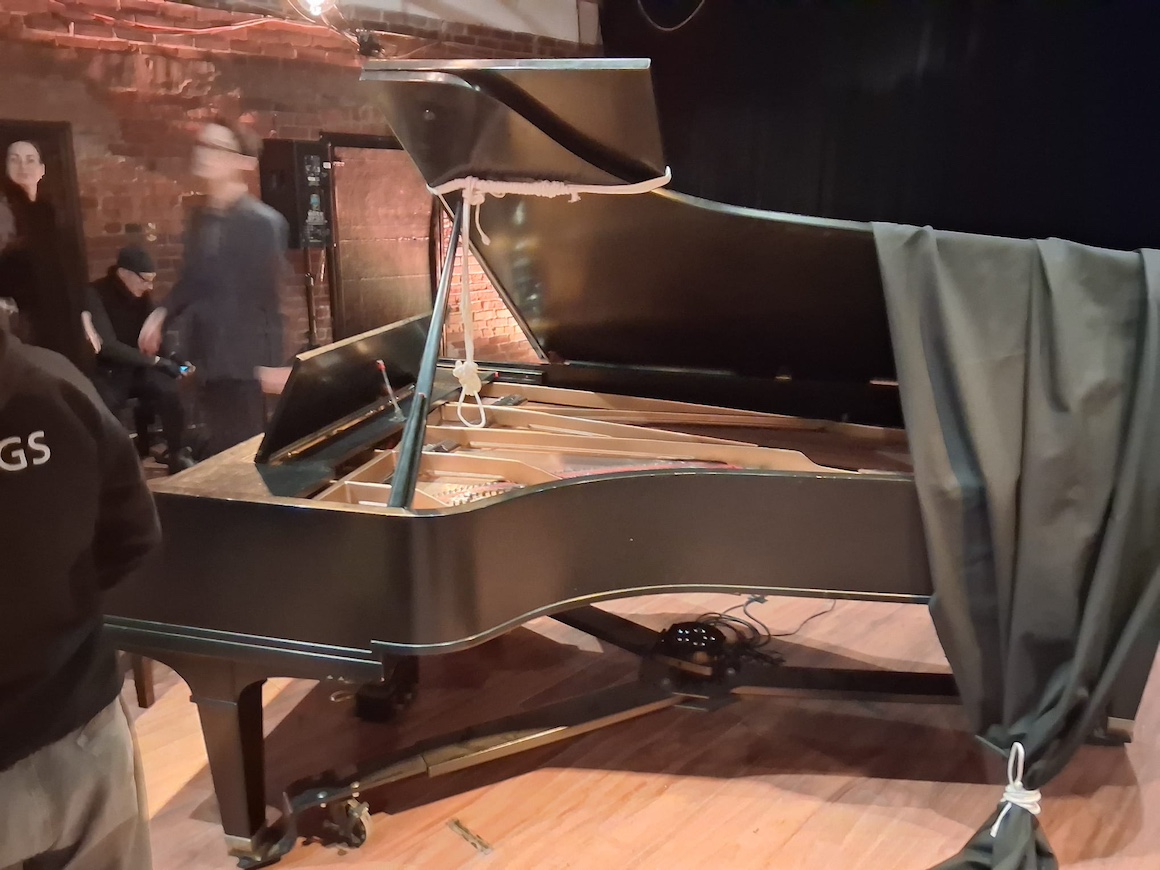
The latest Happenstancers gig, which took place at 918 Bathurst on Thursday evening, was an exploration of the death of Ophelia and related ideas with works for assorted chamber ensembles plus/minus voices.  Ten composers; all of whom could at a stretch be considered “contemporary”, were featured in a programme that, with interval, lasted two and three quarter hours.  That’s a feat of stamina for performers and audience alike as none of the music performed was “easy” and no notes or introductions were provided.

Each half of the programme started off with a piece by Linda Catlin Smith, who was in the audience.  Stare at the River for piano, string bass, trumpet, clarinet, violin and percussion was quite sparse and open textured while The River was more obviously lyrical with guitar, cello and Danika Lorèn replacing piano, trumpet and bass.

Continue reading →

Alchemical Processes

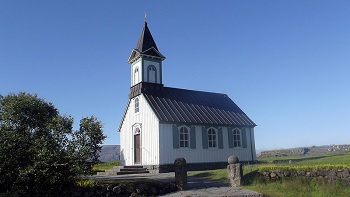
alchemical processesThe second concert in this year’s West End Micro Music Festival took place at Redeemer Lutheran Church on Friday night.  Titled Alchemical Processes it featured a mix of early and modern works written or arranged for some combination of string quartet (Jennifer Murphy, Madlen Breckbill – violins, Laila Zakzook – viola, Philip Bergman – cello), harpsichord (Alexander Malikov) and clarinet or bass clarinet (Brad Cherwin).

It started out with Bach’s Concerto in A Major BWV 1055 arranged for string quartet, harpsichord and clarinet.  It was enjoyable.  Originally written for harpsichord and string orchestra, any loss of richness in the strings by only having one player on a part was compensated by the additional colours of the clarinet.

Continue reading →

dreams-bend

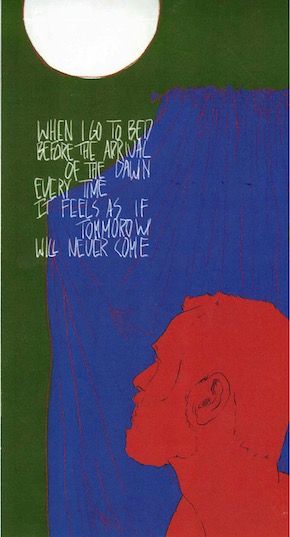
dreamsbendTo the intimate (i.e. tiny) Array Space last night for a concert by the Happenstancers who, in this iteration, consisted of Brad Cherwin – clarinet, Madlen Breckbill – viola and Micah Behr – piano. and, in the first number, viola.

Part 1 of the programme was called Dream Images and was intended to evoke the discontinuous and illogical.  It began with Du Yun’s dreams-bend for taped speech, two violas and clarinet as a sort of intro to the main event.  This consisted of Schumann’s Fairy Tale Narrations and Kurtág’s Hommage à R. Schumann; these being two of the very few works for clarinet, viola and piano.  Added to these was a new work; Abstractions by Nahre Sol.  The pieces were played with the movements in the right order but with the composers mixed up so, for example, the first four movements went Kurtág, Sol, Schumann, Kurtág and so on.  I like this approach.  The styles contrast.  The Kurtág is spikey and dissonant, the Schumann structured and Romantic and the Sol playful, tonal (mostly) and rhythmically varied.  Listening to them interspersed somehow focusses attention on their particular qualities and has a kind of focus that the conventional way of doing things doesn’t.

Continue reading →

The end of all human dignity

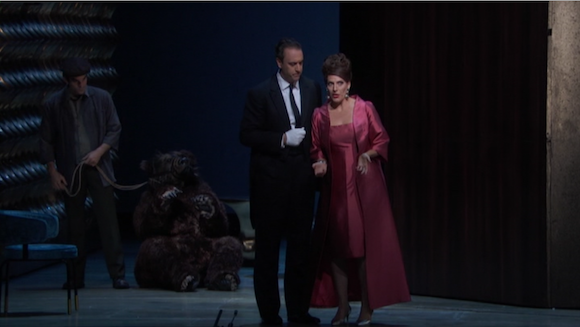
Thomas Adès’ latest opera, The Exterminating Angel, is probably his most ambitious and best to date.  It received its US premiere at the Met in 2017 and was broadcast as part of the Met in HD series, subsequently being released on DVD and Blu-ray.  It’s based on the surrealist 1962 Buñuel film.  It’s a very strange plot.  A group of more or less upper class guests attend a dinner after an opera performance.  All the servants except the butler have (inexplicably) left the house.  The guests seem unable to leave the room they are in nor can anyone from outside enter it.  This goes on for days(??) during which the guests accuse each other of various perversions including incest and paedophilia and turn violent while still expressing delicate aristocratic sensibilities like an inability to stir one’s coffee with a teaspoon.  There’s a suicide pact, a bear and several sheep involved before the “spell” to escape the room is discovered.  What happens afterwards is unclear.  (The opera omits the closing scenes of the film).  It’s very weird and quite unsettling; Huis Clos meets Lord of the Flies?

1.bear

Continue reading →

All who were lost are found

Thomas Adès’ 2004 opera The Tempest was given at the Metropolitan Opera in 2012 in a new production by Robert Lepage.  It got an HD broadcast and a subsequent DVD release.  It’s an interesting work which, on happening, was compared to Peter Grimes as the “next great English opera”.  Whether this early hype will turn into a sustained place in the repertoire is yet to be seen.  Musically it’s not easy to characterize.  Adès very much has his own style; mixing lyricism with atonality and, in this piece, setting one of the roles, Ariel, so high it’s surprising anyone has been found to sing it.  Certainly it’s a more aggressively modern style than most of the work currently being produced in North America.  The libretto two is unusual.  Shakespeare’s own words were, apparently, considered too difficult to sing though, of course, Britten famously set great screeds of unadulterated bard in A Midsummer Night’s Dream.  For the Tempest, Meredith Oakes has rendered the text into couplets; rhymed or half rhymed.  It works quite well with only the occasional touch of Jeremy Sams like banality.

1.prosperomiranda Continue reading →

Ideas for new operas

churchSo riffing off an idea raised in comments over at Likely Impossibilities, what books, films, plays, stories or other source material would you like to see made into an opera?  Feel free to suggest a composer and librettist and even cast it if you so wish!  To start the ball rolling I’ll offer up a few suggestions.

Continue reading →

Yet another Big COC podcast

The latest episode of the Big COC Podcast is up on iTunes. This one features Gianmarco Segato of the COC plus three bloggers; myself, Lydia Perovic of Definitely the Opera and Leslie Barcza of barczablog.  We talked about Henze and European modernism segging into the differences between modern opera in Europe and America.  And that led to a discussion of Adès’ The Tempest, American conservatism, the Met and it’s audience, parties at Christopher Alden’s place and much more.  Then it was on to Lydia’s new novel, Incidental Music(go buy it).  There was also an interview with Nina Draganić about the free concerts in the Richard Bradshaw Amphitheatre.  When we came back it was for a discussion about the difference about men and women, action and feeling in opera and, ultimately, why the soprano always gets a raw deal!  I really enjoyed recording this one.  It really felt like a conversation between good friends (which it was) and it’s not been edited down too much.  I think there may have been a segment on the Opera Atelier Der Freischütz that got chopped.