
 The first performance of Against the Grain Theatre’s Bound took place at the Jackman Studio at the COC. It’s the first public airing of the piece in piano score, as a workshop, so it’s not the finished product. The performance was followed by a lively discussion about the work’s potential and future avenues to explore.
I think it’s fair to say that Bound ventures into more serious territory than we have yet seen from this company, dealing as it does with the fraught relationship between the state and the individual in an age when the state, egged on by the right wing media, uses fear of terrorism to suppress “dissidents”.
The space where the audience assembles before the show is liberally decorated with propaganda for The State of the “fear anything that looks different” variety. In the performance venue itself the audience is ranked either side of a space that contains the piano and, at intervals around the large empty floor, seven chairs; one for each detainee. The detainees are all being held for things which aren’t actually crimes but bring them under suspicion; wearing a hijab, having a Nazi great-uncle, wanting to emigrate to Sri Lanka, converting to Islam, having a terrorist brother, protesting immigration restrictions, being transgendered. They are posed essentially unanswerable Kafkaesque questions by the State interrogator (Martha Burns) sitting off in one corner with a microphone. The only answer is to express frustration and despair and, occasionally, defiance and hope in arias using Handel’s music and words by either Handel’s librettist or Joel Ivany. Some of the music has been somewhat reshaped by Kevin Lau who also wrote/arranged the final ensemble number.
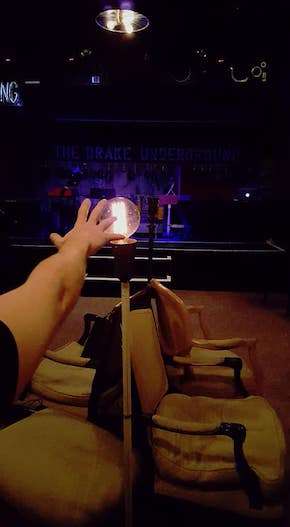 Soundstreams Electric Messiah 3 opened last night at the Drake Underground. Some things have changed from last year. There’s no chorus, the soloists are new, the instrumentation has changed. There’s now a harpsichord (Christopher Bagan) and an electric organ (Jeff McLeod) for instance. Some things are the same. There’s still extensive use of electric guitar (John Gzowski). Dancer Lybido and DJ SlowPitchSound are still there, as is Adam Scime as music director and electro-acoustical wizard. There’s still a mobile phone schtick. It feels both familiar and quite different.
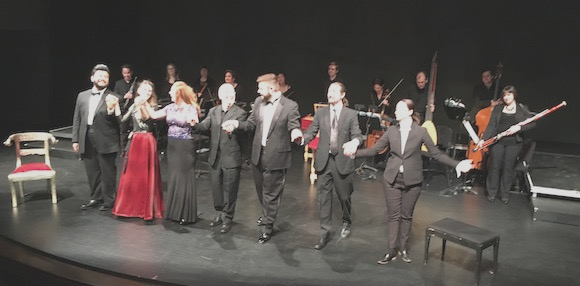
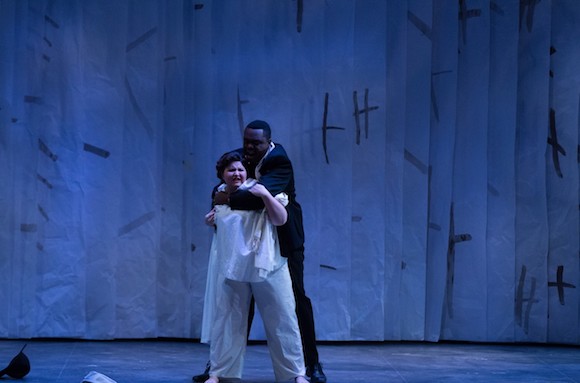

 Voice of a Nation is a Métis inspired collection of works that has been touring Ontario as part of the Canada 150 thing. Last night the Toronto leg of the tour happened at Grace Toronto Church. There are three pieces in the program. Different Perspectives is a setting by Ian Cusson of a text synthesized from the sometimes surprising reactions of a group of young people asked “what Canada meant to them”. It was designed to be sung by community choirs on the tour and last night was given by three (uncredited) female singers accompanied by the thirteen player Toronto Concert Orchestra under Kerry Stratton.
 I went to Walter Hall last night to see a couple of Mahler works in chamber reduction played by the Faculty Artists Ensemble conducted by Uri Mayer. I think I like Mahler in chamber reduction a lot. With one instrument to a part complex textures become clearer. No doubt there are conductors that can produce that clarity with a big orchestra but there are also, sadly, too many who reduce it to a grisly stew of unidentified body parts. It also allows singers to be heard without screaming. The only time I want to hear a tenor sounding like a goat being slaughtered is in that Dean Burry piece. I guess chamber reduction might not work for, say, the 8th Symphony but for the orchestral song cycles, the 4th Symphony, and, I’d hazard a guess, the 2nd Symphony I like it just fine.
 operaramblings