Charlotte

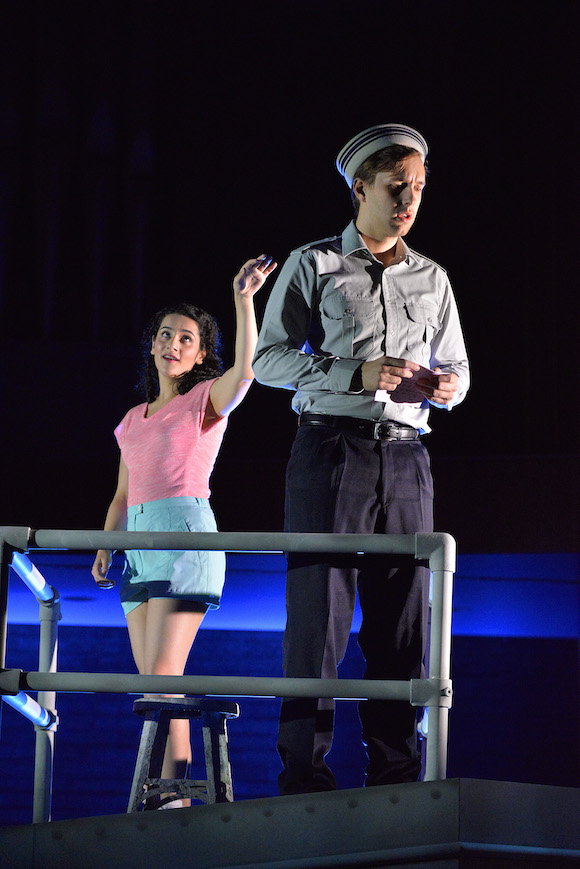
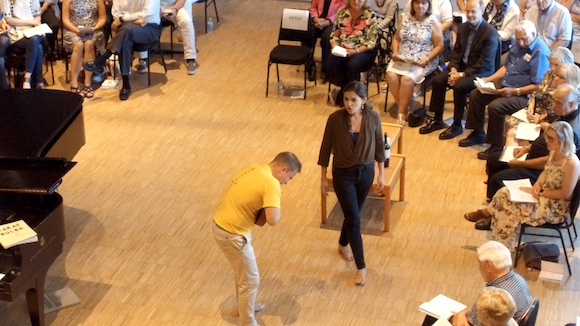
Two years ago Charlotte: A Tri-Coloured Play with Music was presented in workshop form (more or less) at Luminato.  It felt incomplete and rather muddled then and I didn’t write about it.  I saw the latest version yesterday at Hart House Theatre and it feels like a finished piece; indeed a rather accomplished one.

It’s a genre defying work.  Perhaps it’s closer to musical theatre than anything else but it’s not miked and there are some “operatic” moments worked into the plot.  Indeed there are some very funny musical moments and much cleverness in Aleš Březina’s score and Alon Nasman’s libretto.

Charlotte, Theaturtle

Continue reading

At the River

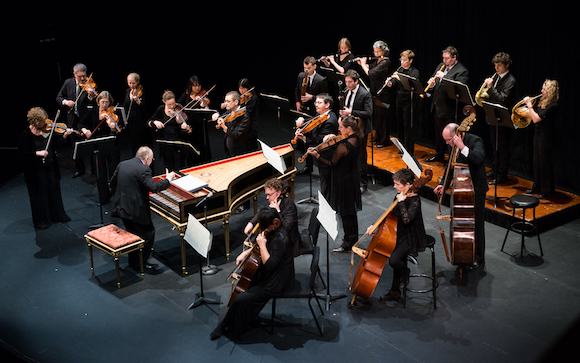
It was the last concert of Confluence’s inaugural season last night.  The theme was “At the River” and the venue the rather splendid (if somewhat popish) St. Thomas’ Anglican on Huron Street.  It rather epitomized what I have come to expect, and love, from this series.  The musical styles on display were eclectic; classical, folk song, pop/rock, jazz with East and South Indian, Middle Eastern and Indigenous elements all well to the fore.  There was also some poetry including an unintentionally hilarious piece in praise of the idyllic Don River.  There was also a large and accomplished ensemble and a lot of joy and sheer fun.

1200px-Madawaska_River_Whitney

Continue reading

Lutheran Masses

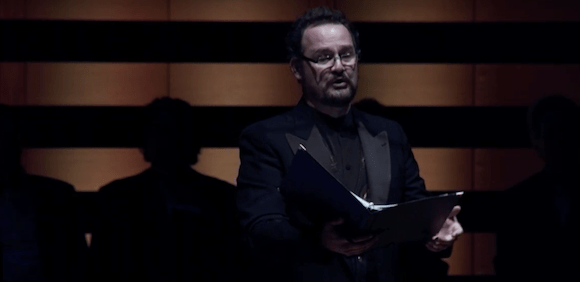
The final concert of this year’s Toronto Bach Festival at Saint Barnabas Anglican Church featured two of the little performed Latin masses written for Leipzig (or possibly for Count Franz Anton von Sporck of Lysá.  Sources vary).  In any event they are unusual for liturgical music.  Based on previously written cantatas for the most part, they incorporate elements not much seen in church music.

allbach

Continue reading

A second look at Shanawdithit

We went back last night for a second look at Shanawdithit.  We were sitting up much closer to the stage area this time and that did bring out some things I hadn’t noticed so much before.  It also made the role of the chorus much clearer.  That said I don’t think I’d write anything much different to my original review if I were doing so again.  But there are some additional thoughts that I want to share:

Shanawdithit2_small Continue reading

Unpacking Pandora

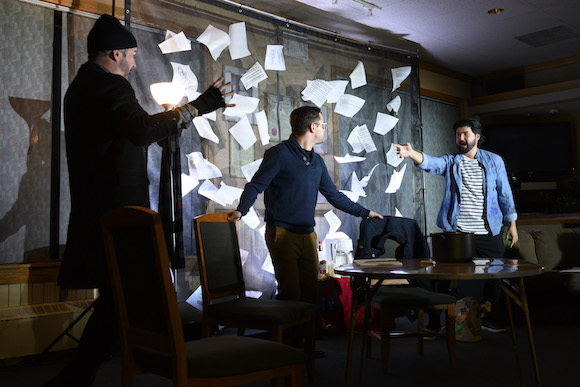
We went to see the opening performance of FAWN Chamber Creative’s new show Pandora at Geary Lane last night.  There’s a lot to like but it’s a dense and in some ways confusing show so I’d suggest that if you plan to go you do your homework.  So, don’t expect anything closely related to any of the many versions of the Greek legend.  That’s just a jumping off point to explain how both evil/malice and hope came into the world.  A very brief prologue in which a character discovers Pandora’s box (or jar or whatever) after centuries and releases Hope into the world sets up three scenes which each, in their own way, reflect the duality of Good/Evil, Despair/Hope or however you want to characterise it.  I strongly suggest reading the Director’s Notes and the Libretto before the show to understand what the three scenes are and where the transitions are.  There are no surtitles (money!) and not many of us can read a printed libretto in the dark.  Also, cast members change character sometimes without change of costume.  It’s helpful to know when that’s happening!  While there’s only one librettist, David James Brock, there are three composers but stylistic differences between them aren’t so obvious that one realises there has been a transition.

_DSC8799

Continue reading

Prophecy Fog

Jani Lauzon’s new piece Prophecy Fog at the Theatre Centre is a fascinating and very personal piece.  I write “very personal” because it’s obviously very personal to her but also because I experienced it in a way that I’m sure was not the same as any one else in the room and I suspect that will be true for many people, perhaps most, perhaps all.

ProphecyFog-photobyDahliaKatz-1483

Continue reading

Dido and Belinda

Dido and Belinda is the first show from Opera Q and Cor Unum Ensemble.  It’s a reimagining of Purcell’s Dido and Aeneas from Belinda’s perspective and with a decidedly gender fluid twist.  Nathum Tate’s libretto is extended by spoken passages which give Belinda’s take on the story and make it very much  a story of the two sisters.  The back story is Dido’s flight from Tyre rather than Aeneas’ flight from Troy.  The future is about Belinda as Queen of Carthage not Aeneas’ “promised Empire”.  It works pretty well though I have reservations about interpolating text in the final scene.  I think Belinda’s accession as Dido’s successor could have been conveyed without interrupting some of the most sublime music ever composed.  That’s a minor quibble though in a story concept that works.

Dido_1

Continue reading

Democracy in Action

Tongue in Cheek’s latest show, Democracy in Action, took place at the Lula Lounge last night.  The concept was pretty straightforward.  There were eight (almost) singers and a pianist.  Each singer offered up five numbers ranging from opera through art song to musical theatre and pop.  Advanced on-line polling had selected one song per singer.  Polling of the audience in the house produced the other two.  The in house polling was supported by really rather well done videos in which the “composers” tried to persuade the audience to vote for their stuff.

received_2303830709872932

Continue reading

A brace of baritones

Last night Thomas Hampson, his son in law Luca Pisaroni and pianist Vlad Intifca appeared at Koerner Hall.  It was a curious program.  The first half was made up of opera arias and excerpts.  There was a sequence of Conte/Figaro and Leporello/Don G numbers.  They were, of course, very well sung.  Both singers are noted exponents of these roles but I really didn’t see the point.  They were pieces I’m sure pretty much every audience member has seen with orchestra, on stage, multiple times.  With piano accompaniment it all seemed a bit pointless.  There followed two longish scenes; the Riccardo/Giorgio confrontation from I Puritani and the scene from Don Carlo where Posa pleads with the king for a change in policy in the Netherlands.  These worked better; perhaps because they are less familiar but more likely the fact that each featured Pisaroni in a genuine bass role.  This allowed for more variation of timbre and colour than the Mozart pieces.

DSC_5885

Continue reading