

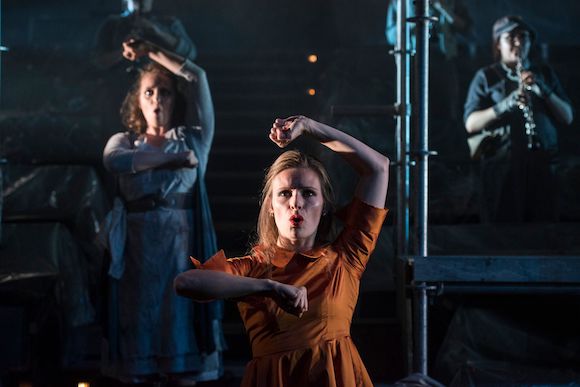
I sat down yesterday with Danielle MacMillan who will sing Agni in Against the Grain’s upcoming production of Claude Vivier’s Kopernikus. Kopernikus is subtitled A Ritual Opera for the Dead and concerns the experience of transitioning from life to death as experienced by Agni. I had many questions:
- What was the music like? After all Vivier is not your “typical” composer.
- What’s the nature of the production?
- What does it feel like to play a dead person?
And a few more things that bubbled up as we talked. So here’s a summary.
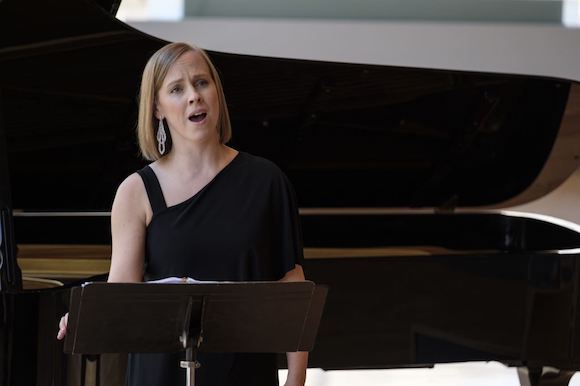
 The ninth edition of Tapestry’s celebration of their back catalogue happened last night in the Ernest Balmer Studio. This year’s mentors are Jacqueline Woodley and Andrea Grant. The emerging artists are Elisabeth Boudreault, Lindsay Connolly, Brianna DeSantis, Ryan Downey, Gabrielle French, Rebecca Gray, Lauren Halász, Rachel Krehm, Brittany Rae, Anne-Marie Ramos and Jennifer Routier with pianists Qiao Yi Miao Mu and Ryoko Hou.

 Heimweh is a CD of Schubert songs from young German soprano Anna Richter and pianist Gerold Huber with a bit of help from clarinettist Matthias Schorn. It’s an interesting combination of the familiar and the less familiar with a bit of a leaning to the more lyrical, less dramatic end of the Schubert canon. Familiar material includes Der Hirt auf dem Felsen and the three parts of Ellens Gesang but there’s material that I’m much less familiar with too like Der Zwerg and Viola. I guess thirteen minute long songs about snowdrops just don’t get programmed that often. There’s also the slightly odd Abschied; where the piano accompanies spoken text.
 Sirènes is an album of pieces by Montreal composer Ana Sokolović. The first pice, which gives the album its title, is written for six unaccompanied female voices. It’s performed here by the vocal ensemble of Queen of Puddings Music Theatre conducted by Dáirine Ní Mheadhra. The six ladies in question are Danika Lorèn, Shannon Mercer, Magali Simard-Galdès, Caitlin Wood, Andrea Ludwig, and Krisztina Szabó. It’s an interesting piece and very Sokolović. The text is bent and twisted into sound fragments which are “sung” using an array of extended vocal techniques. The overall effect is of a shimmering, fluttery and quite absorbing sound world.
 Terezín/Theresienstadt is a CD of music composed in the concentration camp at Terezín in what was then Czechoslovakia. Virtually the entire Czech intelligentsia; certainly those of Jewish or Communist persuasion, were imprisoned in a kind of “show camp” to demonstrate to the world that the Nazis weren’t as bad as made out. Nine of the ten composers featured on the disc ended up on a “Polentransport”; a one way ticket to Auschwitz. No story is more poignant than that of Ilse Weber, a nurse in the hospital. She chose to accompany the sick children of the camp on their final journey and reportedly sang to them in the gas chamber.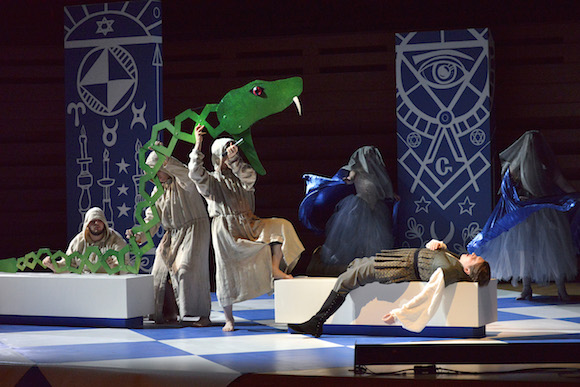
 operaramblings