
Opera Atelier opened a production of Debussy’s symbolist opera Pelléas et Mélisande at Koerner Hall on Wednesday evening with direction by Marshall Pynkoski and choreography by Jeannette Lajeunesse Zingg. Let’s start by making it clear that this is not an attempt to present the opera as it was seen or heard when it premiered in 1902 or even to try and reproduce that aesthetic with more modern technology which, I think, is what’s usually meant by “Historically Informed Performance” (HIP). The extent to which any recent Opera Atelier production is HIP is a discussion perhaps left for another day.
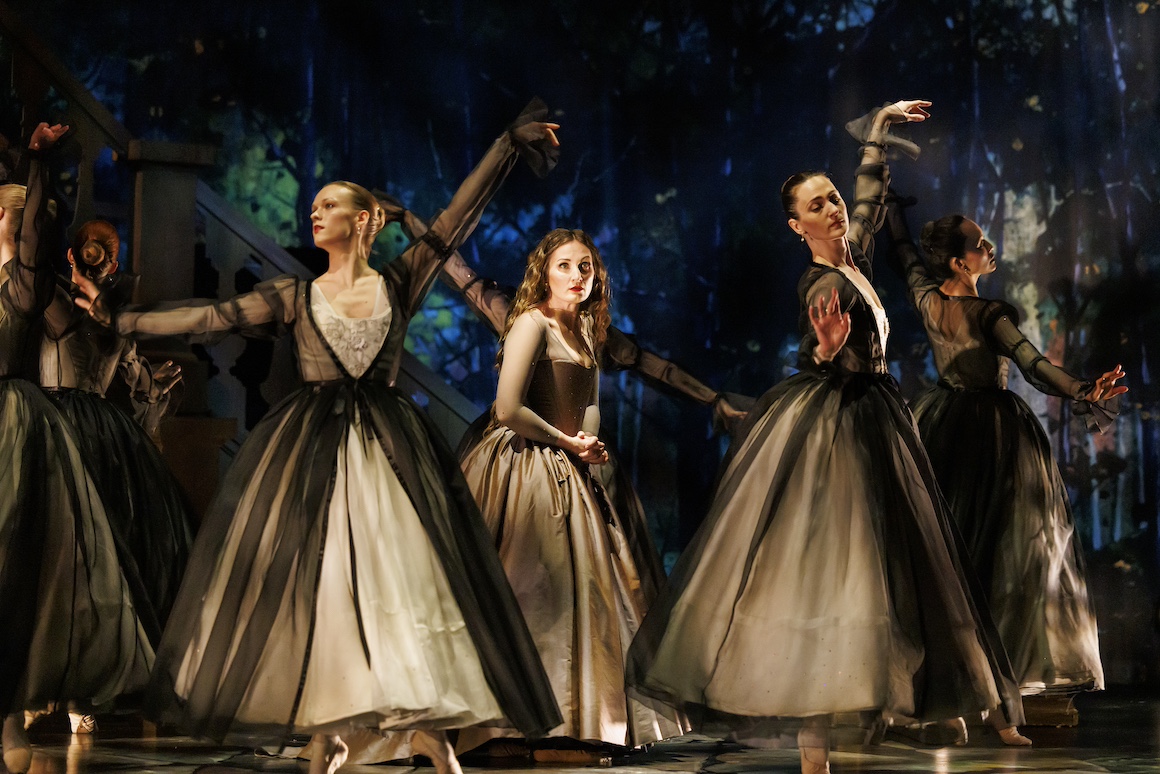
What it is can perhaps be broken down into two parts. First there’s a revised score. Christopher Bagan has re-orchestrated the piece for fourteen instrumentalists and used gut strings. It works really well. I didn’t miss the 80 or so players that Debussy would have expected. There was plenty of colour plus a welcome clarity, and the gut strings suit the “soft focus” tone of the whole opera. There are also some baroque dance numbers interpolated which I feel less positive about. The transitions between sound worlds were quite jarring.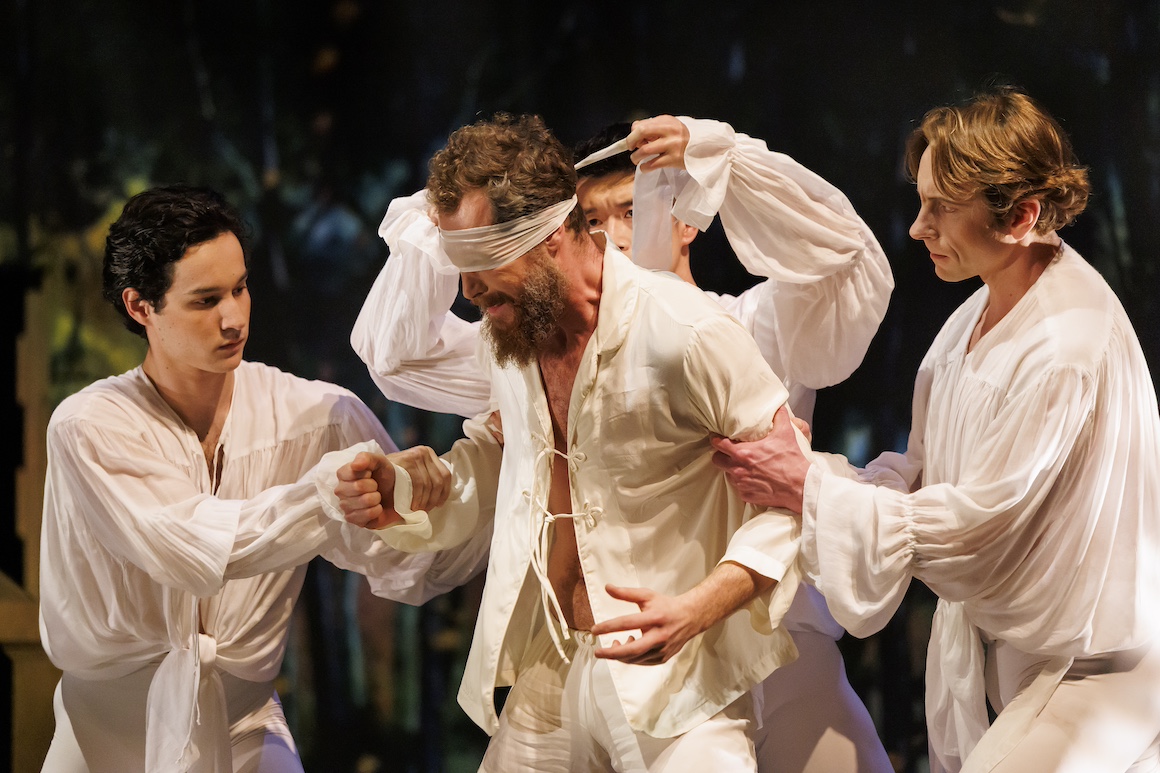
The second aspect of the show is, allegedly, an attempt to link the production to Debussy’s undoubted interest in the music of the French 17th and 18th centuries. I have two huge problems with this. I don’t think there’s anything in the opera; Debussy’s music or Maiterlinck’s text, that suggests that’s what he intended. Secondly, I’m far from sure that Debussy would recognise what OIpera Atelier does in 2026 as being his (no doubt idealised) idea of the French baroque. Let’s take these in turn.
It seems to me that Pelléas et Mélisande owes much more to Wagner; specifically Tristan und Isolde, than it does to Lully. That’s not just true of the music. The whole aesthetic, moral, philosophical and psychological framework that has moved on to a point where the classical certainties have dissolved. Maeterlinck’s text owes nothing to Corneille or Racine. We are in an ancient forest inhabited by who knows what; not in a formal garden at Versailles inhabited by gods and heroes. While it may be reasonable to claim that the piece is permeated by Eros, it’s surely Freud’s Eros rather than the Cupid like one we see here. Plus it’s equally suffused with Thanatos who doesn’tget personified here. This is the unstable mentalité characteristic of the early 20th century that would soon collapse into the most violent catastrophe in human history to date. Gerard Gauci’s set design, which uses projections very skilfully, succeeds in evoking the ancestral forest and the sense of threat but then Gauci has always been the OA team member most willing to move outside his comfort zone. The other production elements are less successful
In considering whether the production in some way links Debussy to the baroque one needs to take into account that Opera Atelier’s aesthetic has evolved over the years to the point where it perhaps owes less to the baroque than it does to the company’s forty years of performance practice. Certain elements have been retained/enhanced and others discarded. Wigs and attempts at historically accurate costume are largely gone in favour of something simpler but more standardised. Painted flats have disappeared for the most part (see above). The choreography operates within tight limits. There are still vestiges of baroque acting style.There are stock characters almost like the commedia. There’s always an angel or, as here, a more or less naked male dancer with bright red wings as Eros. I doubt that this toolkit would have evoked the baroque for Debussy, still less for Maeterlinck.
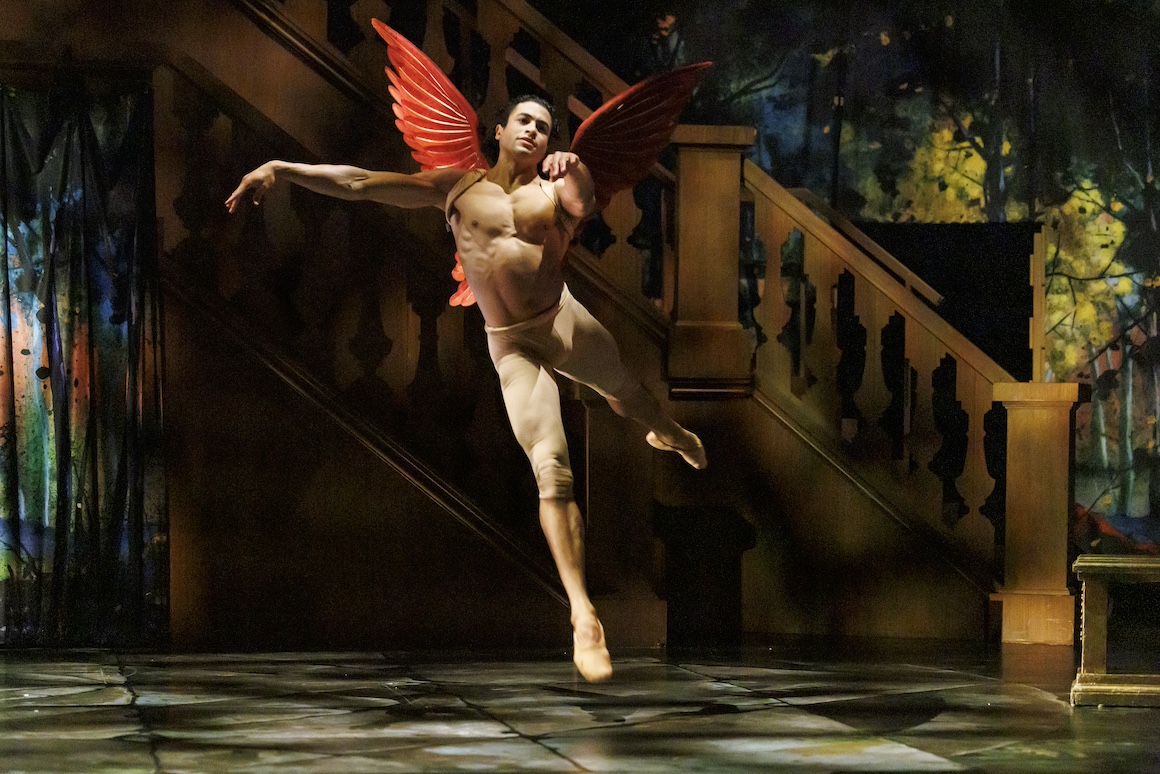
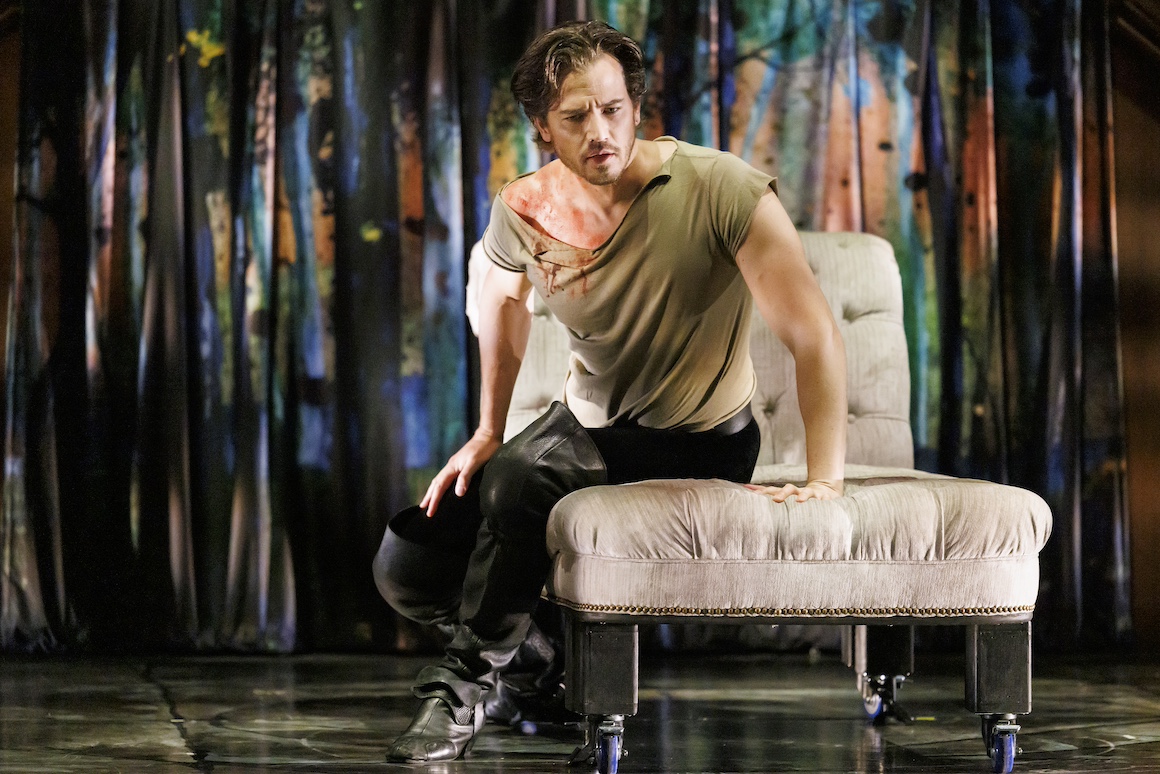
But this toolkit is what we get imposed on an otherwise very decent staging of Pelléas et Mélisande and it’s incongruous. When Mélisande is distraught our tight buttocked friend with the wings appears to comfort here. Dance numbers break out for no apparent reason. The one immediately after Golaud’s killing of Pelléas is particularly jarring. Characters run around the stage in that stylized “woe is me” manner. And when it’s the men in their de rigueur stompy boots they sound like a stampeding herd of buffalo. This might (after Tristan) be the most immersive opera in the canon and yet I repeatedly found myself pulled out of it by elements that didn’t need to be there.
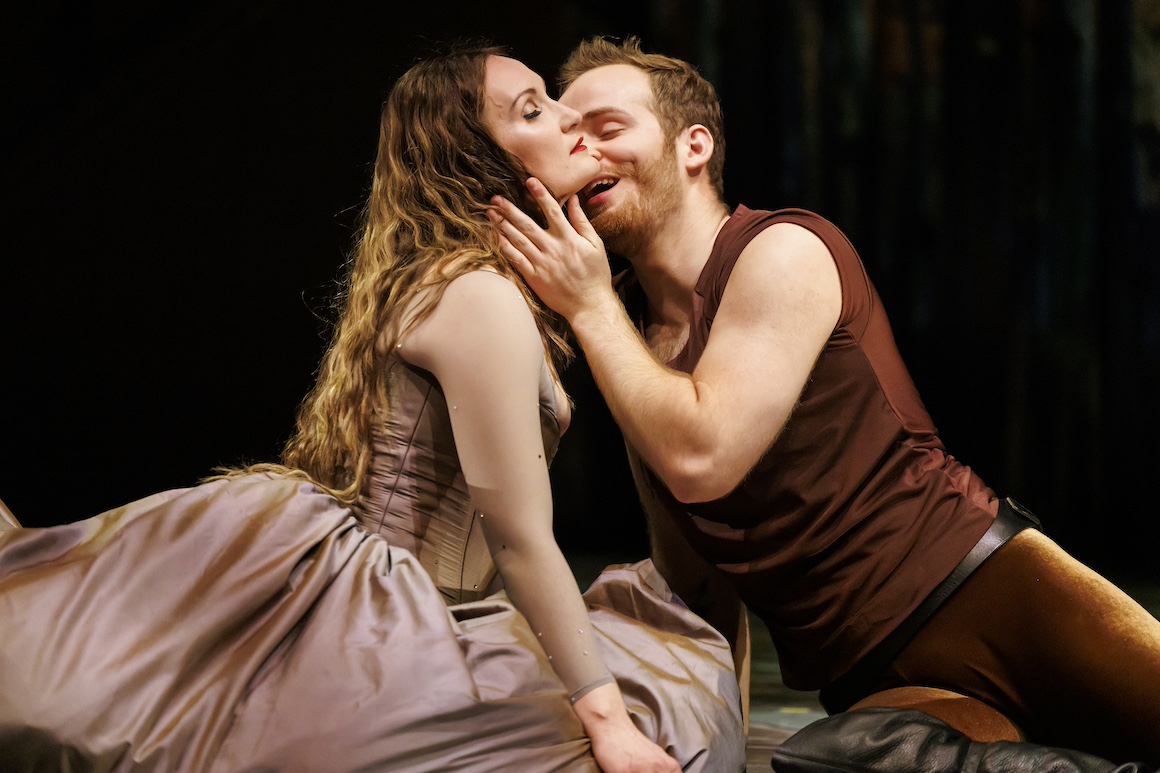
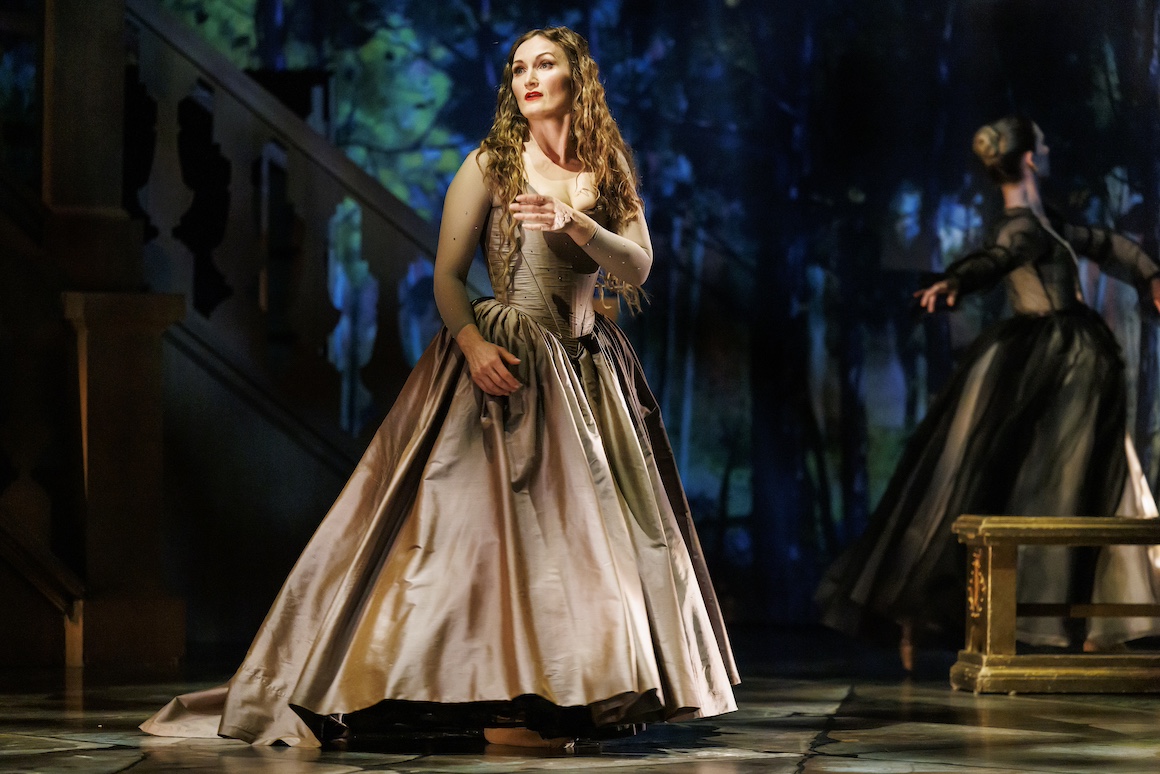
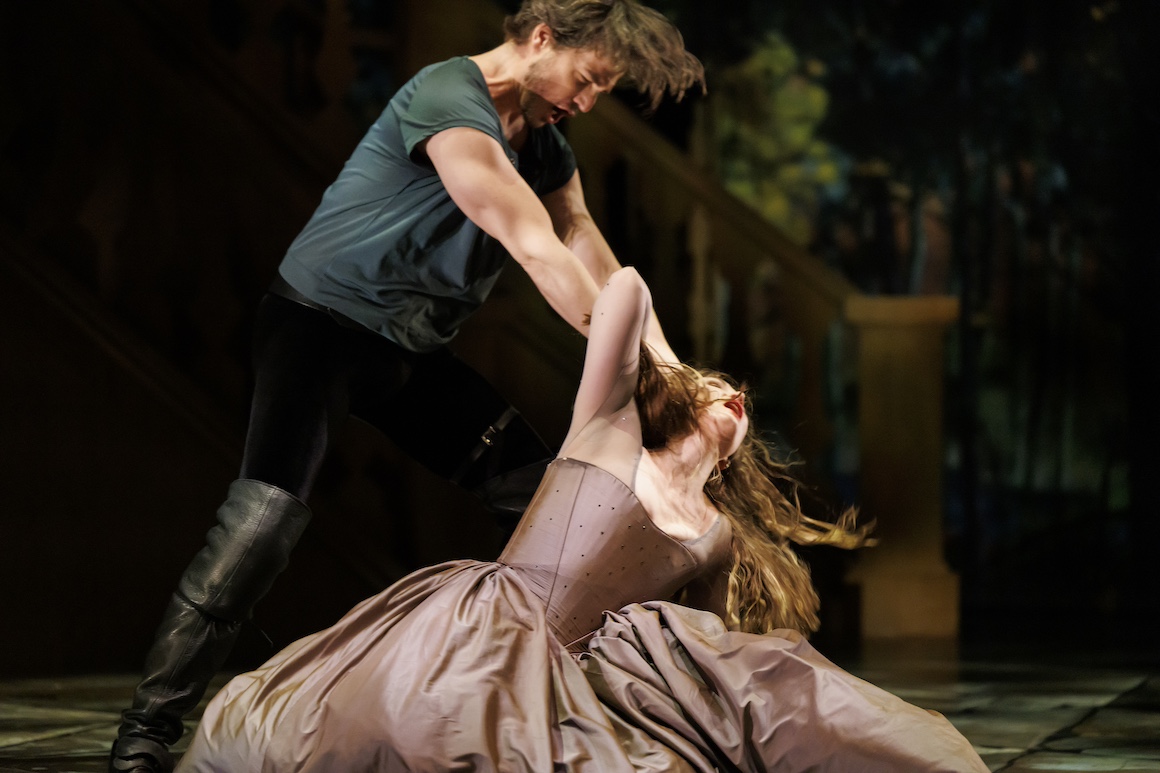
That’s particularly sad because there were some really fine performances. Meghan Lindsay sang Mélisande with both power and subtlety and found some interesting colours to express a range of emotions. She had excellent chemistry too with her Pelléas, Antonin Rondepierre, who sang in a medium sized but very easy on the ear tenor. Douglas Williams made an impressive Golaud. He definitely leant to the darker, more brutal side of the character; helped not a little by being the largest person stage, but that interpretation suited his voice and is valid enough even if it makes his last scene repentance seem a bit forced.
The rather unexpected casting of Philippe Sly as Arkel worked rather well particularly in the final scenes. His voice has both beauty and power and he gave us an Arkel who seemed fully capable of restoring a kingdom on the verge of collapse. Cynthia Akemi Smithers made an interesting Yniold; less obviously child like than some. There were effective cameos from Measha Brueggergosman-Lee as Geneviève and Parker Clements as the Doctor. David Fallis in the pit with Christopher Bagan and thirteen members of Tafelmusik made a compelling case for Bagan’s chamber arrangement. The basics of a really excellent Pelléas et Mélisande were there.
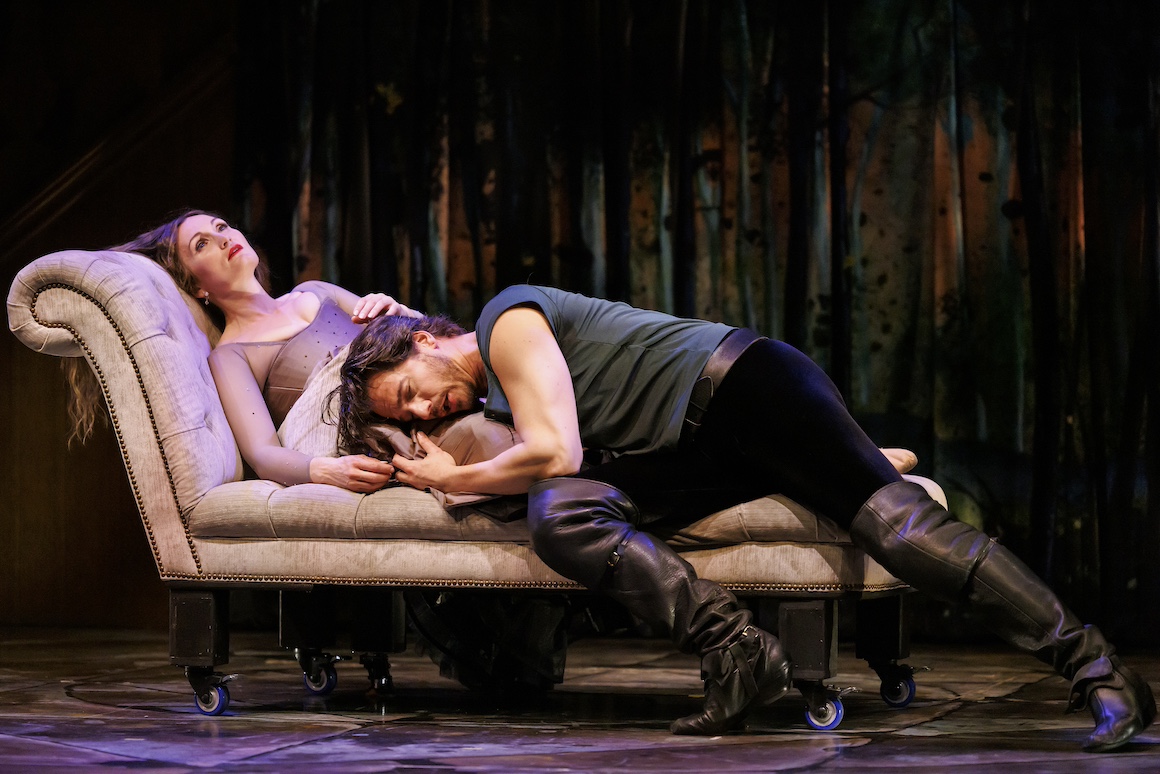
I think Opera Atelier are to be congratulated for being willing to move out of their comfort zone but this time I think they needed to dump more baggage for the idea to fully succeed. As it stands it’s a show that’s worth seeing for some fine singing, Bagan’s arrangement and Gauci’s aesthetic sets but I could well do without the interpolated dance and the incongruous Eros. YMMV.
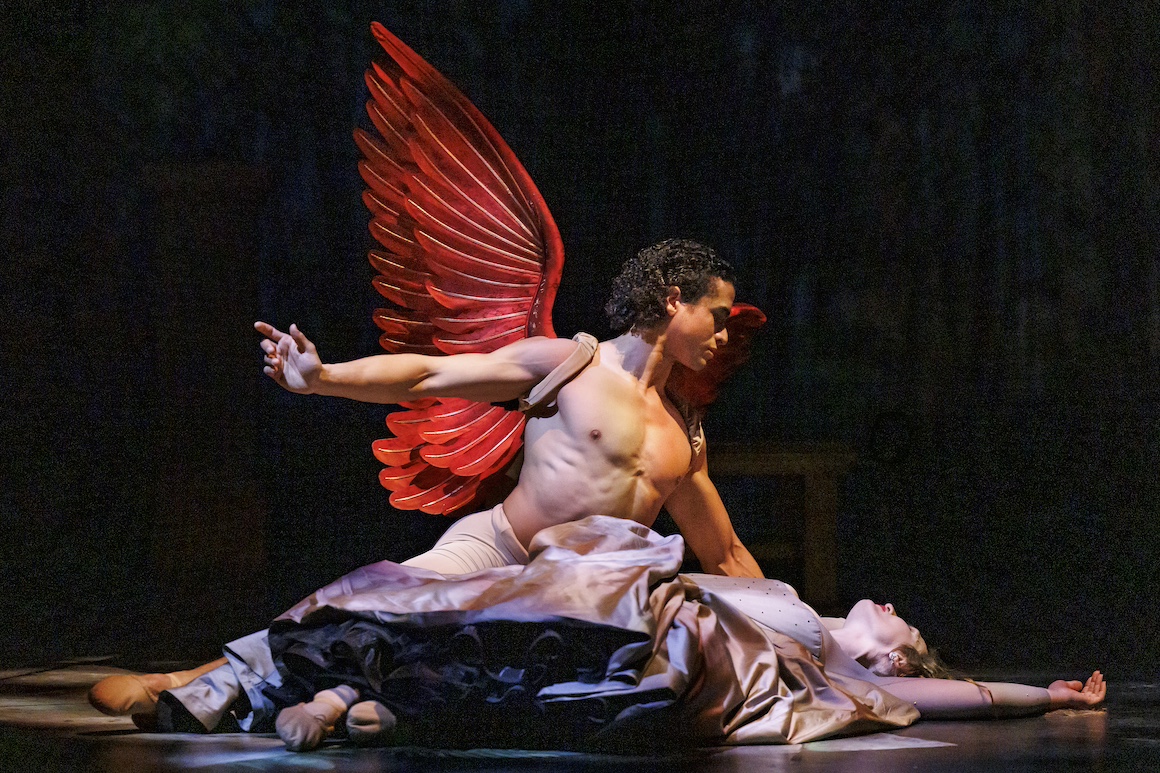
Pelléas et Mélisande continues at Koerner Hall until April 19th.
Photo credit: Bruce Zinger


There’s a good deal of valid commentary in this review. Although I would differ in a few respects, my main purpose in writing is to add some missing context and to query some additional directorial choices.
First, regarding the reorchestration by Dr. Bagan, while I agree he has captured much of the essential sound and atmosphere of Pelléas et Mélisande, there nevertheless are moments where the emotional depth and weight of Debussy’s full orchestra is sorely missed. And of course, to accommodate the interpolation of dance music by Rameau and Charpentier, 3 scenes of the opera have been entirely omitted and, I believe, at least one other is significantly shortened.
As to matters of direction (or misdirection, perhaps), instead of what should be a gradual build of tension as Pelléas and Mélisande grow into passion, we have excessive and almost immediate physicality between them. And, why on earth is Arkel depicted, in his early appearances, as though a madman – not to mention that no attempt is made to have him appear to be any older than his two grandsons.
Valid points, especially wrt the cuts. I found that the combination of the cuts, the interpolations and the lack of “mystery” in the P&M relationship really undermined what I wanted from this opera; that sense of tension you mention. I’m actually quite surprised by how many basically positive the production has had, especially given that some of them basically parse as “It’s a dog’s breakfast but it’s Opera Atelier so that’s OK”. I don’t buy that. I find some of OA’s work insightful (their La Resurrezione for example) but I don’t think it’s useful to alter one’s critical standards just because it’s OA.