
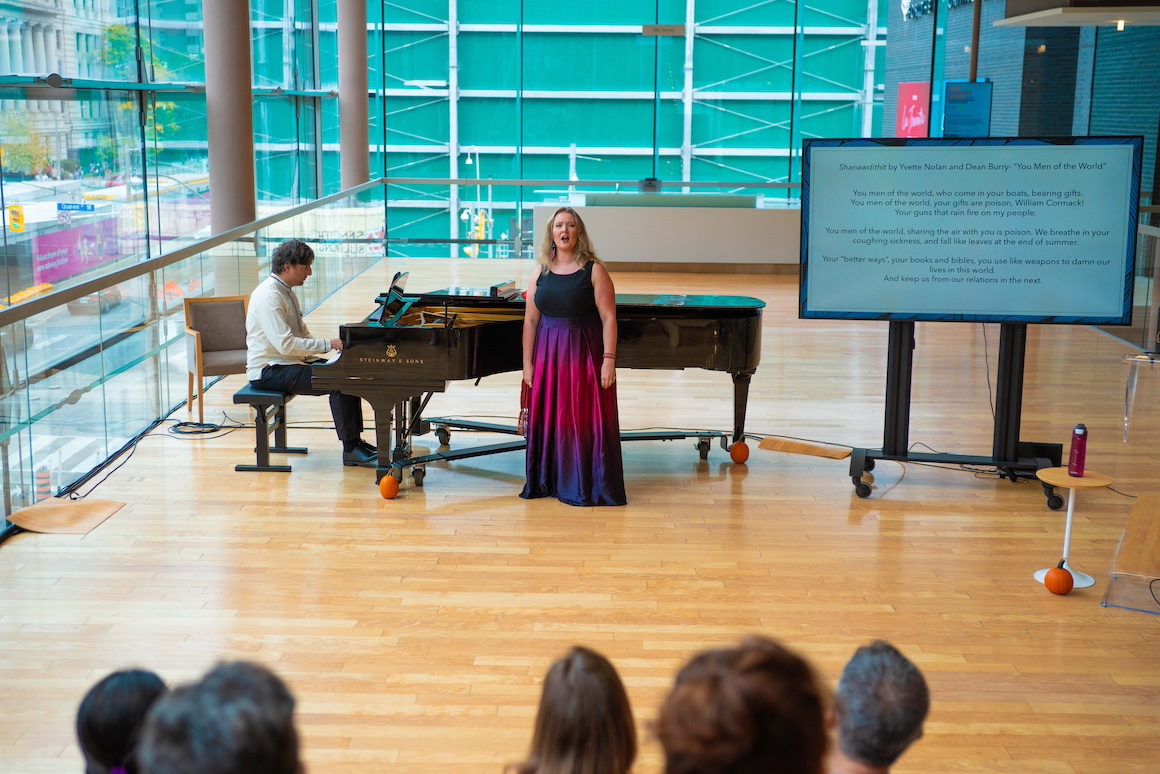
It’s that time of year when we reflect on the intersection of Truth and Reconciliation with opera. So yesterday I attended a lecture/recital by young Métis singer and scholar Camryn Dewar in the RBA at lunchtime. The title was The Evolution of Indigenous Female Representation 1879-Present and the domaine was Canadian opera; so no room for La fanciulla del West or Doctor Atomic. In fact, truth to tell, there Wasn’t much Indigenous female presence in Canadian opera until quite recently. There’s the really awful colonialist Canada’s Welcome by Dixon and Clappé which was dealt with. Somers’ Louis Riel which got a brief mention but doesn’t have much in the way of female characters. Victor Davies’ The Ecstasy of Rita Joe which didn’t get (or deserve) a mention. Perhaps Jani Lauzon’s I Call myself Princess might have deserved a mention even if it’s about opera rather than being an opera.
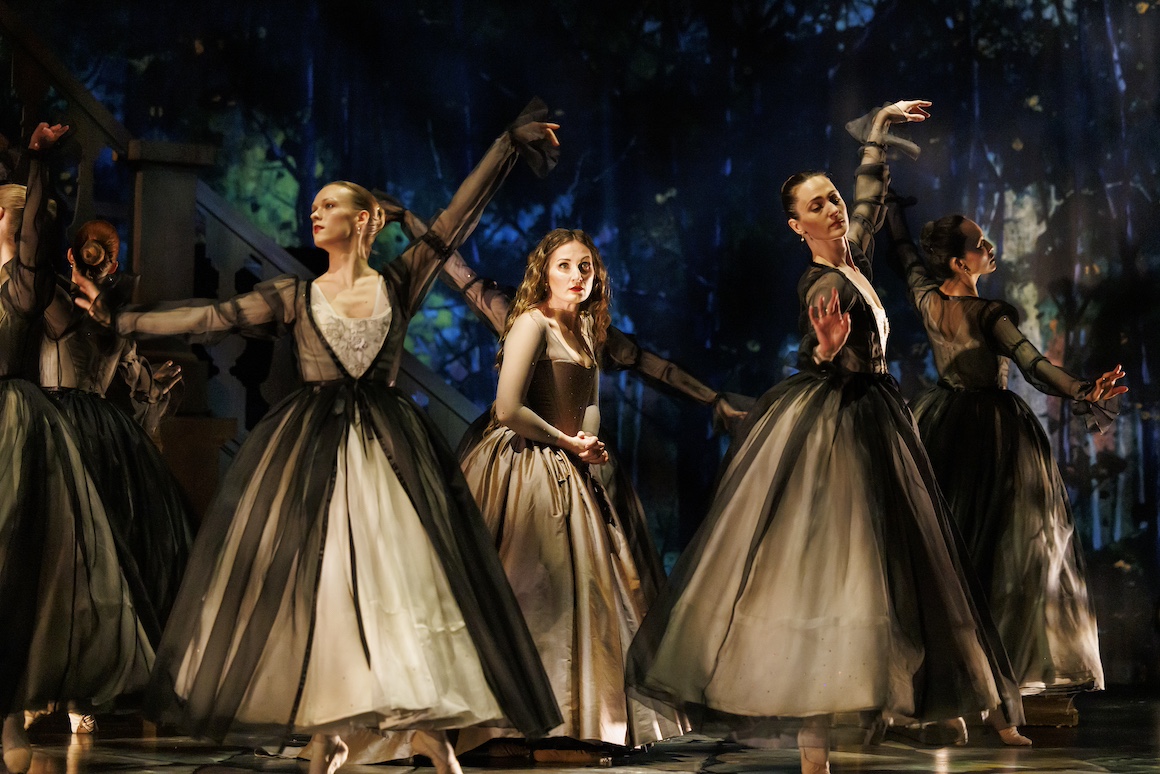


 Last night saw the first of two performances of Haydn’s rarely performed 1791 work Orfeo: L’anima del filosofo. I know how much effort and indeed passion went into creating this production and the singing is pretty good. I wish I could say I enjoyed it but I can’t. There were just too many issues.
 On May 26th and 27th in the MacMillan Theatre there’s a chance to see Haydn’s rarely performed Orfeo: L’anima del filosofo. It was composed for London in 1791 but was shut down during rehearsals because the Lord Chamberlain’s office thought it subversively supportive of enlightenment values at a time when Pitt’s government was cracking down brutally on pro French Revolutionary sentiment in the UK.
 The latest concert in the Confluence series featured Marion Newman and friends addressing the question “What is Indigenous classical music?” through a carefully curated programme of works; all of which featured words by Indigenous women. We began with Marion singing Barbara Kroall’s Zasakwaa (There is a Heavy Frost) with words in Odawa describing the earth going to sleep for the winter with flute accompaniment by Stephen Tam. It was followed by Rebecca Cuddy singing three of the Five Songs on Poems by Marilyn Dumont by Ian Cusson. These are really fine settings of interesting, pithy, angry texts that have a wicked humour to them. I particularly like Letter to Sir John A. Macdonald which I’ve written about before.


