
Marco Arturo Marelli’s production of Wagner’s Tristan und Isolde first appeared at the Semperoper in Dresden in 1995. It was revived in 2024 and recorded for video. It’s an elegant, straightforward production. There’s no “concept” but equally there’s not much attempt at “realism” either. Sets are monumental and abstract. Costuming is opera house medieval. On the few occasions props are needed they are what they are; a cup, swords etc. Atmosphere is mostly down to the lighting and the focus is on the singing and acting.
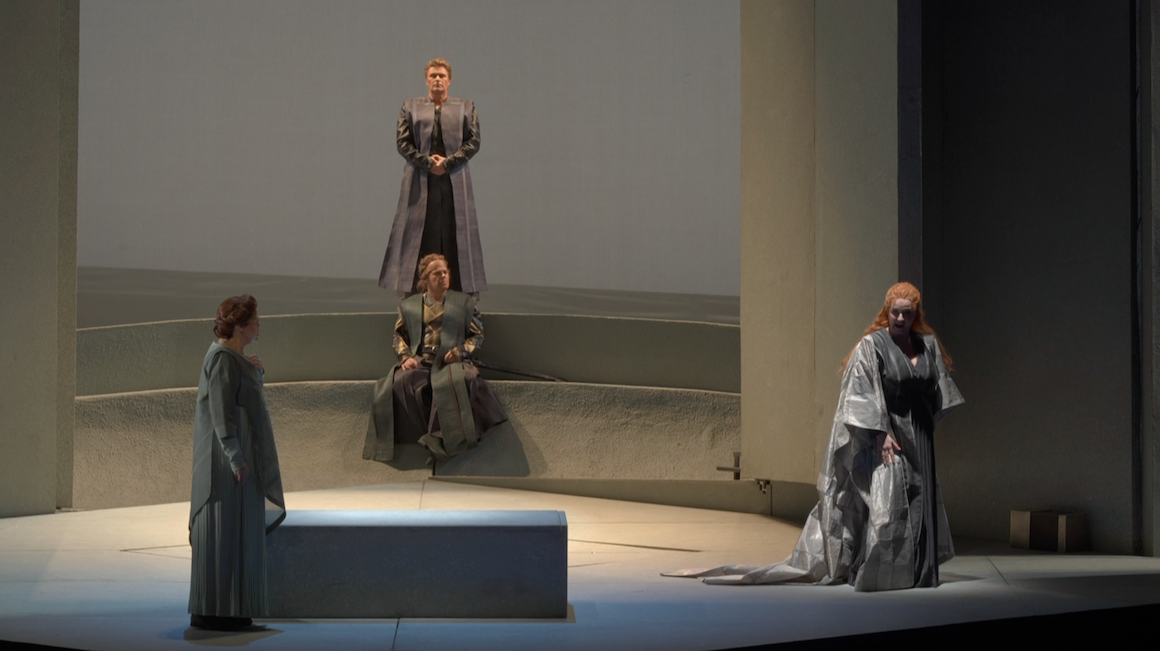
Act 1 takes place in what might be a Greek theatre or temple with an amphitheatre like stage, massive walls and giant sliding doors. Movement is minimal but effective. Both Klaus Florian Vogt’s blonde Tristan and Camilla Nylund’s red-headed Isolde are striking in long, flowing robes. It’s here too that we first see Martin Gantner’s excellent Kurwenal and Tanja Ariane Baumgartner’s powerful Brangane.
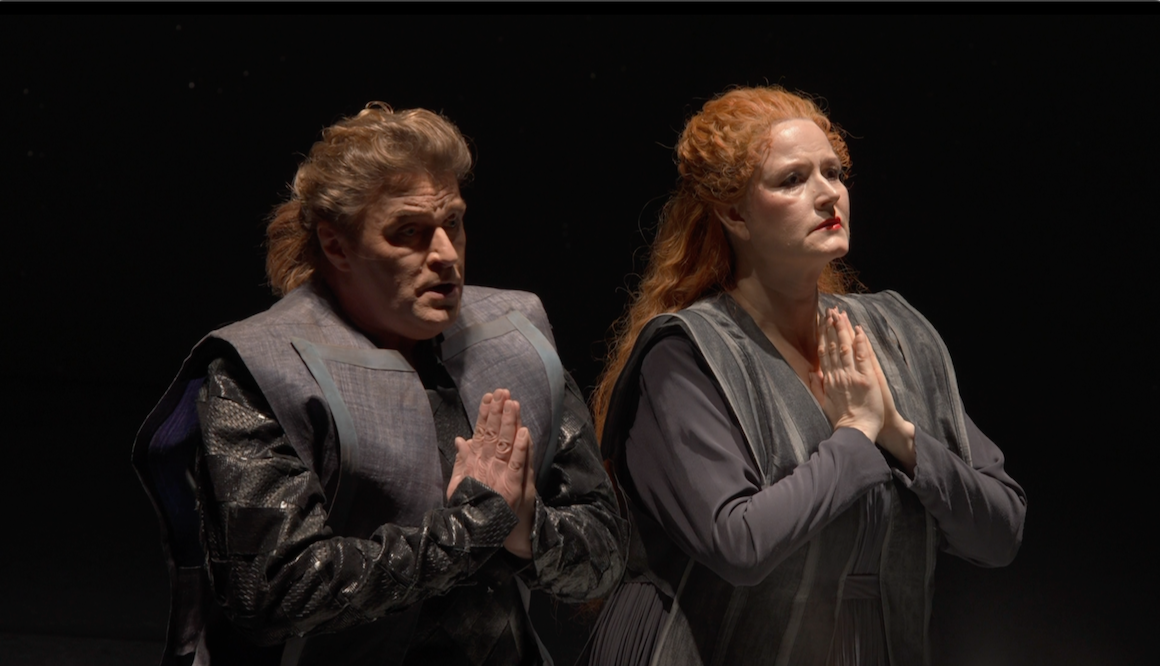
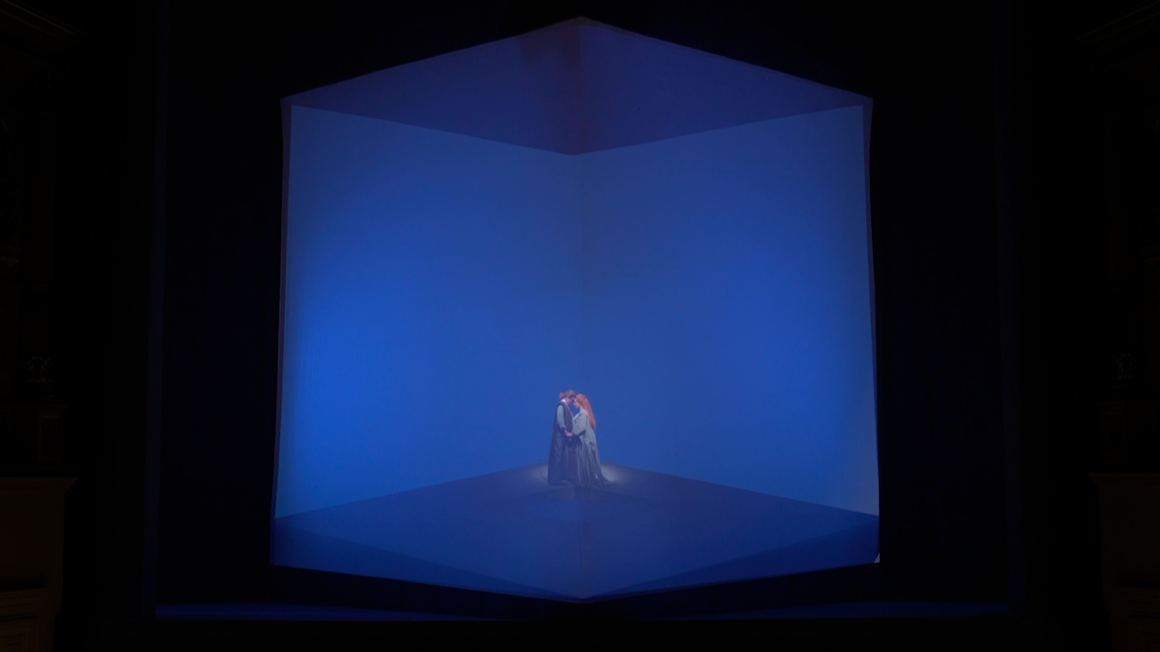
Act 2 is set in a sort of blue-green cube behind a scrim. It’s very static but very beautiful and musically very fine indeed. Vogt and Nylund both sing with beauty and power and there is real chemistry between them. The control of pace and dynamics by Christian Thielemann in the pit is exemplary. Scene 2, of course, is just one massive 40 minute duet and here it washes over the listener like the ocean. The transition to scene 3 is striking too. The other characters rush on stage and the scrim falls. For the first time it’s realistic and action packed. It’s also our first look at Georg Zeppenfeld as Marke. He’s excellent too, giving a real sense of both regret and betrayal.
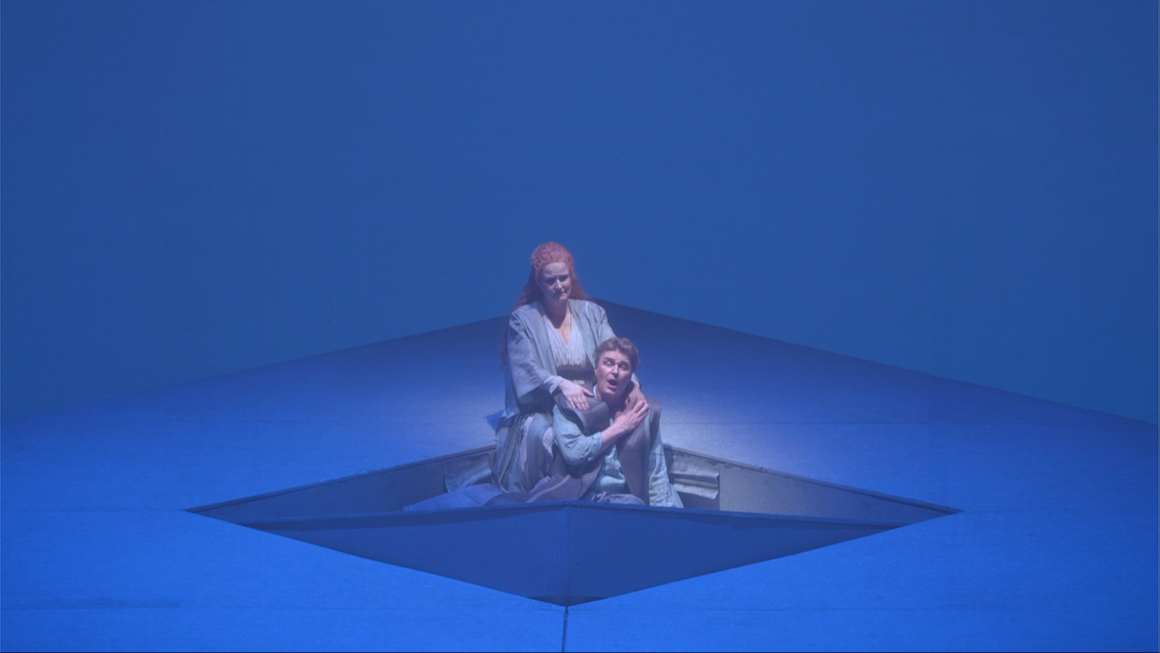
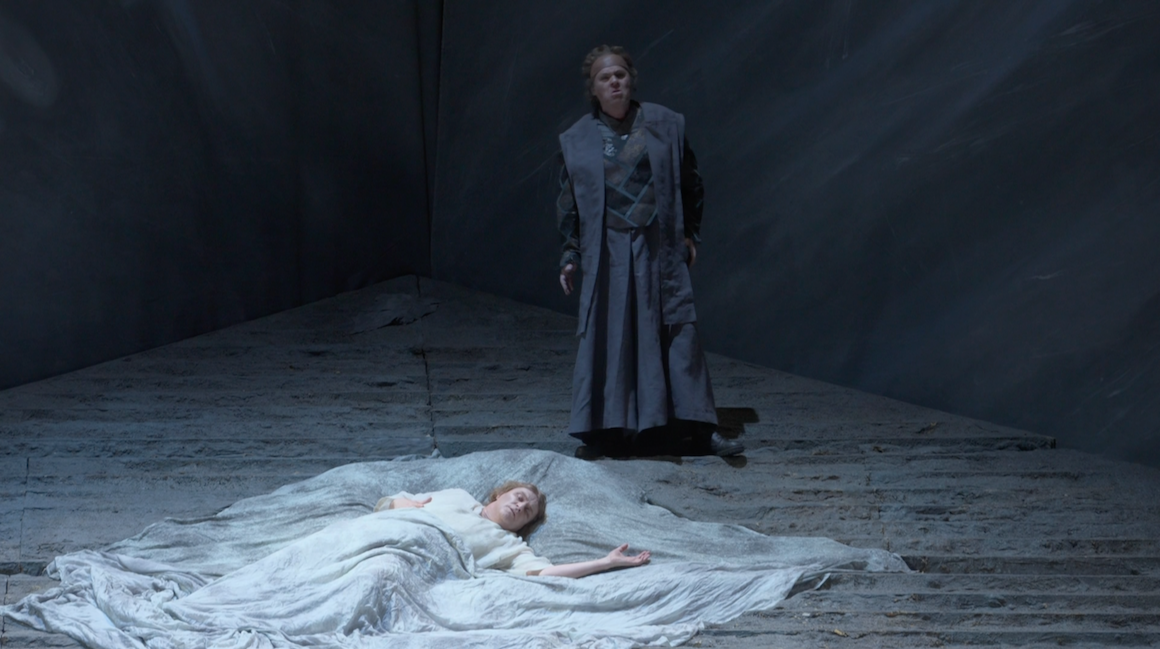
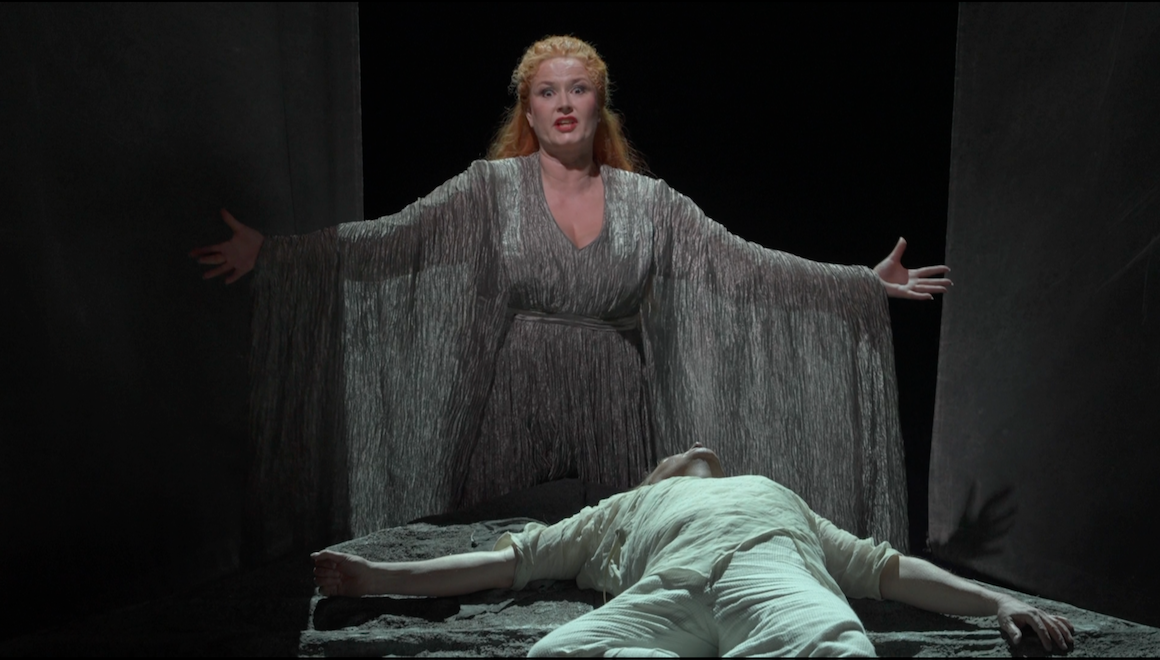
Act 3 is set on a sort of dilapidated, sandy set of steps with Tristan encased in pale bed coverings. Gantner sings really beautifully here and Attilio Glaser is a very fresh voiced Hirt. Vogt does an excellent job of getting across Tristan’s delirium while remaining perfectly musical. The arrival of the ships provides the second “action scene” and another chance to see both Sebastian Wartig’s solid Melot and Zeppenfeld’s excellent Marke. Which all leads to a very beautiful Liebestod. Nylund still sounds fresh and the staging is striking. Nylund is upstage towering over the the dead Tristan; arms spread like a crucified Christ, and the lighting reverts to its Act 2 dreaminess. It’s most effective.
Tiziano Mancini directs for video and this is an easy one to film. He avoids gimmicks and we get an excellent sense of what was seen in the house. Audio and video are normal high Blu-ray quality. The booklet has a synopsis which, weirdly, divides the action between the acts incorrectly, plus a track listing and a slightly pointless short essay. The subtitle options are English, French, German, Spanish, Italian, Korean and Japanese.
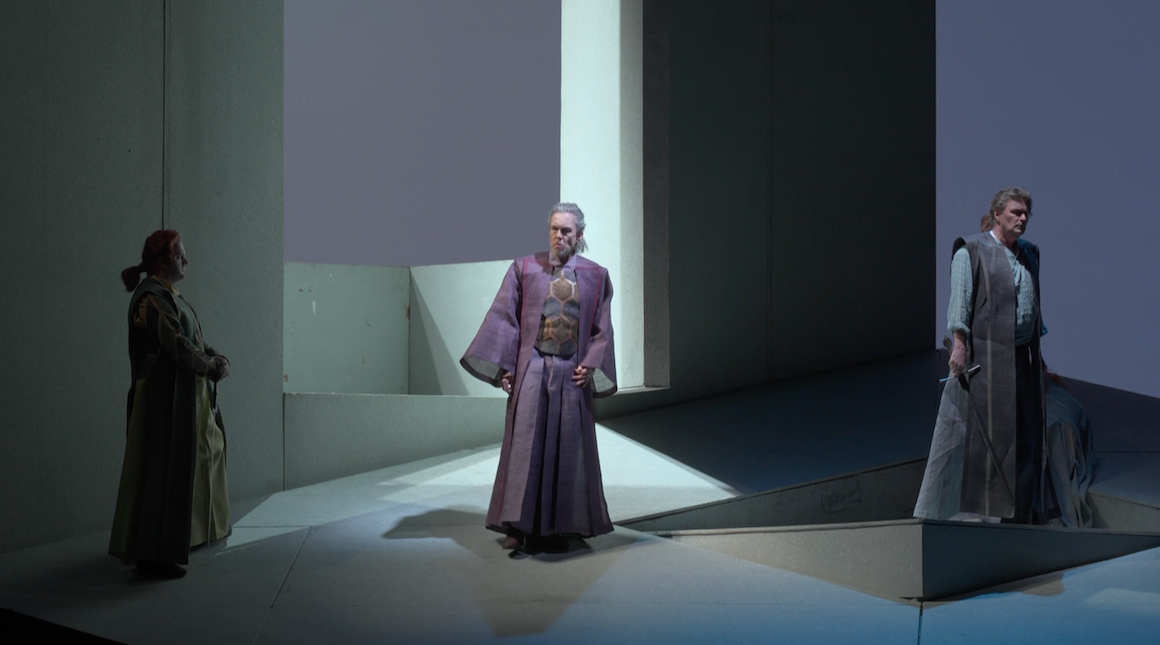
So there we have it. Simple, elegant staging. Terrific singing. Fine conducting. Technically perfectly OK. I’d say it’s just about perfect as introduction to the work or for anyone who wants a concept free production.
The main competition is the 2024 Bayreuth recording which also features very high musical values. It’s differentiators are a much more conceptual production and some really interesting technical innovations on the disk. In fact, in terms of AV quality it may be the best (non 4K) Blu-ray I’ve seen. In any event both recordings are excellent and definitely lead a pretty crowded field.
Catalogue information: C Major Blu-ray 770804

