
Clyde’s, currently playing at the Bluma Appel Theatre, is so much more than a play about ex-cons making sandwiches. There are layers of meaning here that I’m only beginning to unpack. But let’s take a step back and summarize. Lynn Nottage’s play is set in the kitchen of a truck stop owned by Clyde; a woman with a short fuse, a sharp tongue and a thoroughly jjaundiced view of the human condition. The kitchen is led by the enigmatic Montrellous who seeks to create the perfect sandwich and is making progress. His calm enthusiasm captivates the three other ex-cons who work the kitchen and who aspire to meet Monty’s standard of sandwich excellence while coping with their fractured lives and keeping out of reach of Clyde’s wrath.

Clyde, played with brilliant physicality by Sophia Walker, erupts into scenes with verbal and physical violence. She’s a lurking menace even when she’s not on stage. Why she is running a restaurant, albeit a modest one, is a mystery (one of many). She shows every sign of not just hating the product but having complete disdain for it. Any attempt to improve the menu attracts her colourfully expressed disgust. Even a positive review in a local paper is treated with complete indifference. Her verbal facility extends to her critiques of her employees for whose considerable problems she doesn’t give a rat’s fart. One feels she employs ex-cons because that gives her total power over them as well as licence to be abusive.
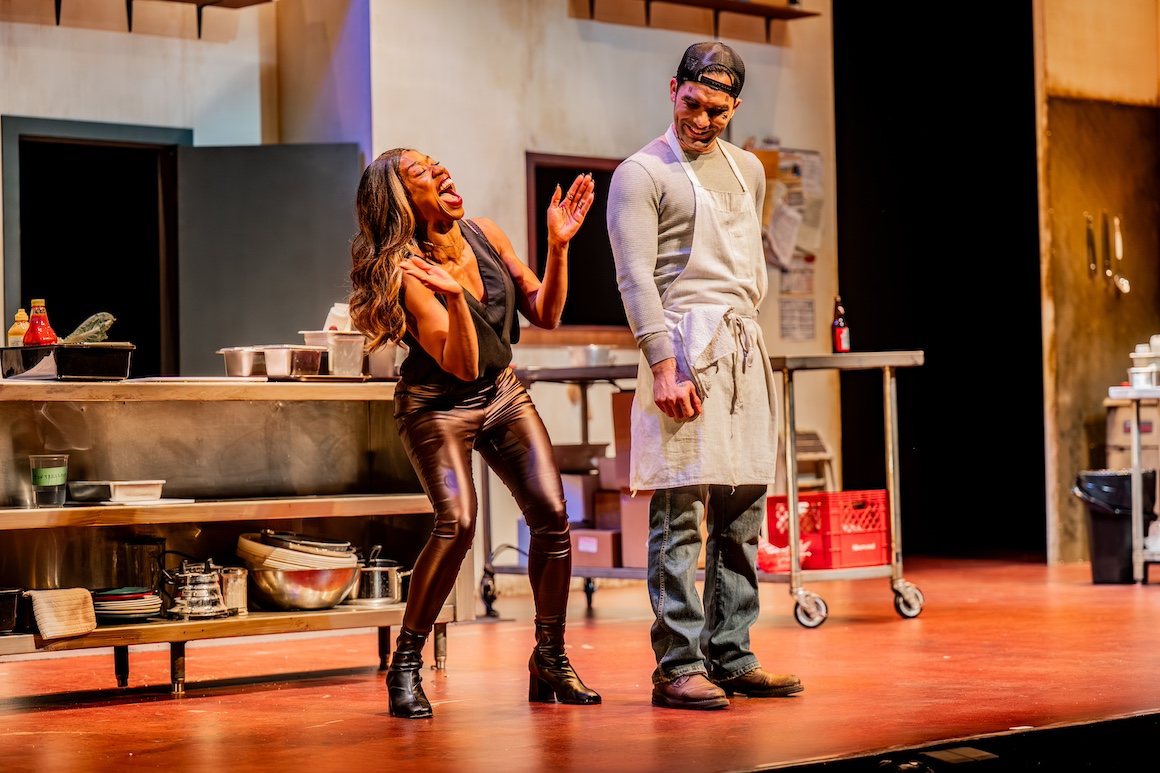
Set against her is the calm and philosophical Monty, played with quiet authority by Sterling Jarvis. If his back story is true, he went to prison more as a saint than a sinner. He takes on the troubles of his co-workers with selflessness and wisdom. They are basically just unfortunates; lives wrecked by a system that hands out long custodial sentences to first time offenders and brands them for life. Tish (Jasmine Case) is dealing with a disabled child, newcomer Jason (Johnathan Case) is homeless ad Rafael (Augusto Bitter) is dealing, sometimes less than successfully, with addiction. They are easy people to bully and demean and Clyde revels in it. These are three very good performances; each fully believable as basically ordinary people with one fatal flaw that dogs and, ultimately, dooms them.

On one level it’s a very funny, if somewhat cruel, situaton comedy but there’s another side to the story that doesn’t quite make sense, on the surface at least. There’s a tendency for things in the kitchen, order slips for example, to burst into flames for no apparent reason and Clyde shows up from time to time with exotic and expensive ingredients. sourced from who knows where and for what purpose? The sense that all is not as it seems builds slowly.
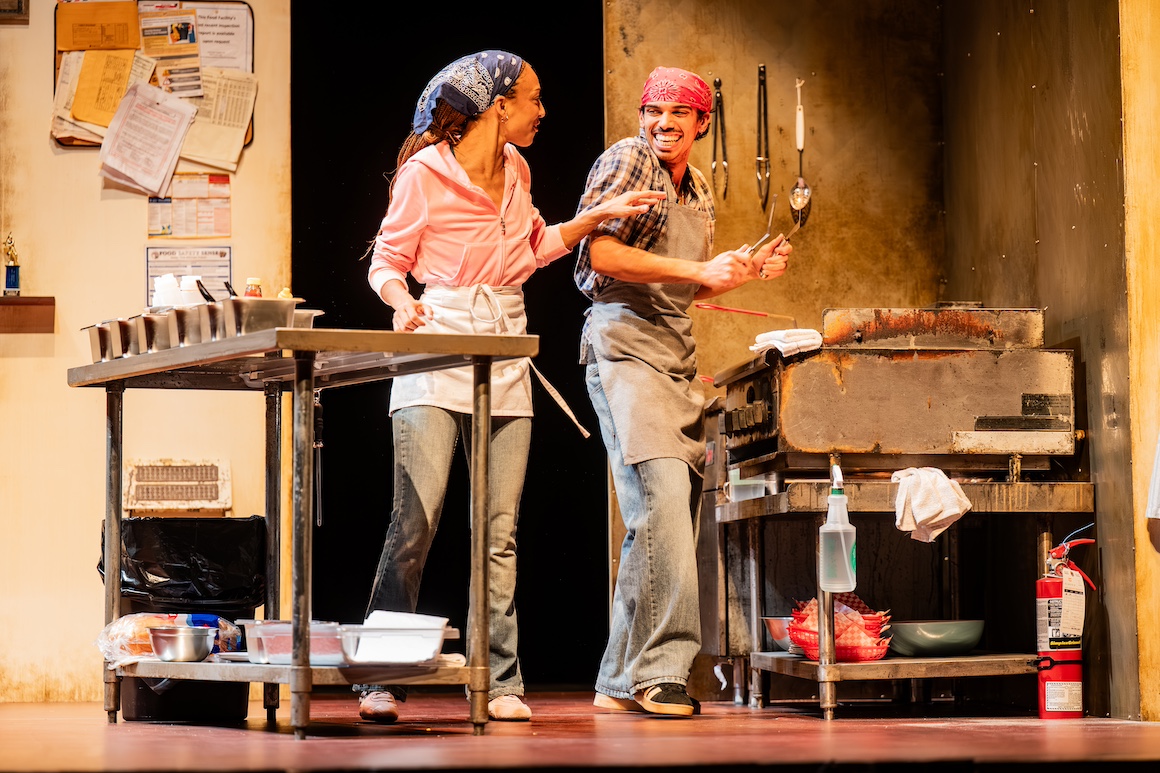
That’s where, I think, Philip Akin’s direction really counts. If we think in terms of “Clyde episodes” of extreme verbal violence paired with the calm, near realism, in between then each pair raises new questions about what we are actually seeing. The sense that Monty is too good to be true builds slowly as does the sense that Clyde’s behaviour is equally far fetched. Are we seeing real people in a real kitchen or, say, Uriel and Lilith in some cosmic playground? Perhaps the weirdly ambiguous finale provides an answer and maybe it doesn’t.
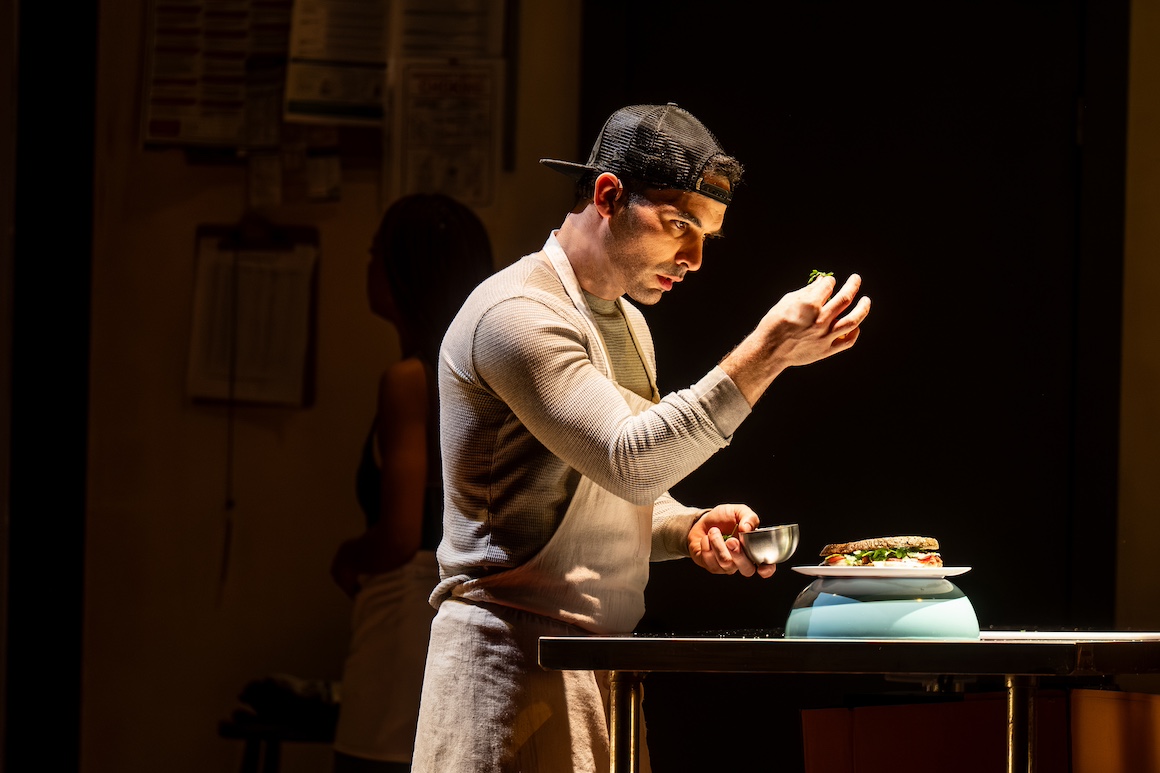
However one interpret’s Clyde’s, it’s the most interesting literary sandwich story since Arthur Dent learned to cook Perfectly Normal Beast. The play only lasts ninety minutes but we spent much longer than that trying to pick apart the layers of meaning. It’s a must see for anyone who loves theatre that makes one think.

Clyde’s is a Canadian Stage production and runs at the Bluma Appel Theatre until April 26th.
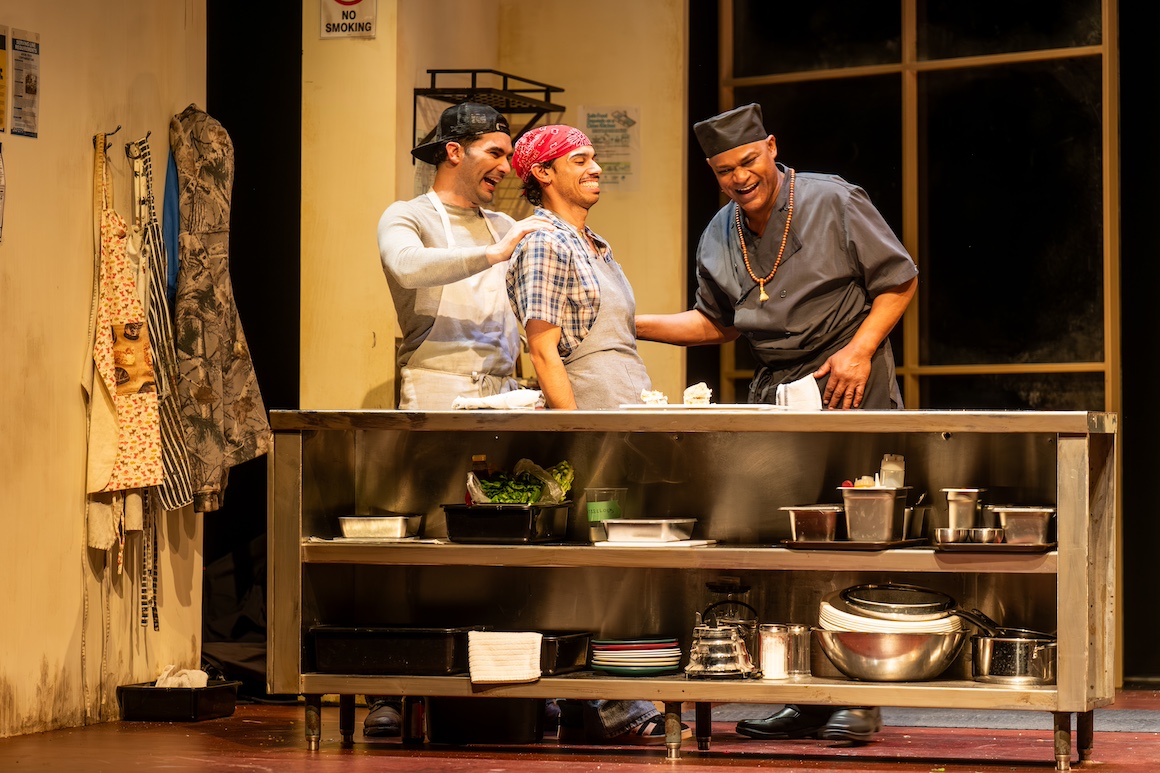
Photo credit: Dahlia Katz.
 operaramblings