A couple of days ago Joseph So interviewed Alexander Neef about various aspects of the current situation in a session organised by the IRCPA. Inevitably and appropriately it focussed heavily on the challenges facing performers; especially those at the beginning of their careers, but there were a couple or three things not related to that that really caught my attention.
The first was around the theme of “what does the opera world look like if and when we get back in the theatre?” One part of this question that really wasn’t addressed was “will it be the same audience?” Given the demographics of the current viral epidemic I really wonder whether the oldest section of the audience will come back; at least in the short/medium term. Which is probably linked to a question that was addressed which was “will the financial impact of the crisis make companies program more conservatively?” Alexander handled this pretty diplomatically (surprise!) by answering (more or less) “if we don’t make art, we cease to have a purpose” and saying there was a limit to how many times one could program standard rep, though to be honest I’ve never detected any such limit at the COC. My guess is that we see an intensification of the trend already apparent under the pressure of long term decline in ticket sales. That’s to say one or two marquee productions a season buttressed with unchallenging revivals of the Operabase top 20 but we shall see. That’s been a formula that has, by and large, appealed to the traditional audience but if (big if) future audiences skew younger it may merely make things worse.
Continue reading →


 Tafelmusik are starting a series of on-line concerts on May 27th. They are ticketed, Pay-What-You-Like with a starting price of $5. Details on the whole series can be found
  I Will Fly Like a Bird is a chamber opera for two voices and six instruments composed by John Plant to a libretto by J. A. Wainwright. It deals with the story of Robert Dziekanski, a young Pole who was fatally tasered by police at Vancouver Airport in 2007. It’s not dramatic or angry. It’s more of an elegy recounting the hopes and aspirations of Robert and his mother who waits for him in Kamloops. It’s often very beautiful and very, very sad,
 .
.
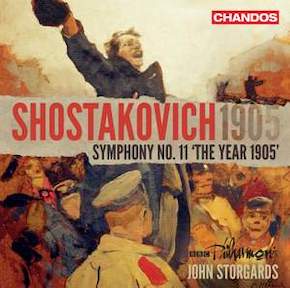 One of the “selling points” of John Storgårds’ new recording of Shostakovich’s 11th Symphony (The Year 1905) with the BBC Philharmonic is that it uses real church bells rather than orchestral tubular bells for possibly the first time since the original recording by the Leningrad Phil. They are interesting but that’s not the main reason to buy this disk. There are two far stronger ones. It’s extremely well played. Storgårds conjures up an almost unbearable amount of tension and it never really relaxes. This is a performance that will have you on the edge of your seat throughout. Needless to say, he’s very well backed up by the BBC’s Salford based orchestra who produce exceptionally lovely string tone and brass that is emphatic without quite the “teeth on edge” quality of some Russian orchestras.