‘Tis the season to speculate

Finley-Gerald-02With a month or so to go before the Canadian Opera Company officially announces its 2013/14 season it’s surely time for some uninformed speculation.

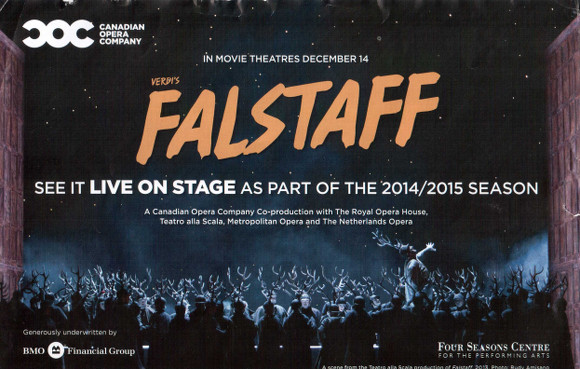
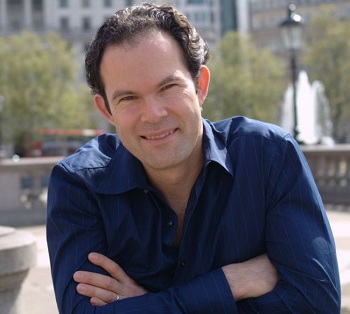
There are three big anniversaries in 2013; the bicentenaries of Verdi and Wagner and the centenary of Benjamin Britten.  One would think all would be represented but maybe not.  We know Verdi will be.  Gerald Finley announced at the Rubies that he would make his role debut in the title role in Falstaff at COC in 2013/14 so we can ink that one in.  Britten seems probable.  There’s a Houston/COC co-pro of Peter Grimes, directed by Neil Armfield that is due to to come to Toronto.  I think we can pencil that one in.  No idea on casting but I would love to see Stuart Skelton myself.  Wagner, I’m not so sure.  Maybe February’s run of Tristan und Isolde will be COC’s sole nod to Wagner.  Certainly the next most likely candidate; the Lyon/Met/COC Parsifal is, apparently, not expected before 2015.

Continue reading

Una opera in maschera

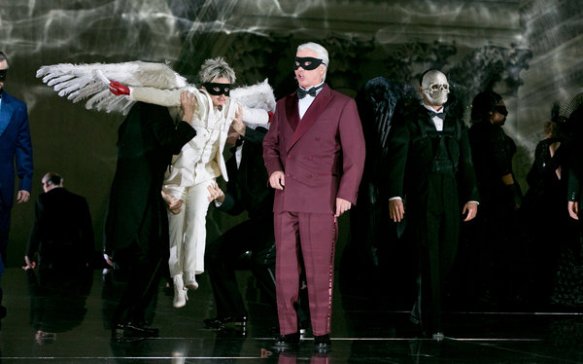
I despair.  I really do.  Yesterday’s MetHD broadcast of Verdi’s Un ballo in maschera had so much going for it.  The singing was brilliant and David Alden’s production seemed to have plenty of interesting ideas.  I say “seemed” because we only got the briefest of brief glimpses of it in between the succession of close ups served up by video director Matthew Diamond.  On the odd occasions we got to see more than a head or a body it was usually from a weird angle.  It’s particularly irritating because the two elements of the production that seemed to be most important were the ones most ruthlessly undermined.  Alden’s movement of chorus, supers and dancers and the contrast between what they do and what the principals do seems to be important but who knows?  Similarly his use of contrasting spaces, especially in Act 3, is obviously important but when the viewer gets only a couple of seconds to establish the context before the camera moves in and loses it the effect is fatally weakened.

ballo Continue reading

War in opera

As November 11th comes around for the 94th time since the guns were, very temporarily, silenced I thought it might be interesting to look at how war has been seen by librettists and composers over the years. Very early on we get a very gritty take on the subject in Monteverdi’s extremely compact Il combattimento di Tancredi e Clorinda but not so long after the path for the next three centuries is set with Purcell’s broadly comic King Arthur.  As far as I can see from Purcell to 1945, with very minor exceptions, the message is largely “war is fun”.  War is an excuse for a big parade (Aida; unless Tim Albery is directing!), an excuse for a drinking song (Faust), just plain comedic (La Fille du Regiment), a plot device (Cosí fan tutte) or a background event (Tosca, various versions of the Armida story).  The only opera, pre 1945, that I can think of that deals with the horror of war is Les Troyens, and that of course takes place in a distant, mythical, past.

Continue reading

Rigoletto in Zürich

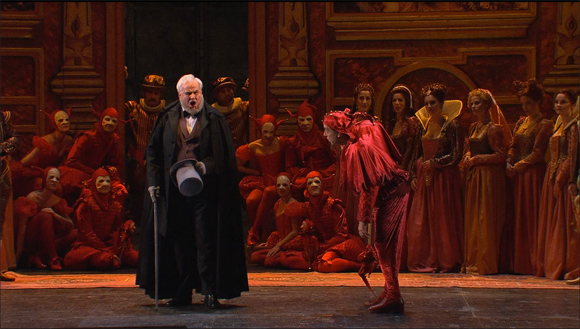
This is another of those Arthaus Blu-ray disks that’s sold at a silly cheap price as a carrier for two hours of trailers from the Arthaus catalogue.  That said, it’s very high quality indeed.  GIlbert Deflo’s production is, in the end, quite conventional though with careful and effective Personenregie.  He does trick us a bit at the start.  The scene opens with what is, apparently, a rather louche 16th century court entertainment/orgy.  There are bare breasted women and dancers of both sexes dressed as Satanic imps.  Everyone is in period costume including Rigoletto with jester hat, bells etc.  The scene is, perhaps, what we expect.  The “ladies” are very receptive to the duke’s advances.  The men are resentful but not actively so.  Then in comes Monterone in mid 19th century dress to denounce the proceedings and we, perhaps slowly, realise that this is a costume party.  From there on there’s nothing very tricksy.  The story gets told effectively and straightforwardly.  We have been pulled, effortlessly, from the time of the libretto to the time of first performance and the parallels are drawn.

Continue reading

Traditional Traviata

The 2007 recording of Verdi’s La Traviata from Milan’s Teattro alla Scala is extremely traditional but very satisfying.  Liliana Cavani’s production is set in the mid 19th century with entirely conventional sets and costumes (with the obligatory cleavage) and nothing in the direction that adds up to an original concept or idea.  Act 1 is set in a glitzy ballroom.  Act 2 scene 1 takes us to a slightly odd sort of country house bedsit with billiard table  In Act 2 scene 2 we are back with the glitz with actual gypsies and bare chested matadors. Act 3 is set in a suitably dark invalid’s bedroom.  Angela Gheorghiu’s Violetta goes from ballgown to nightdress to ballgown to nightdress while maintaining Ange levels of, you guessed it, cleavage.  The guys are all in evening dress or operetta dress uniforms.  It’s all pretty and doesn’t distract from the music.
Continue reading

Fifty shades of grey

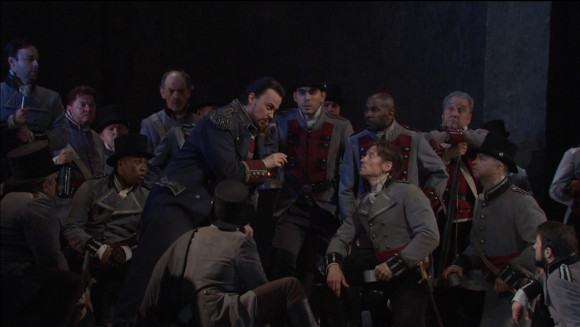
Verdi’s Il Trovatore notoriously has an episodic and highly improbable plot.  It’s also famously difficult to cast.  Creating a compelling production and staffing it with capable singers therefore presents a formidable double challenge.  The current Canadian Opera Company production gets it half right.  The problem is Charles Roubaud’s much travelled production.  There’s not an idea in it.  It’s not surprising that the director’s programme notes run to three short paragraphs.  Roubaud sets each scene in a sort of grey box of towering walls.  Unfortunately each grey box is just different enough that that the curtain comes down at the end of each scene and the stage crew spend what seems like an interminable amount of time setting up the next grey box.  We just aren’t used anymore to sitting quietly through interminable scene changes.  We expect slicker stagecraft and in a modern opera house there’s really no excuse for this 19th century approach.  Within in each grey box the grey clad cast come and go and in between mostly stand around.  Blocking is perfunctory, acting superfluous and old fashioned “park and bark” the order of the day.  It’s the sort of production that might have passed muster thirty years ago but really doesn’t cut it in 2012.
Continue reading

Claustrophobic and Intense Don Carlo

The first time I tried to watch Willy Decker’s 2004 production of Verdi’s Don Carlo at De Nederlandse Opera I failed to get past Rolando Villazón in doublet and hose. To anyone familiar with British TV comedy of a certain era the resemblance is just too close and I couldn’t get beyond the idea of Stephen Fry as Felipe II and Miranda Richardson as Elisabetta. This time around I watched the highly illuminating video introduction and read Wily Decker’s useful essay on his production concept before tackling the piece proper. I’m glad I did that and I’m glad I came back to this recording because it is very fine and it was very useful to have Decker and Chailly’s perspectives on the dramaturgy and the music.

Continue reading

Conspicuous Consumption

Richard Eyre’s production of La Traviata at the Royal Opera House, filmed in 2009, is a pretty good example of how to do a traditional production.  There’s nothing conceptual or thought provoking to it but the direction is careful and tells the story clearly and well.  The designs are mid 19th century with crinolines and tail coats but with the odd imaginative touch and a welcome refusal to succumb to the “more stuff” syndrome that plagues so many Verdi and Puccini productions.  Backed up by excellent music making it probably makes a near ideal introduction to the piece, even if it won’t entirely displace Willy Decker’s brilliant and disturbing Salzburg production in my affections.

Continue reading

Karajan’s Otello

So, another lip synched film from the 1970s. This time it’s Verdi’s Otello starring Jon Vickers and Mirella Freni.  What makes this one a bit different is that Herbert von Karajan not only conducts but directs as well.  It’s a curious piece with fantastic music making but no real production concept, continuity errors, some very dodgy acting and puzzling cinematography in places.  It’s never dull though.  Continue reading

I vespri Siciliani

Mid period Verdi in a highly traditional La Scala production isn’t usually my cup of tea but I thought that if the usually excellent Opus Arte label thought the thing was worth a reissue it might be worth watching.  With caveats, it was, even for someone who is as allergic to this kind of production as myself.
Continue reading