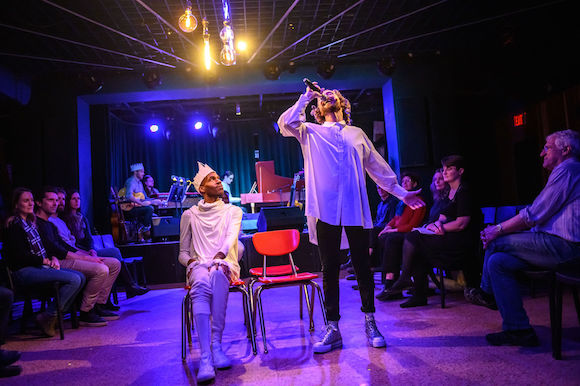
It’s the fifth year that Soundstreams has put on Electric Messiah which I guess means it’s pretty much becoming a holiday tradition. This iteration may just be the best yet. This version seemed quite stripped down compared to some years and all the better for it. It’s centred around rearranged (and shortened) excerpts from the Handel work supplemented with some personal touches for the cast. This time the “band” was Wesley Shen on harpsichord, Joel Visentin on keyboards and electric organ, Joel Schwartz on assorted acoustic and electric guitars and Adam Scime directing from the (laptop) keyboard which controlled lots of effective electronics. SlowPitchSound was there on turntables with Lybido dancing.

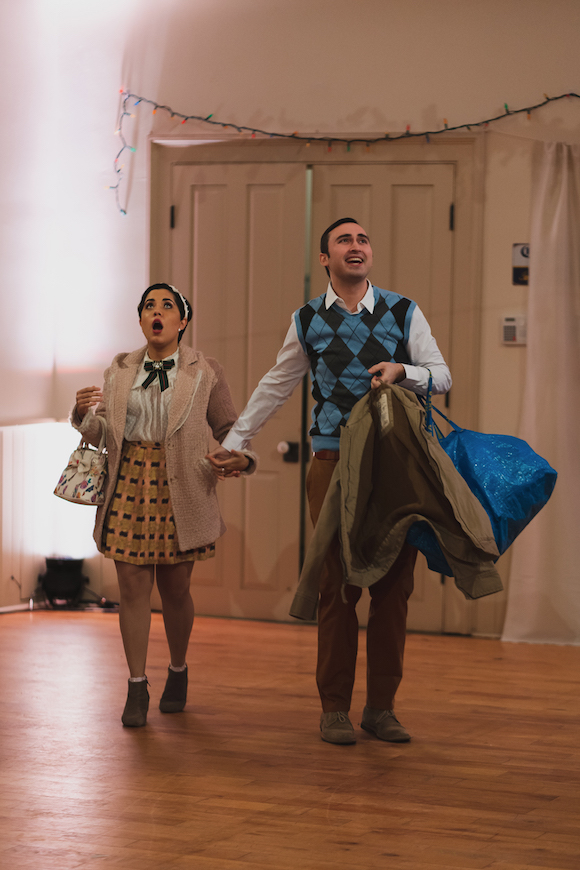

 I chatted this morning with Rachael Kerr; music director of Against the Grain’s upcoming Figaro’s Wedding. I saw the
 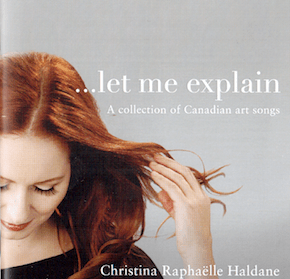 …let me explain is a new CD of Canadian art song (mostly) from soprano Christina Raphaëlle Haldane. The first set consists of three arrangements of Acadian folk songs by by Carl Philippe Gionet. The three are quite different. L’Escaouette is fast, high, rhythmic and very high energy. Tout Passe is much more elegiacal while Wing Tra La is very playful. They are sung quite beautifully with piano accompaniment from the arranger. Ahania’s Lament is a longish piece in which Blake’s text is set by Samy Mousa. It’s a tough sing with a lot of high exposed passages against a minimal accompaniment. It’s a piece that it’s easy to get drawn into. It’s a good vehicle for Haldane’s crystalline upper register. Piano accompaniment by M.Gionet again.
 The latest concert in the Confluence series featured Marion Newman and friends addressing the question “What is Indigenous classical music?” through a carefully curated programme of works; all of which featured words by Indigenous women. We began with Marion singing Barbara Kroall’s Zasakwaa (There is a Heavy Frost) with words in Odawa describing the earth going to sleep for the winter with flute accompaniment by Stephen Tam. It was followed by Rebecca Cuddy singing three of the Five Songs on Poems by Marilyn Dumont by Ian Cusson. These are really fine settings of interesting, pithy, angry texts that have a wicked humour to them. I particularly like Letter to Sir John A. Macdonald which I’ve written about before.