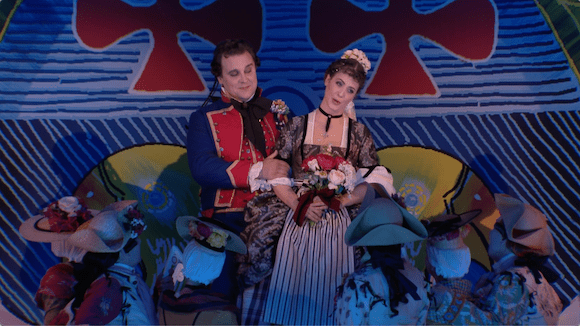
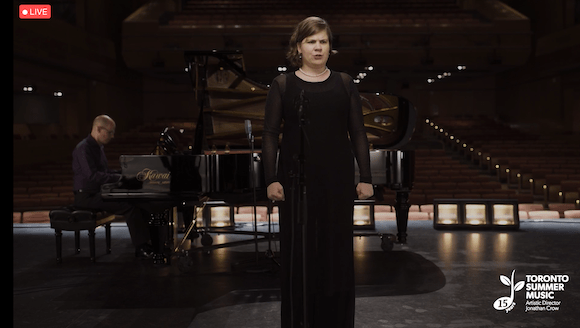
Yesterday was the one vocal element in this year’s virtual Toronto Summer Music; a recital streamed from the Burlington Arts Centre by mezzo Ema Nikolovska and pianist Steven Philcox. I think this was quite the best on-line event I have seen/heard since this schmozzle started. It started off with a master class in German Lieder singing. There were three Beethoven and three Schubert songs and they were just lovely. Ema’s voice is a lovely rich mezzo and she showed great expression and attention to the text backed up by perfect diction. Steven, as ever, was an exemplary accompanist.
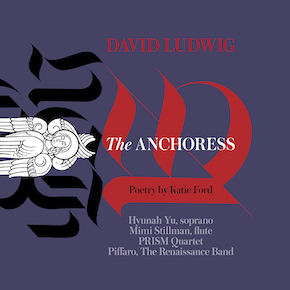 The Anchoress is a 2018 work for soprano and instrumental ensemble by David Ludwig setting texts by Katie Ford. There are eight “scenes” each exploring an aspect of life of the medieval anchoress; a woman who voluntarily secluded herself in a cell attached to a church. Such women were seen as almost saintly and thought to have great insight which was sought by all ranks of people. I
 It seems like as soon as the lockdown started there was a great rush to get content up online. Companies big and small were at it and so were individual artists and groups of friends. Some of the content was performance, some was interviews and some was just plain quirky. Since then we’ve seen specially staged concerts and attempts to monetize the streams among other things. It’s four months on and what have we learnt?


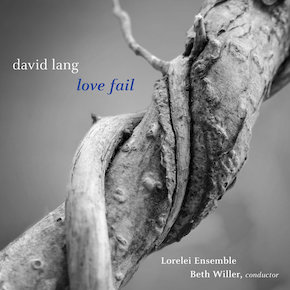 David Lang’s love fail is a choral work inspired by the story of Tristan and Isolde. It was originally written for Anonymous 4 but later revised for the slightly larger forces of the Lorelei Ensemble (3 sopranos, 3 mezzos, 2 altos) who have now recorded it. It’s basically an a cappella piece though there are places where the singers play percussion instruments. The texts are a mixture of elements that the composer has taken (and translated where necessary) from various classic versions of the tale; Gottfried von Strassburg, Marie de France, Sir Thomas Malory and even Richard Wagner among others, and interspersed them with poems on themes of love and loss by Lydia Davis. The “classical” texts are somewhat repetitive and reflect the classic values of the story. Davis’ poetry is wordier and less obviously poetic and deals with relationships in more more modern, more personal, less mythic terms. It’s an interesting contrast that the composer exploits to find two rather different colour palettes within the constraints of eight female voices singing essentially tonal music. It works. The risk of tedium is avoided and the work hangs together for its full length.