
 Terezín/Theresienstadt is a CD of music composed in the concentration camp at Terezín in what was then Czechoslovakia. Virtually the entire Czech intelligentsia; certainly those of Jewish or Communist persuasion, were imprisoned in a kind of “show camp” to demonstrate to the world that the Nazis weren’t as bad as made out. Nine of the ten composers featured on the disc ended up on a “Polentransport”; a one way ticket to Auschwitz. No story is more poignant than that of Ilse Weber, a nurse in the hospital. She chose to accompany the sick children of the camp on their final journey and reportedly sang to them in the gas chamber.
Terezín
1
 Christian Gerhaher’s recording of Mahler Lieder with the Orchestre Symphonique de Montréal under Kent Nagano is his first recording of the great Mahler cycles with orchestra. The disc contains Lieder eines fahrenden Gesellen, the Kindertotenlieder and the Rückert Lieder. This is singing of the highest class with great beauty, no lack of power and intense attention to the text. It’s hard to imagine a singer being more in this music than Gerhaher. Being Gerhaher, it’s quite individual and quite restrained (much less exuberant than Fischer-Dieskau) but without sounding unduly mannered. It sounds exactly right and yet no-one else would sing these songs quite the same way. The accompaniment from the Montreal orchestra is also very fine with great clarity of texture and lovely playing of the important woodwind solos.
 Although recorded in 2010 and 2013 and released in Europe in 2016 Barbara Hendricks’ recording of Mahler Lieder on her own Arte Verum label has only recently been released in North America. It’s quite an interesting choice of works. Lieder eines fahrenden Gesellen and the Abschied from Das Lied von der Erde are given in the Schoenberg chamber arrangements. The Rückert Lieder come in the piano version.
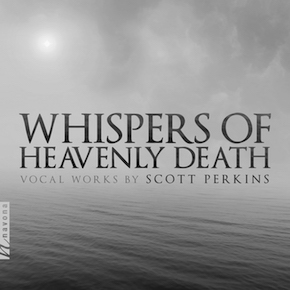 Whispers of Heavenly Death is a new CD of song settings by Scott Perkins. It’s a generously filled disk with nine works amounting to some 33 tracks. First up are five Walt Whitman poems from the eponymous collection. The settings are sparse but quite varied with legato vocal lines handled nicely by the dark toned mezzo Julia Mintzner. Accompaniment, as on the rest of the disk, is by Eric Trudel.
 I was fortunate, back in November 2016, to be at the Aga Khan Museum when Miriam Khalil gave an
  I haven’t heard a lot of music by Andrew Staniland but what I’ve heard I’ve liked so I was pleased to get my paws on a recent recording of songs by him; Go by Contraries. There are three pieces on the disk. The first, and longest piece; Earthquakes and Islands, is a setting of eight poems by Toronto poet Robin Richardson. It’s the work that reminds me most of Dark Star Requiem. Words and music are both quite quirky. My Voice, In My Mouth, for example. is a meditation in an oncologist’s waiting room about the consequences of getting close to a lion. The music is full of variation; tonally, rhythmically, harmonically and dynamically. It’s quite surprising the range of sounds Staniland can conjure up from a piano and two singers. It always appears to be rooted in the text though and even long voiceless passages come back logically to words.
  That headline is taken from the eighth movement of Jonathan Dove’s 2016 work for orchestra and children’s chorus; A Brief History of Creation, which takes us in thirteen movements from the stars to man via, inter alia, rain, sharks, whales and monkeys. The text, by Alasdair Middleton, is clever, engaging and singable. The music is eclectic. There are elements of atonality but also intense lyricism. It’s by turns shimmery, frantic, doom laden and meditative. It engages beautifully with the text and Dove has a very sure sense of what is and is not reasonable to ask of a children’s choir. Some short text sections are left as spoken (with a very authentic Mancunian accent). All in all, it’s a witty and enjoyable piece that doesn’t outstay it’s 45 minutes or so.
 I’m not sure how I’ve not come across the music of Howard Skempton before but it took a flyer for a disk with a setting of The Ancient Mariner to get my attention. I’m fascinated by what contemporary composers do with the broadly defined field of art song and Skempton’s piece is really interesting. He sets a mildly abridged version of the Coleridge but there’s enough to last past the half hour mark. The vocal writing is tonal, rhythmic and declamatory; hardly song at all in a way, but it supports the text rather well. It’s sung here by baritone Roderick Williams, for whom the piece was written. He has a clear, bright voice and the setting tends towards the upper end of the baritone range. He also has superb diction in the manner of the best of the “English school”. The result is complete comprehensibility for the text and full value for every word.
 I’d hesitate to call Eliza Carthy a “folk musician”. Like the rest of the Waterson/Carthy clan she’s much more than that and she’s always had the capacity to surprise; moving from a member of her mum and dad’s band to the principal behind albums like Red and Rice. Her latest effort; Rivers and Railways is something else again. At 17’33” I hesitate to call it an “album” but it’s released in digital and physical formats on the NMC label (another outfit which is a bit hard to pigeonhole). It’s a collaboration with the equally uncharacterizable Moulettes and the Freedom Choir and it’s, implausible as that may seem, about Hull (as in “From Hull and Halifax and Hell, good Lord deliver us”.)
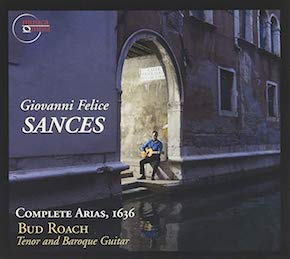 This review first appeared in the print edition of
