
 Summer Night is a CD of songs by Healey Willan produced by the Canadian Art Song project and due to be released on the Centrediscs label next month. Willan is best known as a composer of church and choral music but he also wrote over 100 songs and song arrangements, many of which have not been published, let alone recorded. There are 28 songs on the CD ranging in composition date from 1899 to the late 1920s. Most are original settings of the text though a few are arrangements of existing songs; either traditional or by Burns.
Summer Night
Reply
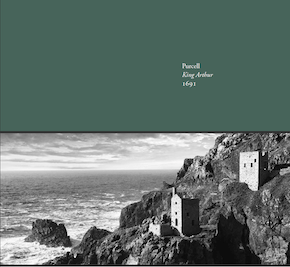 Purcell’s King Arthur is a problematic work. It was originally written as a sort of praise poem for Charles II showing the inevitable ascent to glory of the Stuarts from earliest days. Unfortunately Charles died and his brother lost his job before the piece could be given. The staunchly Protestant court of William and Mary wasn’t much in favour of a celebration of crypto-Catholic Charles by openly Catholic Dryden and it wasn’t until Dryden and Purcell needed a new commercial project that it reemerged with various cuts, insertions and reworkings to get it past the censorship. No reliable record exists of what was actually performed in that first commercial run so for their new CD release Paul McCreesh and the Gabrieli Consort have used a mixture of considerable erudition plus impressive musical nous to reconstruct something that is plausibly like what audiences in the 1690s might have heard.
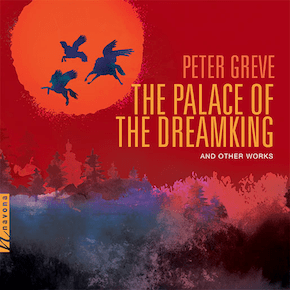 Peter Greve is a Dutch composer of works for various forces all of which could, I suppose, be considered tone poems as they all have thematic/storyline elements. The “stories” for the pieces on the CD can be found
 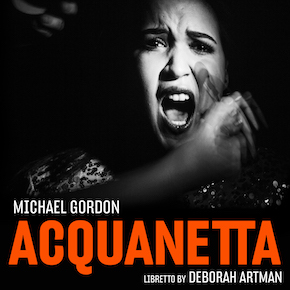 Acquanetta; music by Michael Gordon, libretto by Deborah Artman, is a one act chamber opera in ten scenes lasting around 70 minutes. It’s a sort of homage to the B movie horror genre and specifically riffs off the 1943 film Captive Wild Woman in which a mad scientist turns an ape into a sultry temptress. The opera got its North American premier in Brooklyn in January 2018 and was reviewed by Patrick Dillon in Opera Canada Volume LVIII No. 4. Subsequently a CD version was recorded in the studio.
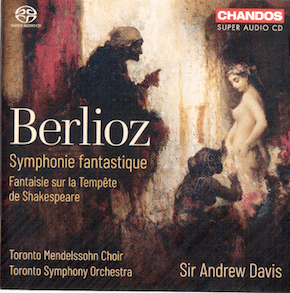 The Toronto Symphony have a new CD out. It’s a couple of Berlioz works recorded under the baton of Sir Andrew Davis at Roy Thomson Hall in September 2018. The first piece is the rarely heard Fantaisie sur la Tempête de Shakespeare for which the orchestra is joined by the Toronto Mendelssohn Choir. It’s an early piece inspired by one of Berlioz’ unrequited passions (like everything else by Berlioz!) and was considered daringly modern in its day. It’s said to be the first piece to introduce a harp to the symphony orchestra and it also includes piano four hands. It’s very colourful and rather brash which is territory that Sir Andrew excels in. There’s great clarity to both the singing and the playing.
 John Adams’ 2005 opera Doctor Atomic, about the development of the first atomic weapon, comes over very effectively on CD. I think this is because, in essence, it’s more oratorio than opera. There’s very little action in the stage version. So little in fact that Peter Sellars staged the original production rather the way he stages oratorios
  Suzanne Farrin’s Dolce la morte sets poems by Michelangelo inspired by his relationship with Tommaso de’ Cavalieri dealing with the joy and complexity of desire and spiritual fulfillment. They are really intense poems and Farrin has scored them for counter tenor and seven piece chamber ensemble. The music is complex and intriguing. The vocal line consists mainly of long, high legato lines that play around with pitch in a variety of ways. The instrumental accompaniment is often also quite high and somewhat drone like with percussive insertions and places where the strings sound uncannily like another voice. It’s haunting and quite disturbing and definitely the sort of music one doesn’t fully “get” on first hearing but which makes one want to come back to it.
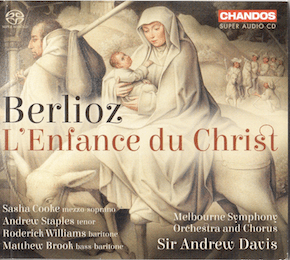 I got hold of the recent Chandos recording of Berlioz’ L’Enfance du Christ largely because I wanted to take a look at the Super Audio CD format. On that subject my thoughts are
  Heimweh is a CD of Schubert songs from young German soprano Anna Richter and pianist Gerold Huber with a bit of help from clarinettist Matthias Schorn. It’s an interesting combination of the familiar and the less familiar with a bit of a leaning to the more lyrical, less dramatic end of the Schubert canon. Familiar material includes Der Hirt auf dem Felsen and the three parts of Ellens Gesang but there’s material that I’m much less familiar with too like Der Zwerg and Viola. I guess thirteen minute long songs about snowdrops just don’t get programmed that often. There’s also the slightly odd Abschied; where the piano accompanies spoken text.
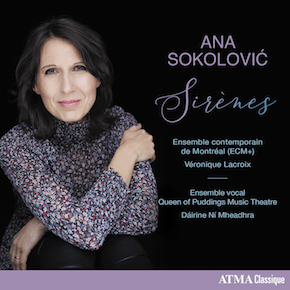 Sirènes is an album of pieces by Montreal composer Ana Sokolović. The first pice, which gives the album its title, is written for six unaccompanied female voices. It’s performed here by the vocal ensemble of Queen of Puddings Music Theatre conducted by Dáirine Ní Mheadhra. The six ladies in question are Danika Lorèn, Shannon Mercer, Magali Simard-Galdès, Caitlin Wood, Andrea Ludwig, and Krisztina Szabó. It’s an interesting piece and very Sokolović. The text is bent and twisted into sound fragments which are “sung” using an array of extended vocal techniques. The overall effect is of a shimmering, fluttery and quite absorbing sound world.
