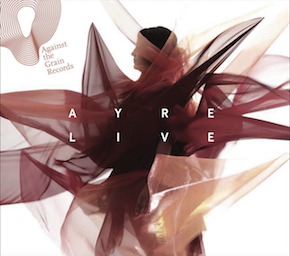
 I was fortunate, back in November 2016, to be at the Aga Khan Museum when Miriam Khalil gave an extraordinary performance of Osvaldo Golijov’s Ayre. Good news! It was recorded and is now available as the inaugural release on the new Against the Grain label. It loses little in its translation to disk. I think the power, beyond the work itself, comes from Miriam’s intensity and grasp of the various idioms involved. As the man himself says “No one owns this piece in the way that Miriam Khalil does. It is as if she was born to sing it”. Certainly it sounds quite different from the original recording with Dawn Upshaw. The recording itself is clean and clear and does the performance justice. Osvaldo’s introductory speech is included as a bonus.
Ayre is available digitally on iTunes (C$9.99) and Google Play, and physical CDs will be sold in retail shops in Toronto, online via the AtG website, and at all upcoming 18/19 season performances by Against the Grain Theatre.
There is also a digital booklet (including texts and translations and useful historical/background material) available on the AtG website.


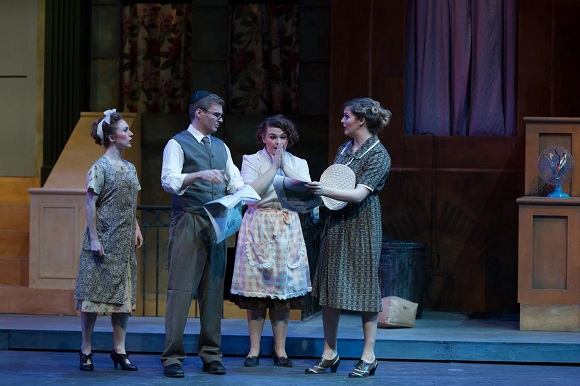
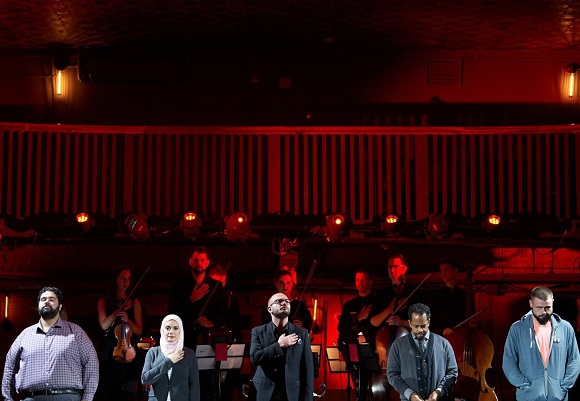
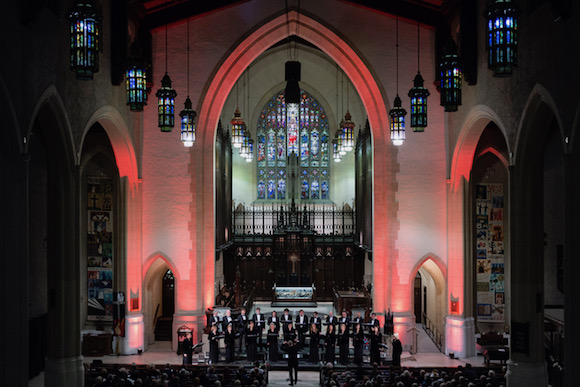
 So one thing can be guaranteed in December; lots of Messiah. This year I have four on the radar. There’s the TSO of course. This year Johannes Debus conducts with soloists Claire de Sévigné, Allyson McHardy, Andrew Haji and Tyler Duncan. One might almost have expected the COC Chorus but actually it’s the Toronto Mendelssohn Choir in the loft. That one runs December 18th, 19th, 21st and 22nd at 8pm and the 23rd at 3pm. Roy Thomson Hall of course. Over at Tafelmusik, it’s Ivars Taurins with Sherezade Panthaki, Krisztina Szabó, Charles Daniels and Drew Santini plus, of course, the Tafelmusik Chamber Choir. That’s on December 18th, 19th, 20th and 21st at Koerner Hall at 7.30pm. The Sing-a-Long version is at Roy Thomson Hall at 2pm on the 22nd. There’s also a workshop on the 8th at 2pm at Eglinton St. George’s United Church.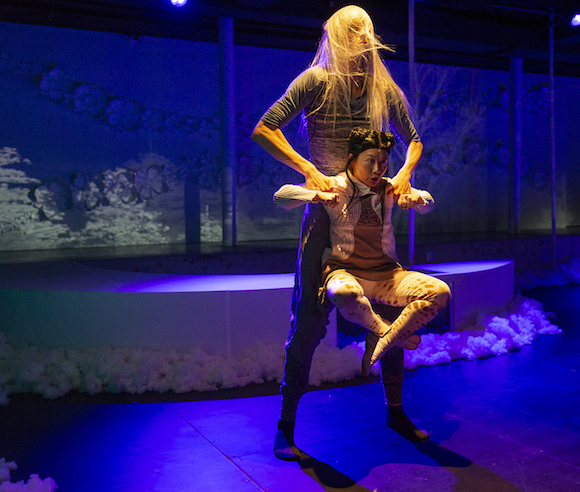
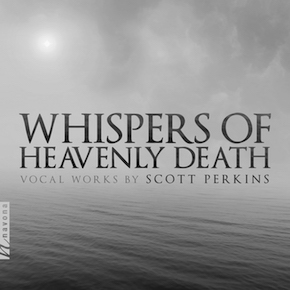 Whispers of Heavenly Death is a new CD of song settings by Scott Perkins. It’s a generously filled disk with nine works amounting to some 33 tracks. First up are five Walt Whitman poems from the eponymous collection. The settings are sparse but quite varied with legato vocal lines handled nicely by the dark toned mezzo Julia Mintzner. Accompaniment, as on the rest of the disk, is by Eric Trudel.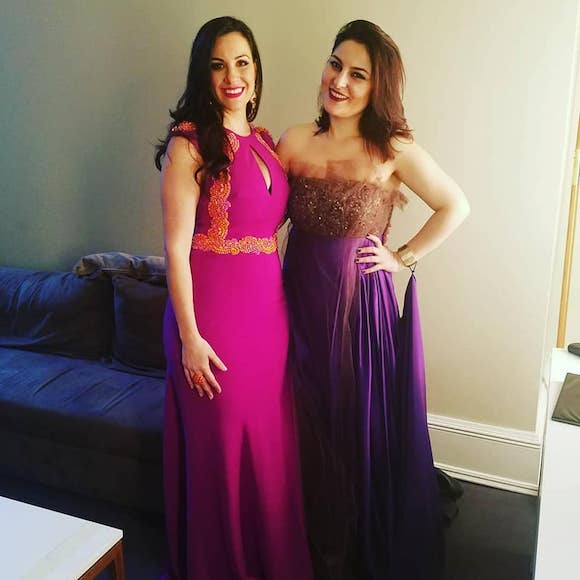
 The 6th in the annual series of fundraisers for St. Mike’s ICU in memory of Elizabeth Krehm took place at Christ Church, Deer Park last night. Once again Evan Mitchell had assembled a fine orchestra of volunteers and Elizabeth’s sister, Rachel, sang. The orchestra book ended the program with the overture from Hänsel und Gretel and Brahm’s 4th Symphony; the latter a very red blooded account indeed with the brass and woodwinds getting a workout. The main interest though was the premier of Come Closer: Songs on Texts by Elizabeth Krehm. The texts are drawn from selections of Elizabeth’s writing, from Grade 2 to near the end of her short life, selected by Rachel. The music is by Ryan Trew. They are really quite evocative texts, showing a surprising emotional depth. The settings are apt; steering a middle ground between artsy and schmaltzy, and Rachel sang with real feeling. It was a loving and lovely act of remembrance.
 operaramblings