
There’s a French version of Verdi’s Macbeth dating from 1865 and based on the 1847 Italian version. It was performed at the Verdi festival in Parma in 2024 and recorded for video. It’s not enormously different from the original though, unsurprisingly, there’s more ballet (at the beginning of Act 3). The ending is just as weirdly abrupt at least (*). In 1847 this was a transitional work with Verdi moving away from bel canto but here’s there’s still lots of rather jolly music accompanying either sinister or bloody scenes. By 1865 that must have sounded a bit odd.
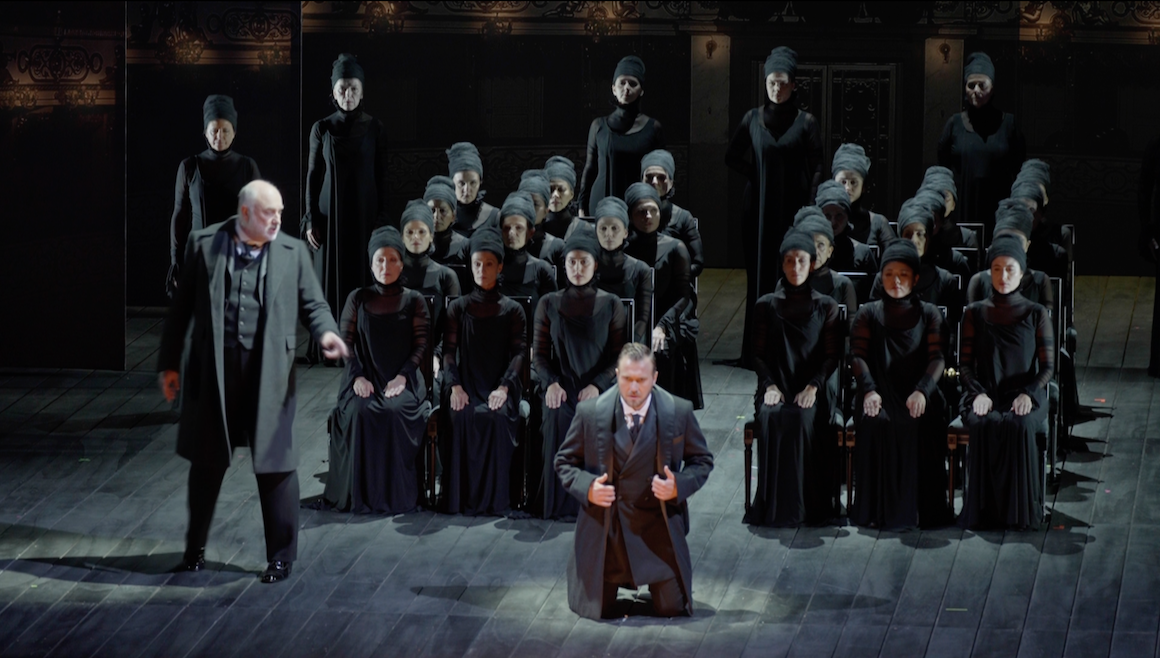
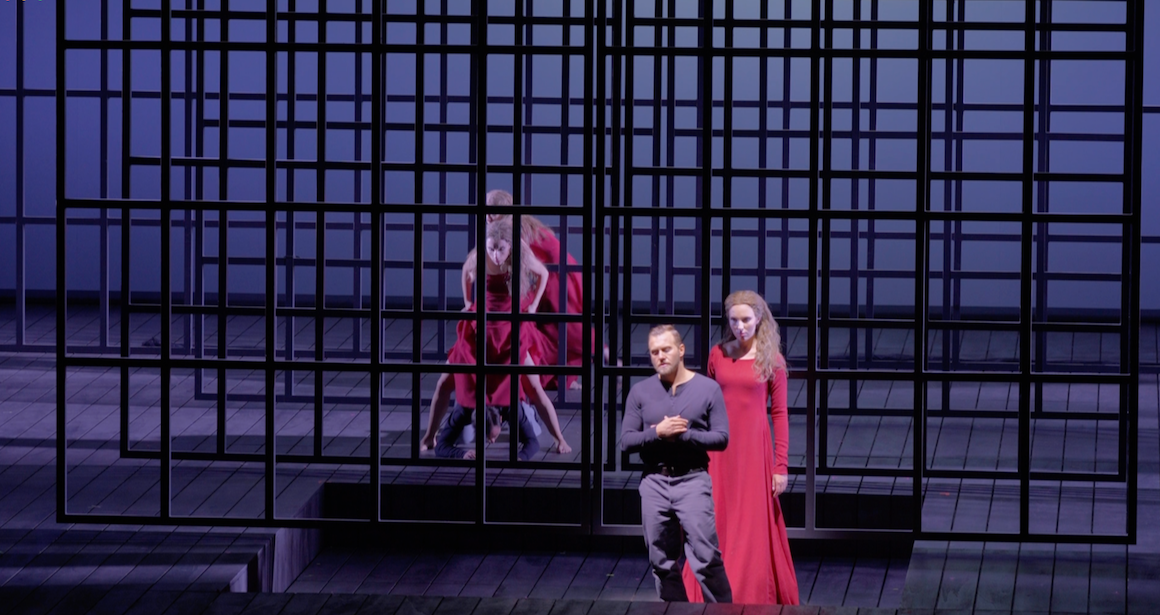
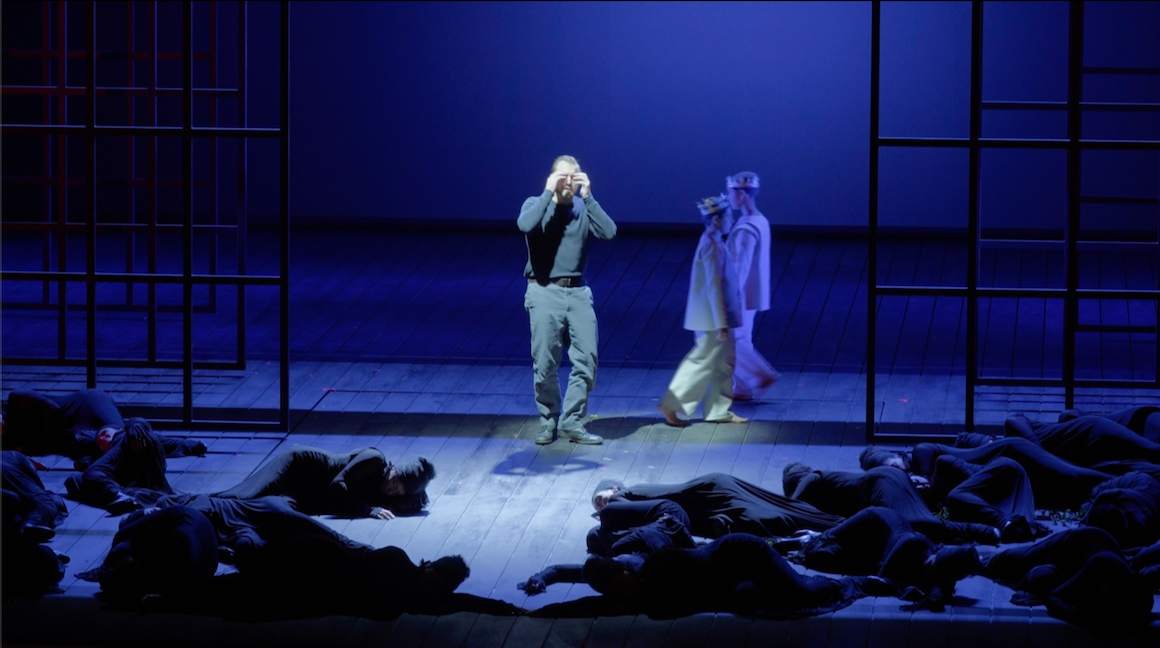
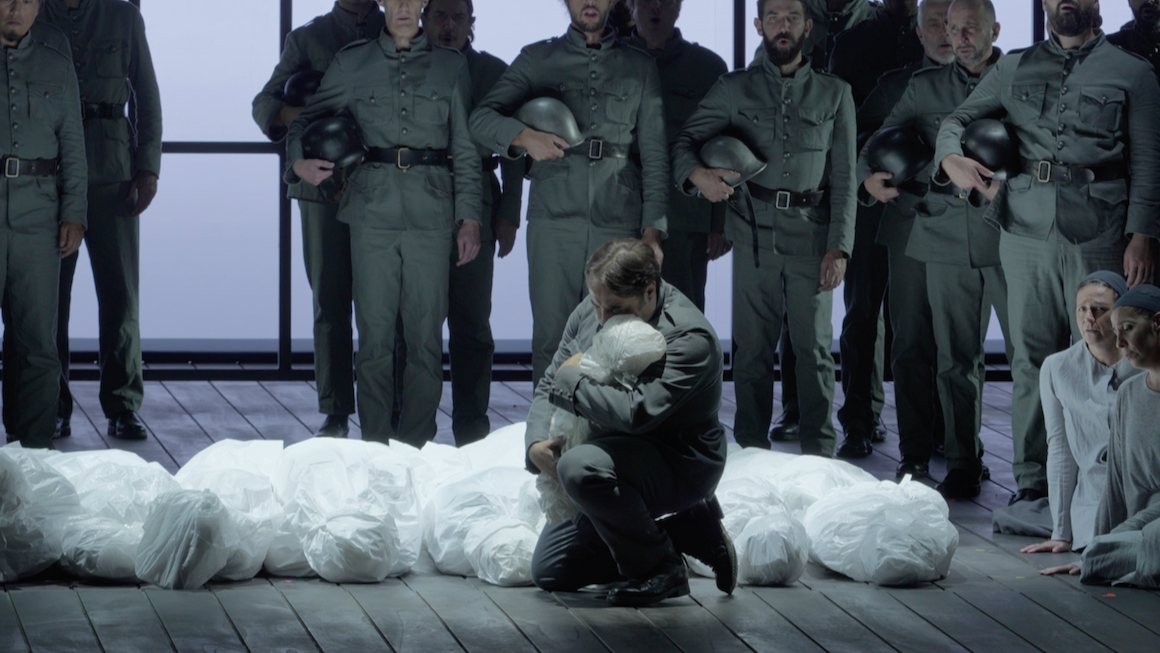
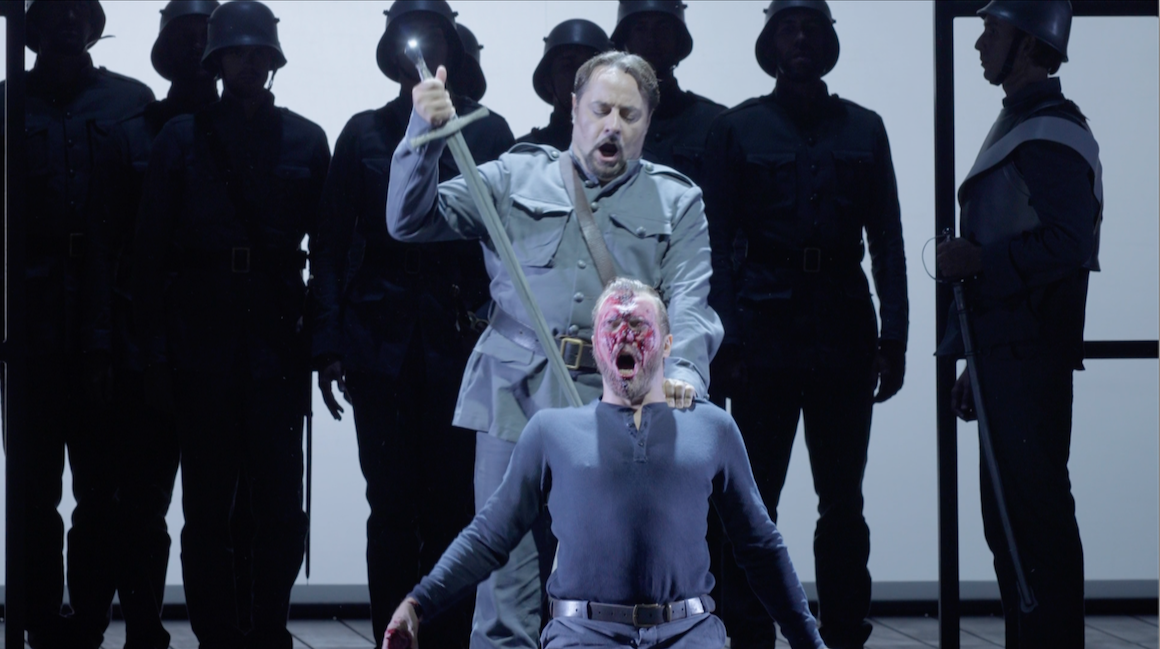
It does feel different in French though. That’s particularly the case here as director Pierre Audi has translated the action to what looks the Third Republic in the run up to WW1; performative politics over a deeply rotten core. Costuming (Robby Duiveman) starts with tail coats, dress uniforms and formal dresses but Macbeth dresses down as he gets more unstable. By Act 4 the uniforms look 1916ish and vaguely Teutonic. The ladies of the chorus are dressed in black with black turbans. It’s quite austere except for the dress uniforms and some of Lady Macbeth’s outfits. The staging is quite abstract. There’s a sort of lattice thing at the back of the stage and a lift at centre stage. Early on there’s a lot of use of rows of chairs and quite phalanx like movement of the chorus which feels almost like a Robert Carsen production.
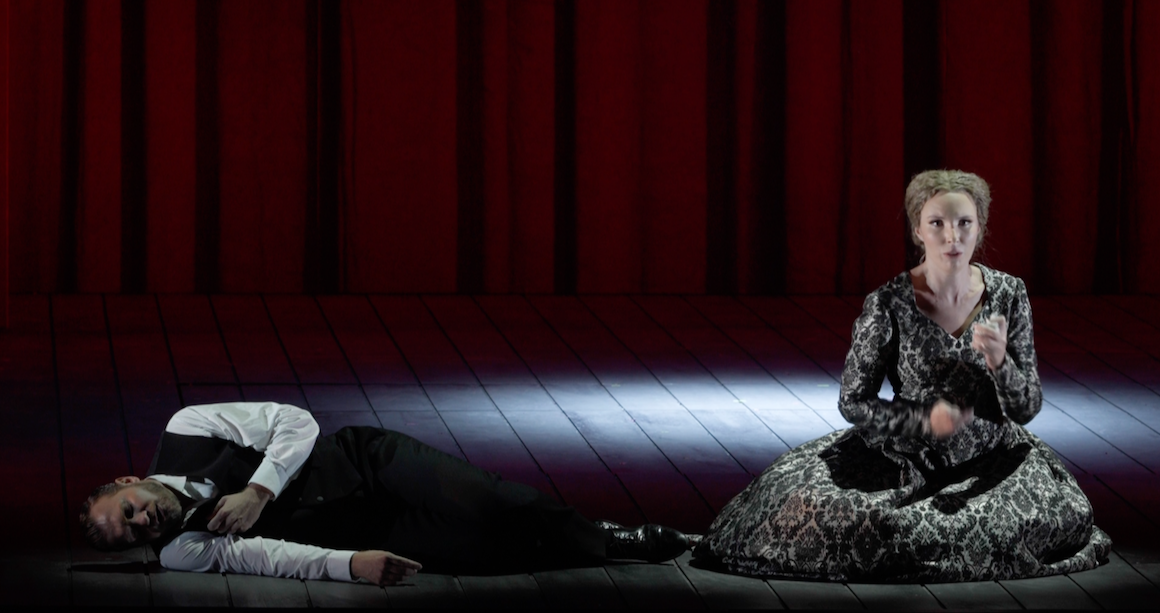
The “apparition scene” is definitely improved by the incorporation of three short ballets. Here, Pim Veuling’s energetic choreography is danced very well indeed by a quartet that appears to represent Macbeth and three Lady Macbeths . Otherwise that scene, and pretty much everything else is played quite straight with much of the visual drama coming from Jean Kalman and Marco Filibeck’s lighting plot. There is some imaginative use of the lift though. Duncan and his guards descend on it, never to be seen again. Lady Macbeth uses it during the sleepwalking scene and, at the end, it lifts the victims of the slaughter of the Macduffs to stage level. Overall, it’s a very clean production with plenty of visual interest but few gimmicks.
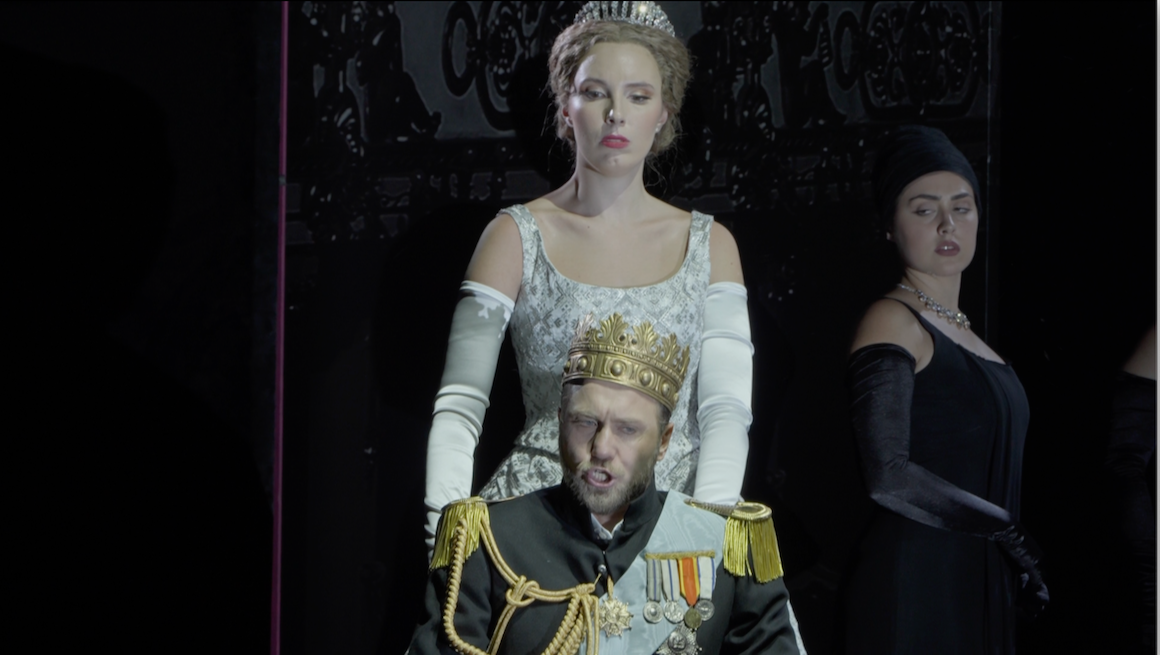
Musically it’s very good. The Macbeths; Ernesto Petti and Lidia Fridman, are quite imposing and are both very strong singers. Fridman combines power with rather good coloratura and she’s super tall. Petti really knocks the big solo numbers out of the park and they work well together. Michele Pertusi is an imposing Banquo and Luciano Ganci does some properly ardent tenoring as Macduff. The minor roles are all competent. The. chorus (Coro del Teatro Regio di Parma) sounds musical but I’m not at all sure about their French intonation. maybe a native speaker could have a listen! It sounds a bit off to me. The Filarmonica Arturo Toscanini in the pit sounds fine and conductor Roberto Abbado is fairly unobtrusive but keeps things properly co-ordinated.
Tiziano Mancini’s video direction is pleasantly straightforward backed up by typical Blu-ray quality video and audio (PCM stereo and DTS-HD-MA). The booklet has quite interesting notes from both conductor and director. as well as a synopsis and track listing. Subtitle options are Italian, French, English, German and Japanese.
This is the only video recording of the French version of Macbeth so there’s no competition. It’s definitely worth a look even if there are plenty of more starrily cast Italian versions to consider.
fn(*) From the announcement of Lady Macbeth’s death to the end of the opera is a scant seven minutes. It’s almost as if Macduff comes on stage and announces “Oy Macbeth, you’r nicked! Come along quietly my lad.”.. curtain.
Catalogue information: Dynamic Blu-ray DYN58063

