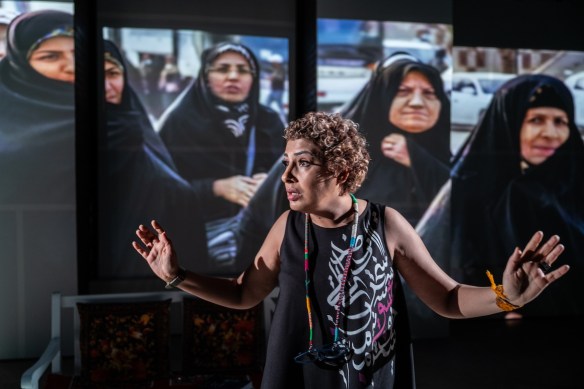
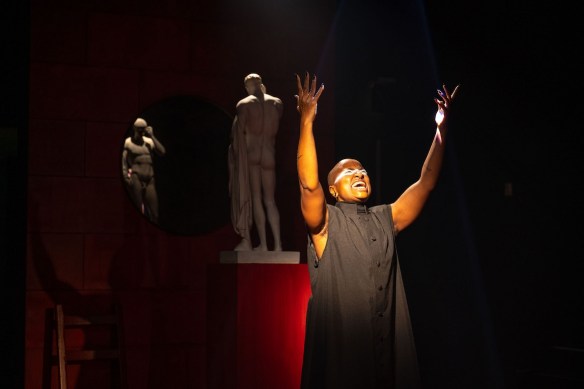
 The Valentine’s Day recital in the RBA was given by Simone McIntosh and Rachael Kerr. They served up fare appropriate to the occasion unlike in 2013 when Franz-Josef Selig gave us a Valentine recital mostly about Death! It was an interesting mix of material starting with two of the Britten folk song arrangements; “The trees they grow so high” and “The miler of Dee”. Quite a bold choice in some ways as the first one is almost, but not quite, a capella so there’s nowhere to hide. It was good. Not only was Simone’s voice accurate and expressive but she gave herself some metrical freedom. There is nothing worse than a singer singing this material as if they have a broomstick up their ass.
Love and Song
Reply
 Kamp! – Songs and Satire from Theresienstadt is a 2016 album recorded by Amelia DeMayo, Curt Buckler & Sergei Dreznin (piano) under the auspices of the World Jewish Congress. It’s a collection of 25 more or less satirical songs written in the Theresienstadt camp/ghetto by the likes of Leo Straus and Ilse Weber. They are presented here in English translation and in a breezy cabaret style which is very apt and which I liked very much.
 What Brings You In is an album of music for violin and electronics that consists mostly of work that was composed for performance as part of an art installation or a site specific performance or as therapy rather than a conventional concert hall experience. It features violinist Leslie Ting and various collaborators on percussion and live electronics. It’s one of the most “experimental” records I’ve listened to. There are five tracks and I’m going to describe each piece as best I can. Conventional music vocabulary; melody, harmony, rhythm etc isn’t much help!
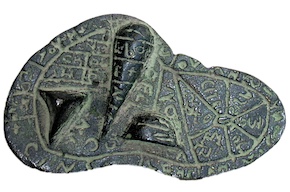 So the COC is set to release details of the 2024/25 season some time in late February so in the interests of tradition I’ll have a go at guessing what we will hear. I have to admit that i have very little confidence in my predictions as the combination of COVID and new management has disrupted old patterns and new ones are not yet very apparent. Even the sacrificial goat liver (see left) isn’t helping much. There have been two complete seasons since COVID. One featured five revivals and the other five “new to Toronto” productions sourced from other houses. COC commissions, new productions or co-pros were noticeably absent. It’s probably also fair to say that there was a distinctly conservative vibe to the productions. I’m not saying horned helmets and crinolines but it’s noticeable that the revivals haven’t included any of the COC’s edgier efforts.