Women of the Fur Trade

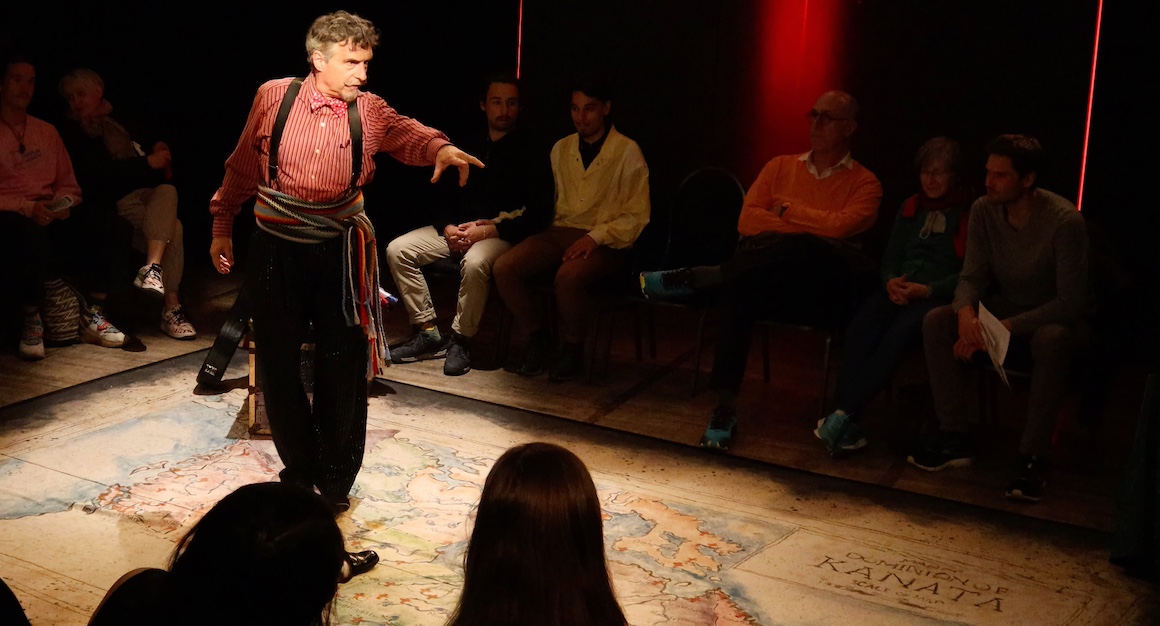
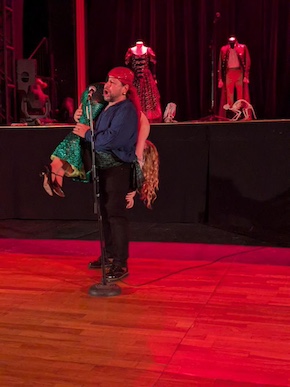
Francis Končan’s Women of the Fur Trade opens tonight (Thursday) at the Aki Studio in a production by Native Earth Performing Arts.  I saw a preview last night.  It’s not an easy play to describe.  It’s a comedy.  But with several twists.  It has a historic setting.  But it plays fast and loose with time.  It’s funny, disturbing and relates events from a female point of view that rarely get seen that way.

IMG_9169

Continue reading

TSO and VOICEBOX 2024/25

annaprohaskaThe Toronto Symphony’s 2024/25 season is the usual mix of mainstream symphony/concerto rep, Pops, film music, kids’ concerts etc.  My sense is that it has got more “popular” since the pandemic and that therefore there’s been less that’s caught my eye.  That’s my story anyway!

There are some concerts of interest to me though in the 2024/24 season though; curiously mostly in November.  The four that caught my eye were the following: Continue reading

Le siège de Corinthe

Le siège de Corinthe is a 1826 reworking, for Opéra de Paris, of Rossini’s earlier Maometto II so besides, of course, being in French it is restructured as a three act tragédie lyrique with a substantial ballet in Act 2.  The plot is straightforward enough.  It’s the mid fifteenth century.  Mahomet II is besieging Corinth but unknown to him the king, Cléomène’s, daughter Palmyra is the girl he fell in love with during an incognito trip to Athens.  Cléone has promised Palmyra to his top warrior Néoclès.  After Corinth falls Mahomet promises clemency to the Greeks as long as Palmyra marries him.  She agrees and is cursed as a traitor by her father.  The marriage doesn’t happen for various reasons and Palmyra flees to the camp of the once again revolting Greeks.  When they are defeated for a second time she commits suicide rather than submitting to Mahomet.

1.bottles

Continue reading

La battaglia di Legnano

Verdi’s 1849 opera La battaglia di Legnano is loosely based on a battle that took place in 1176 between the forces of Frederick Barbarossa and those of the Lombard League; just one episode in the interminable struggle between Guelfs and Ghibellines.  By Verdi’s time the battle had been appropriated by Italian nationalists (at least in northern Italy) as symbolic of the Italians struggle against the Austrian occupiers and that’s pretty much where Verdi is at.

Continue reading

Being Pascal Dusapin

dusapin1Saturday evening, at Redeemer Lutheran, the Happenstancers offered up a palindromic tribute to Pascal Dusapin.  As it was a palindrome I shall review it from the middle outwards.  Let us take the interval as t=0.  Then at t=+/-1 we heard Two Walkings from singers Danika Lorèn and Hilary Jean Young.  Two songs; “How Many Little Wings” and “Kiss My Lips She Did” came before the break and the rest; “May June”, “A Scene in Singing” and “It Seems To Be Turning Music” after.  And, of course the singers swapped positions at the break!  This is extremely interesting but fiendishly difficult music with the unaccompanied singers trading snatches of phrases and half thoughts in a complex atonal musical language.  I’m actually in awe that anybody can actually perform a work like this but they did, and very well.

At t=+/-2 we got works for clarinet (Brad Cherwin of course), cello (Peter Eom) and singer.  At t=-2 it was Danika with the evocative Canto and at t=+2 an equally effective account of Now the Fields from Hilary.  It’s always interesting to hear art song with something other than piano especially when the works are as complex and challenging as these. Continue reading

Manon goes to Ellis Island

Davide Livermore’s production of Puccini’s Manon Lescaut, performed and filmed at Barcelona’s Liceu in 2018 moves the setting of the piece from the 1700s to the 1880s and includes a spoken prologue (in English).  In the prologue the elderly Des Grieux is visiting Ellis Island just before its closure and is reminiscing.  The meaning of this will eventually become clear but what we get from the beginning is this elderly figure as a silent spectator to the action.  We may even be seeing the whole thing narrated as a flashback by Des Grieux.

1.manondesgrieuxx2

Continue reading

The Tragedy of Hamlet

The Tragedy of Hamlet; directed by Robert Lepage with choreography by Guillaume Côté is a 100 minute long dance work based on Shakespeare’s play.  It opened last (Thursday) night at the Elgin Theatre.

ExMachina - Hamlet Prince of Denmark

Photo : Stéphane Bourgeois

Continue reading

Doktor Faust

Ferrucio Busoni’s Doktor Faust was left unfinished at the composer’s death in 1924 and completed by Philip Janarch.  Further sketches for the work by the composer were fleshed out and incorporated into the score by Anthony Beaumont in 1982.  That more complete version was performed at the Maggio Musicale Fiorentino in 2023 and recorded for video.

1.library

Continue reading

Rose in Bloom

roses in bloomRose in Bloom is a new recital CD from coloratura soprano Erin Morley accompanied by Gerald Martin Moor.  It’s a bit of a mixed bag.  There’s some really nice singing and playing but some of the music choices leave me a bit cold.

Saint-Saëns “La libellule” is a good start.  It’s quite dramatic with opportunties for Morley to show off her considerable coloratura chops.  It’s followed by Rimsky-Korsakoff’s “The Rose Enslaves the Nightingale” which is quite exotic with oriental touches and allows Morley to display a more lyrical side.  Berg’s “Die Nachtigall” shows she can sing classic German Lieder with style and feeling and then there’s a bit of a chance to show off with Saint Saëns four minute long vocalise “Le Rossignol et la Rose”.

Continue reading

La France au printemps

france 2Thursday’s concert by members of the Ensemble Studio in the RBA was an all French affair (at least as far as language went) and it was rather good.  Karoline Podolak iniated proceedings with Mattia Senesi at the piano with Kurt Weill’s “Youkali”.  Now I’ve heard this sung by everybody from Barbara Hannigan to Benjamin Appl and I’d have to see that Ms. Podolak is right up there.  There was no male stripper though.

Korin Thomas-Smith has something of a penchant for the bizarre and I think that’s a fair description of two sets drawn from Apollinaire’s Bestiaire.  There were five of the Poulenc settings (about as far from Dialogues of the Carmelites as one could imagine) and six from Rachel Laurin’s more atonal and abrasive settings.  I would probably sing these songs if I had four dromedaries and could sing.  Fine work from Brian Cho at the piano. Continue reading