
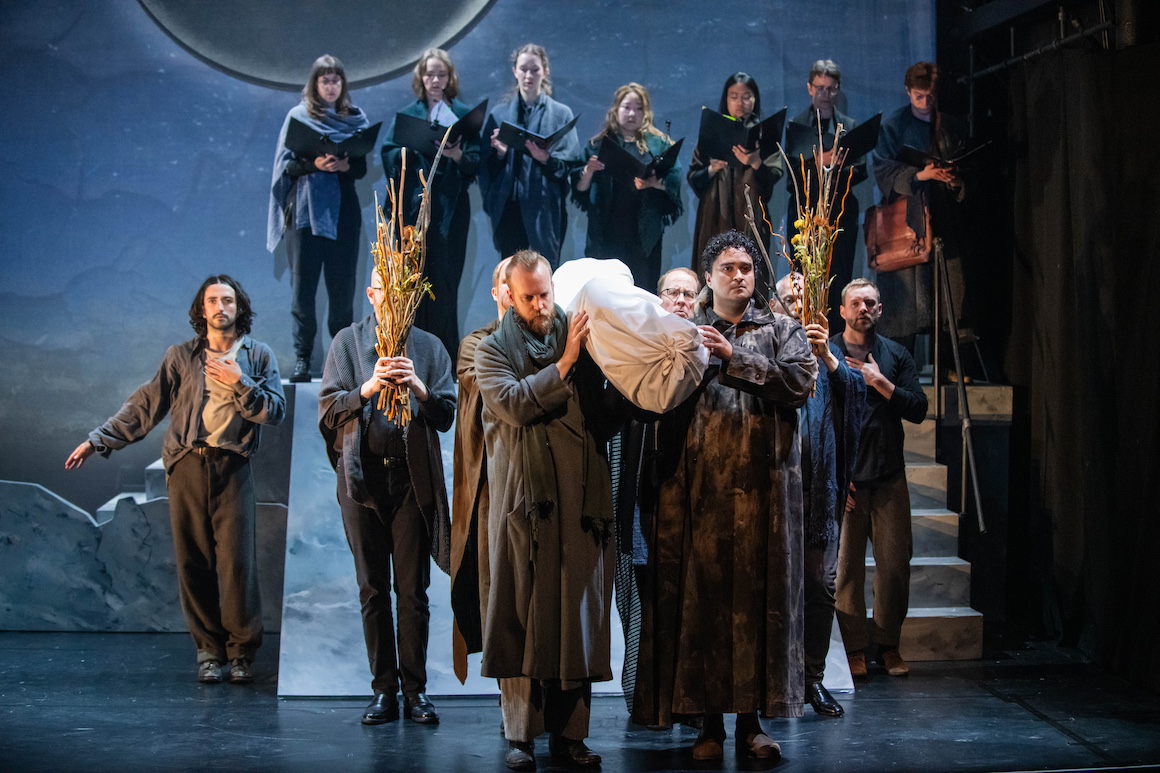
Parélios; music by Cecilia Livingston, words by Duncan McFarlane, opened at Theatre Passe Muraille on Friday as part of Opera 5’s Toronto Opera Festival. It’s an intensely cerebral and very, very beautiful work but it’s unrelenting and quite dark. Basically a group of refugees; perhaps fleeing some environmental catastrophe, are on a journey to who knows where. They have survived the winter but the summer brings no real relief. It’s a bit like Cormac McCarthy’s The Road but vastly more intellectual and poetic.
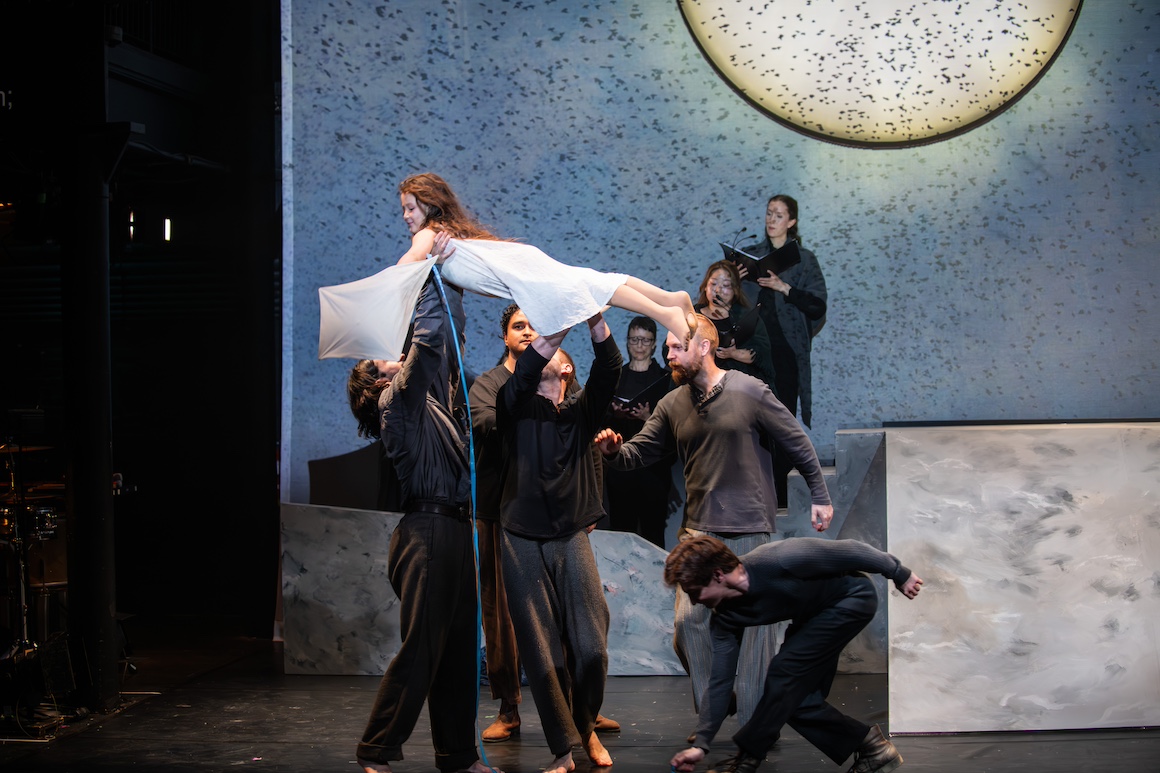
There’s so much to unpack. Not least what kind of work is this? There are solo singers but they aren’t really assigned to characters but rather abstract ideas. There’s a chorus. There are dancers. It’s scored, besides the voices, for percussion quartet. It’s fully staged with gorgeous projections. So. hints of opera, oratorio, ballet and more. It won’t stay easily in any one box and that’s part of what makes it weirdly wonderful.
McFarlane’s text is richly poetic. It’s rooted in his background as a scholar of Classics and there are references to the Iliad, the Aeneid and much more. It explores the place of humanity in the Cosmos in an allusive and elusive way. “Parélios”, for example, is the Ancient Greek word Aristotle uses in The Meteorologies for the phenomenon of “false sun” or “sun dog” and which gives us the English word “parhelion” and its use asks questions about what’s real and what’s illusion. He’s also exploring what happens to collective memory as physical conditions deteriorate. Characters find everyday objects like a kite and a book but have no idea what they are or what to do with them. Perhaps he’s teasing us a bit by by using projections in Greek and Latin which, one suspects, few in the audience could read and following up with a character utterly baffled by a book; presumably in English.
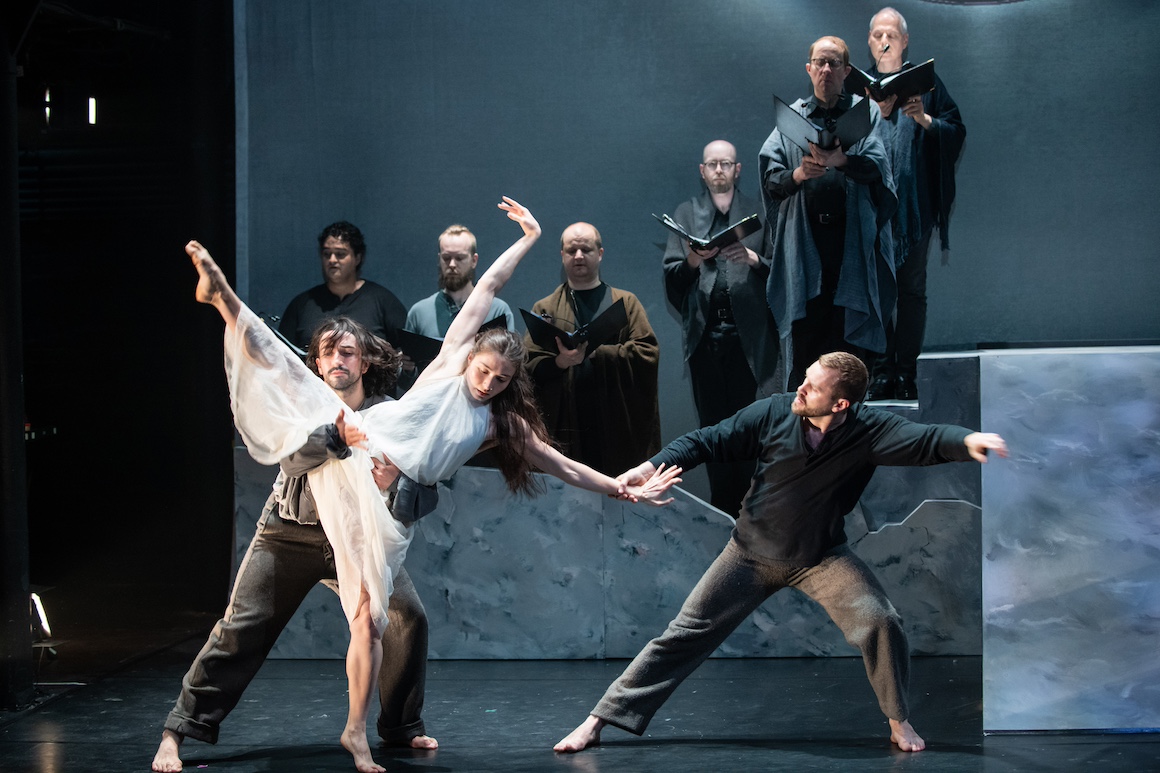
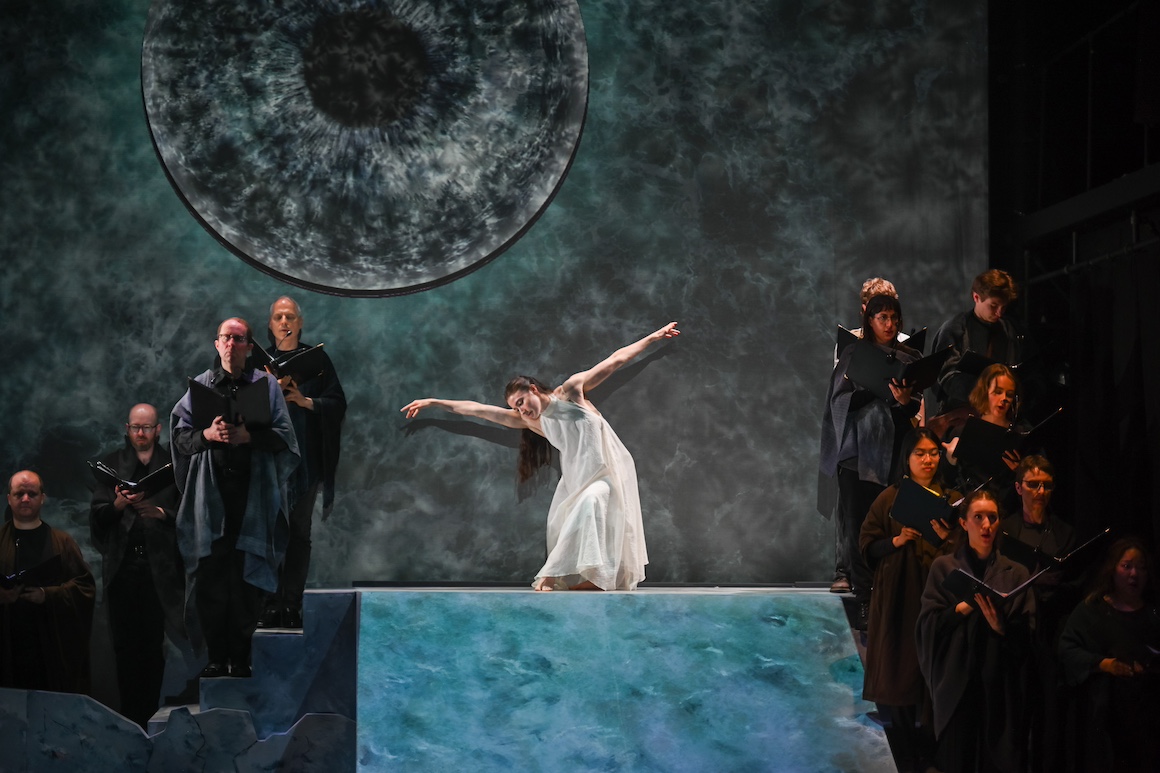
It’s fully staged with set design by Carlyn Rahusaar Routledge and direction by Jennifer Nichols. We see our ragged band in all parts of Theatre Passe Muraille’s many gangways and staircases. There’s a sort of sloped platform in the stage area and a screen behind it. Both are used for evocative and sometimes enigmatic projections by Nathan Bruce. This leaves space enough for the three dancers; Sully Malaeb Proulx, Jarrett Siddall and Miyeko Ferguson to execute Jenn Nichol’s athletic and very beautiful choreography. Incorporating dance effectively into a work like this makes a huge difference. The staging is also considerably enhanced by Siobhan Sleath’s striking lighting.
The music matches the text in aesthetic. The percussion is used sparingly but sometimes to surprising effect as when two mirambas are used to accompany one of the few set piece arias. It’s also beautifully played by the TorQ Percussion Ensemble. The vocal line moves pretty seamlessly between the four soloists; Len Crino, Brenden Lengsfeld, Ryan Nauta and Aaron Dimoff and the ten person choir. It’s ethereally beautiful and every bit as cerebral as McFarlane’s text.
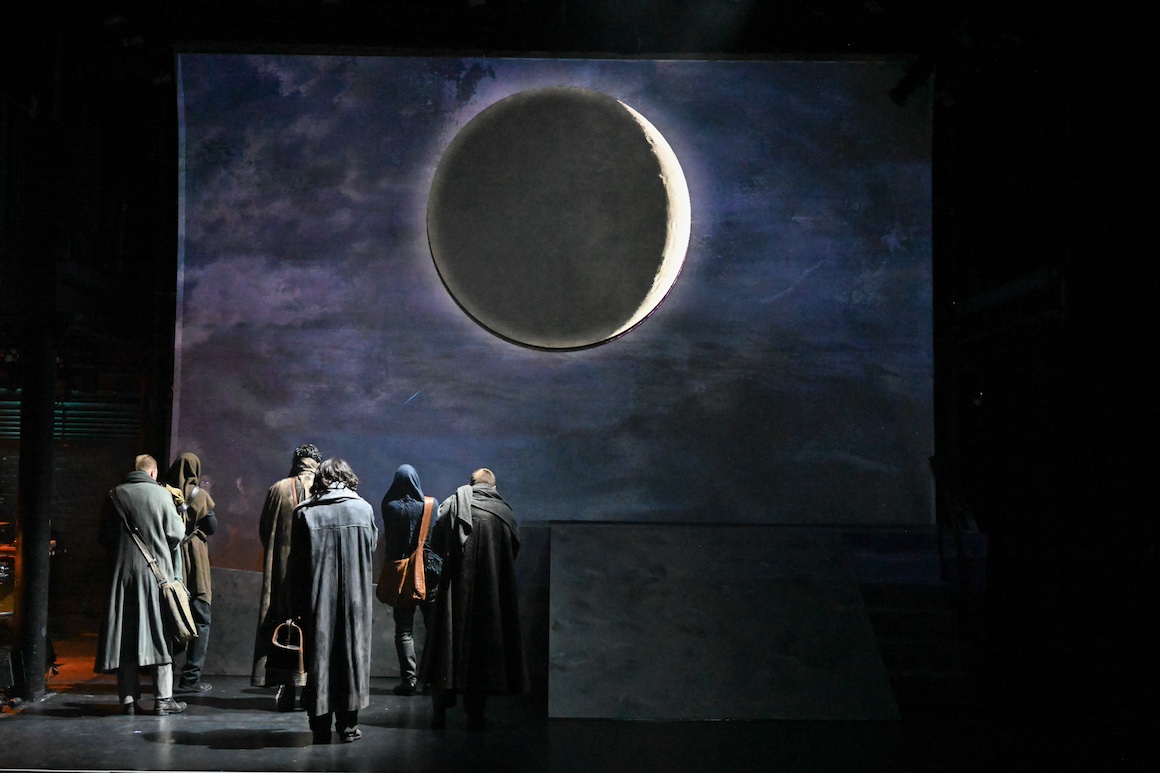
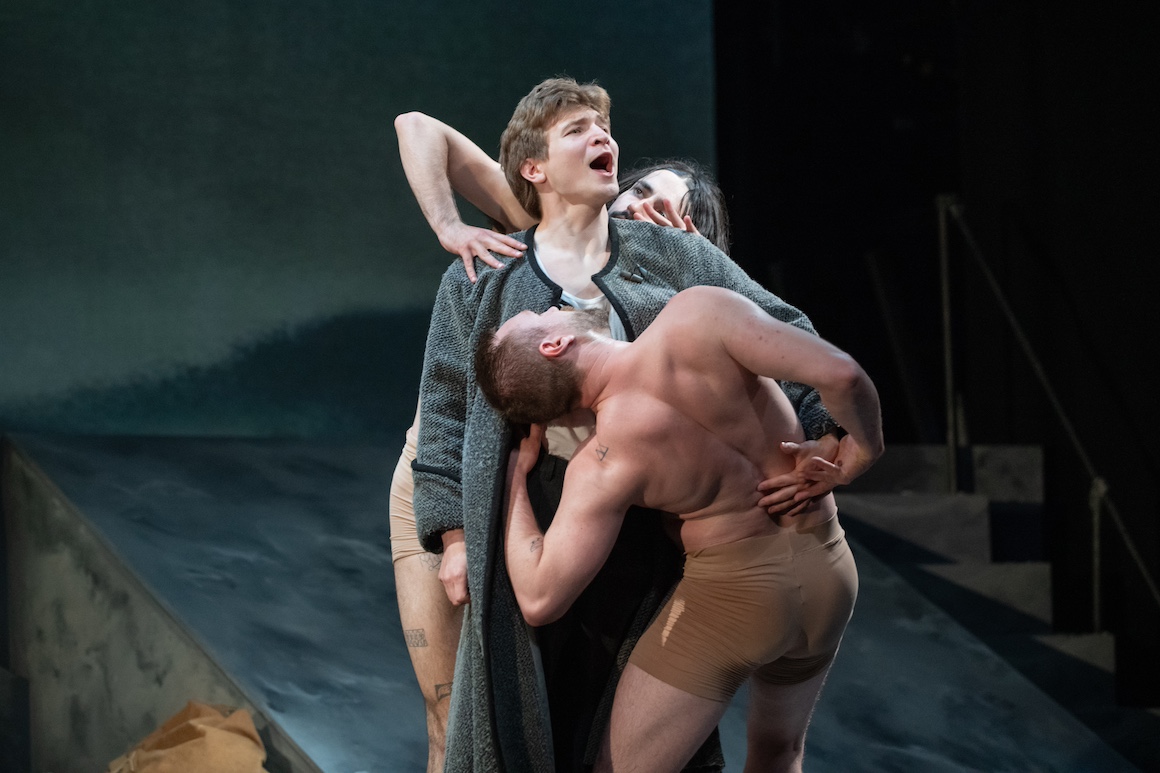
The singers manage the complexities of music and text with great skill though with few opportunities for individual display. Those thast do come up are well executed. Dimoff sings the gorgeous miramba aria from high up in the gallery and Lengsfeld has a scene where he sings beautifully while being dragged and thrown about by the male dancers. There’s also a very cute cameo by Keira Beasley as Child. She doesn’t sing but she gets tossed around a lot by the dancers too! There’s a lot going on and the physical set up is challenging with the percussionists in a sort of “box” on one side of the stage and action all over the place but Evan Mitchell, on the podium, keeps it all together with considerable precision.
This is not an easy night at the theatre. For 75 minutes your intellect and your emotions will be challenged but it’s a deeply rewarding experience. It’s a work of real substance and I hope it gets picked up elsewhere. It would be a perfect fit for a house with a second stage and younger singer and dancer programmes. Yes, Royal Opera, I mean you. This would perfectly in the Linbury. Meanwhile there are further performances on Saturday and Sunday.
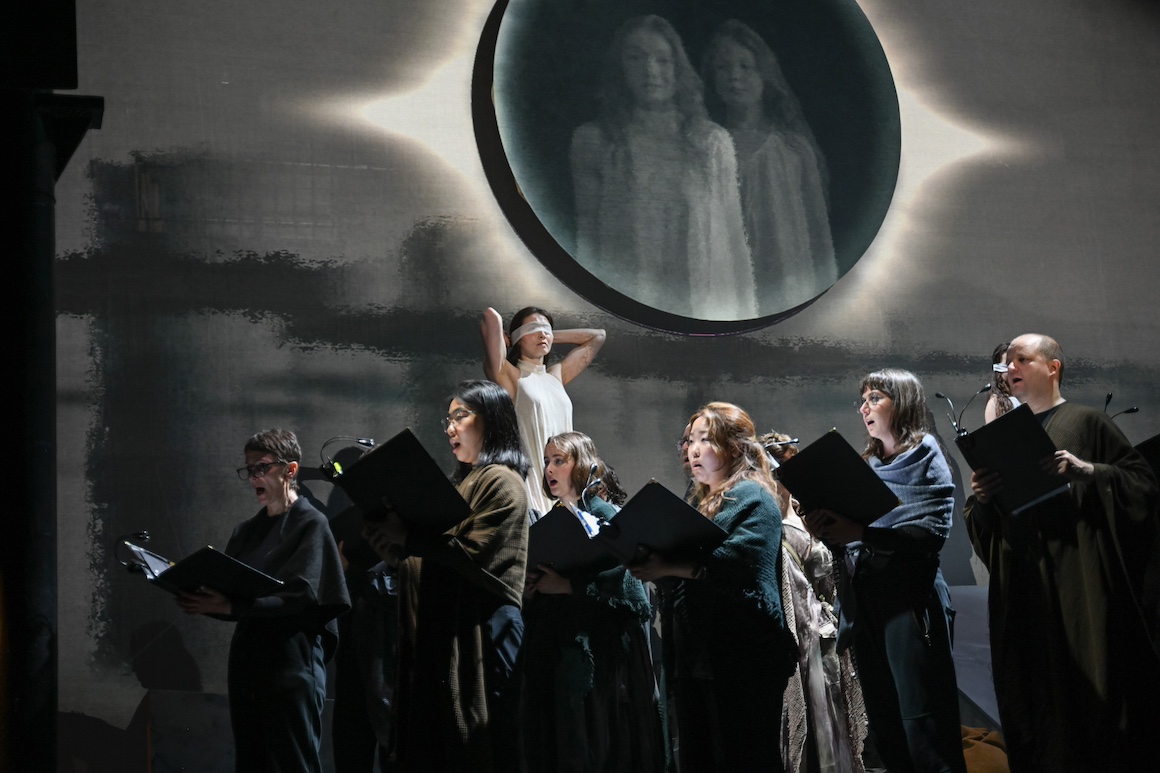
Photo credits: Emily Ding Photography

