Sad news

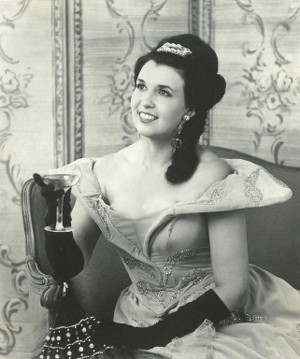
Clarice Carson as Violetta 001 - thumbCanadian soprano Clarice Carson died on the weekend aged 85.  In her career she sang a range of roles ranging from Mozart to Wagner including Tosca on Radio-Canada televeision with Louis Quilico as Scarpia (and we’ll never see that again).  She sang in many major houses including The Metropolitan Opera, San Francisco and Venice’s La Fenice.

Ms. Carson was an active member of the Board of the International Resource Centre for Performing Artists, for which she often gave wardrobe consultations to young artists, mentored singers and acted as consultant for their careers. Clarice donated her musical scores and recordings to the IRCPA reference library planned to open in her name in the fall of 2017.  Canadian Donations for this library can be made directly to the IRCPA website at Canada Helps: www.ircpa.net.
Sing unto the Lord a new song

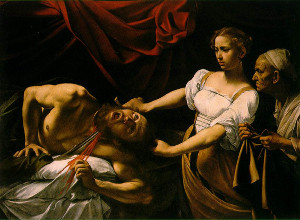
Judith_Beheading_Holofernes_by_CaravaggioHubert Parry’s 1888 work Judith got its North American premiere yesterday in a performance by Pax Christi Chorale at Koerner Hall.  It’s a typical English high Victorian oratorio, commissioned by the Leeds Choral Society Birmingham Festival (Wikipedia strikes again).  It’s got some very grand choruses and some tuneful solos (one was later used for the hymn tune Repton setting the words “Dear Lord and Father of Mankind”).  If one like’s that sort of thing, and Peter Simple’s Alderman Footbotham of the Bradford Tramways and Fine Arts Committee would certainly have approved, it’s very enjoyable.  And if that’s not enough, there’s human sacrifice, seduction and murder to keep one’s interest.

Continue reading →

Hands on Figaro

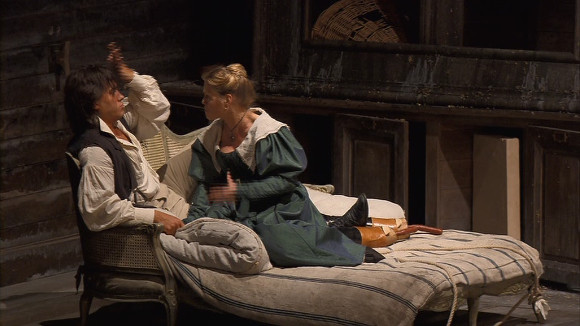
In the booklet accompanying David McVicar’s production of Le nozze di Figaro, recorded at the Royal Opera house in 2006, there’s an essay by the director in which he raises all kinds of questions about the rise of the bourgeoisie, the nature of revolution and romantic conceptions of love.  He even appears to draw a parallel between Joseph II and Tony Blair. Then he declines to explain how he has embodied all these ideas on the stage and challenges us to “Watch, listen, participate”.  Well I did and I’m none the wiser.  What I see here is an essentially traditional approach; transferred cosmetically to 1830s France but so what?  It’s darker than some Figaro’s but not nearly as dark as, say, Guth.  Curiously, the main “extra” on the disks “Stage directions encoded in the music” tees this up much more clearly than the essay.

1.figarosusanna Continue reading →

Führerbunker

Andrew Ager’s Führerbunker is a short chamber opera depicting the events leading up to Hitler’s suicide in April 1945.  It’s a tautly constructed work in which many short scenes are woven into a seamless and compelling whole.  It flies by and its 45 minute length seems even shorter.  The score is spare, even brutal, as befits the subject matter.  The composer told me he had initially envisioned something Wagnerian but feared that that must descend into pastiche.  He made the right decision.  So, the piano line is minimalist with elements of serialism and very  little support for the singers.  It’s a style that has perhaps been largely discarded (in north America at least) but here it was startlingly effective.  Perhaps the crappy Tranzac Club piano contributed to the effect!

Continue reading →

Toronto Operetta Theatre announces 2015/16 season

Bon-Voyage-closeupOnce again Toronto Operetta Theatre will stage three shows with a typical mix of an English language piece, a classic European work and a zarzuela.  First up is Bernstein’s Candide which will run October 23rd to 25th.  The holiday show will be Romberg’s The Student Prince with five performances from December 27th to January 3rd.  The final offering will be Jacinto Guerrero’s Los Gavilanes with four performances from April 27th to May 1st.  All shows wil be at the St. Lawrence Centre for the Arts.  No details on casting yet.

In a handbag?

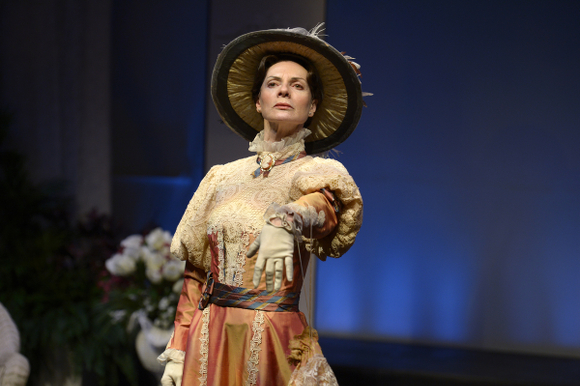
One probably can’t go far wrong with an adaptation of Wilde’s The Importance of Being Earnest and the operetta, Earnest,The Importance of Being by Victor Davies and Eugene Benson doesn’t.  In fact it doesn’t go far from Wilde at all following the plot of the original faithfully and containing all the well known lines.  It means too, of course, that it has the flaws as well as the virtues of the original.  The first act can drag a bit as Wilde gets a bit too clever but t builds to a very effective second half which flies by.  The duet for the girls, To Speak With Perfect Candour is probably the best number in the piece.  Davies’ music too does not try to be too portentous.  It’s a bit of a pot pourri of styles with, at least, big band music, classical operetta, popular song of the period and what seems to be a nod to Andrew Lloyd-Webber.  It’s perfectly consistent with the text.  I don’t think though that there’s a single number that one would call truly hummable.

Lady Bracknell 1 Continue reading →

The Futile Precaution

Yesterday lunchtime the Ensemble Studio gave us a preview of their upcoming performance of the Barber of Seville.  The production, of course, will be the one currently on stage at the Four Seasons Centre and there were clear echoes of that in the way yesterday’s event was put on though they also played with the fact that Almaviva will be split between Andrew Haji and Jean-Philippe Fortier-Lazure with much pulling and pushing into place.

SONY DSC Continue reading →

Fatal attraction

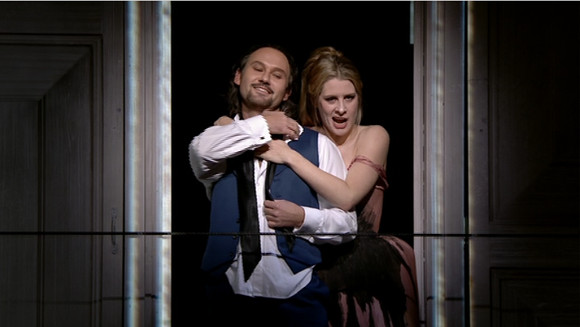
Kasper Holten’s Royal Opera House production of Don Giovanni, seen in cinemas, is now available on DVD and Blu-ray.  It’s a visually and dramatically complex production so it’s probably as well that there’s plenty of explanatory material on the disks and in the booklet.  Es Devlin’s set is a two storey structure that rotates and serves as a screen for a heavy use of video projections by Luke Halls.  These start wth the 2065 names of the women Don Giovanni has seduced and seem to be mostly about what’s going on in Don Giovanni’s head.  The sequence during Fin ch’han dal vino calda la testa is particularly spectacular.

1.balcony Continue reading →

Much Ado

11160680_986649388020560_2336906169017147576_nI really wasn’t at all familiar with Berlioz’ Béatrice at Bénédict before last night’s opening of a production by Metro Youth Opera at the Daniels Spectrum.  All I knew was that it had something to so with Shakespeare’s Much Ado About Nothing and a reputation for being rather tedious.  For the record it’s basically the Shakespeare play shorn of all the darker elements; no Don John, no fake funeral, resulting in a RomCom in which the title characters, after much verbal sparring,  are finally brought to admit that they are in love and get married along with Claudio and Héro.  Further compressed a little (Somarone is axed) for this production it runs a pleasingly untedious two hours or so.

Continue reading →

Glorious Alcina

The 2011 production of Handel’s Alcina at the Wiener Staatsoper marked the first time Handel, or any other baroque work, had appeared in the house since Karajan’s reign in the 1960s.  In mounting it they went big.  There’s a starry cast headed by Anja Harteros, Marc Minkowski and Les Musiciens du Louvre – Grenoble, a large group of dancers and former Royal Shakespeare Company boss Adrian Nobel.  It paid off.

1.salon Continue reading →