
It’s that time of year when we reflect on the intersection of Truth and Reconciliation with opera. So yesterday I attended a lecture/recital by young Métis singer and scholar Camryn Dewar in the RBA at lunchtime. The title was The Evolution of Indigenous Female Representation 1879-Present and the domaine was Canadian opera; so no room for La fanciulla del West or Doctor Atomic. In fact, truth to tell, there Wasn’t much Indigenous female presence in Canadian opera until quite recently. There’s the really awful colonialist Canada’s Welcome by Dixon and Clappé which was dealt with. Somers’ Louis Riel which got a brief mention but doesn’t have much in the way of female characters. Victor Davies’ The Ecstasy of Rita Joe which didn’t get (or deserve) a mention. Perhaps Jani Lauzon’s I Call myself Princess might have deserved a mention even if it’s about opera rather than being an opera.
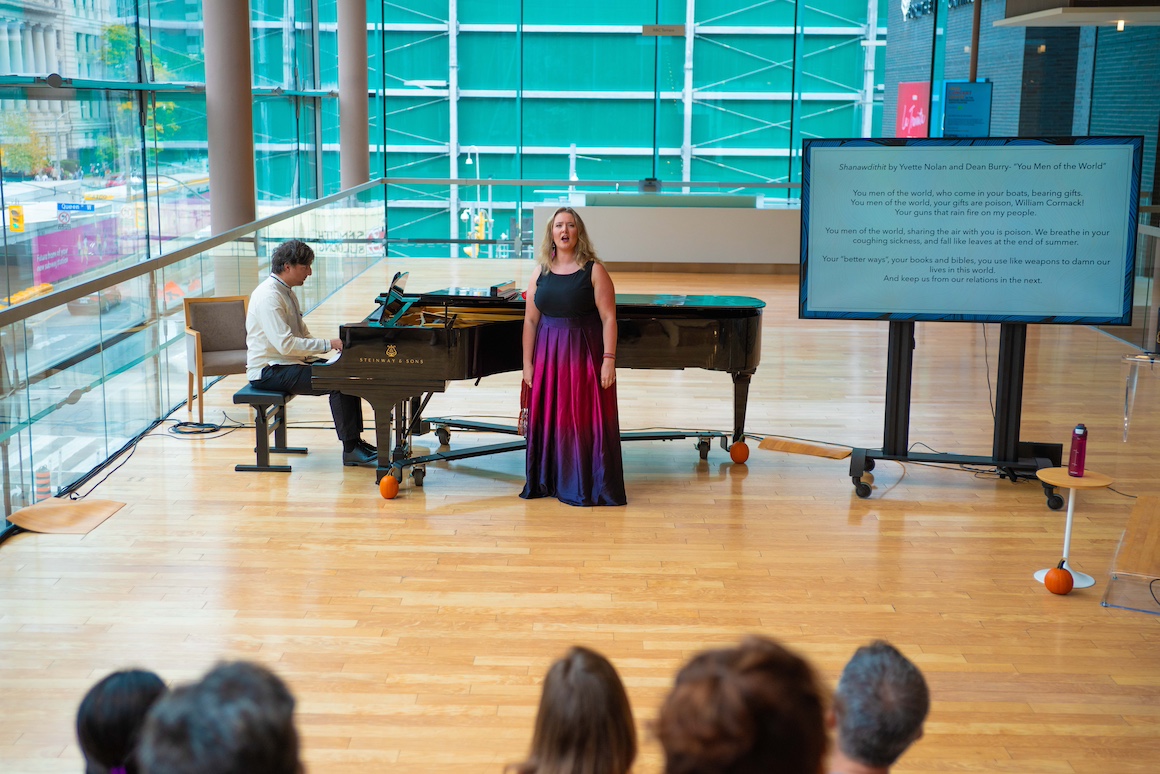
Then we are into the 2010s and the operas that formed the main focus of the lecture/recital; Marie Clements and Brian Current’s Missing, Yvette Nolan and Dean Burry’s Shanawdithit and Cherie Dimaline and Ian Cusson’s Empire of Wild. Li Keur; Lion of the North also got a brief mention. It’s interesting that in the first two cases the librettists are Indigenous and the composers are not though personally I wouldn’t describe either as “some random white dude”. Cherie and Ian, of course, are both Métis which likely makes Empire of Wild the first wholly Indigenous Canadian opera.
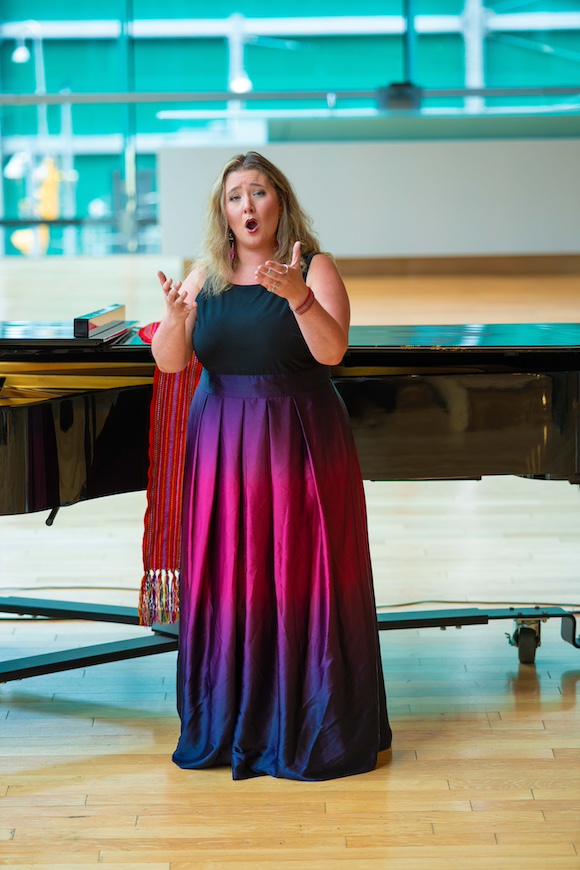 I was really intrigued by Camryn’s take on the operas. She’s relatively new to them and encountered them as finished pieces whereas I lived with their creation for many years; intermittently catching up with creators and performers for updates and seeing/hearing excerpts and WIP long before I got to see the finished work. In the case of Missing I think I knew about it ten years before I got to see a performance! And that process is now being repeated with Empire of Wild. And, of course, she’s female and Indigenous and I’m not.
So what were Camryn’s takes on the operas? Unsurprisingly she wasn’t much taken by Canada’s Welcome in which “Canada” is personified by a sexualized and rather dim “Indian Maiden” who gets an aria that manages to combine a sub Gilbert and Sullivan aesthetic with nods to “The Maple Leaf Forever”. Camryn did manage to sing it without puking which is creditable.
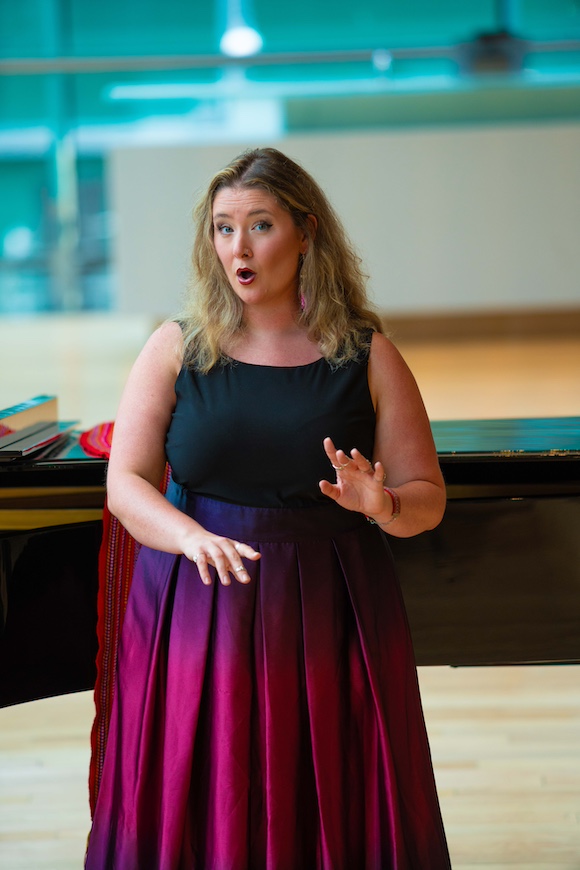 I’d say her take on Missing was ambiguous. The decision to make the two most prominent Indigenous women in the play anonymous seemed to grate a bit. I can see why but I also understand Clements’ desire to universalize their experience. She also told us that some young singers approaching this opera have found it really distressing. I guess i can see why though none of the original cast have ever said anything to me to that effect. Age? Experience? Being part of the creative process? Do those things soften the impact? However one looks at it, it’s the first Canadian opera to present fully realized Indigenous female characters from an Indigenous perspective.
And so to Shanawdithit. Here we get an Indigenous woman’s story told largely through her own words and images translated to the stage by the deft hand of Yvette Nolan. Hearing extracts again after seven years reminded just how good the music is. And the story arc that unites the dying Shanawdithit with her female kin is so alien to the operatic tradition of the dead woman on stage in the final scene. It’s life affirming in a way that perhaps only a female Indigenous perspective could summon up. The three excerpts were nicely sung and expertly accompanied by Jesse Plessis on piano.
We also got Joan’s aria “My Prayer is Small” from Empire of Wild which serves as a reminder that this new opera is a very modern take on Indigenous culture though firmly rooted in tradition and myth. And it has proper arias! It premieres at the COC in May and I can hardly wait!
I really enjoyed this lecture/recital. It was thought provoking, nicely performed and brimming with the confidence that only a 25 year old has!
Photo credit: Karen E. Reeves

