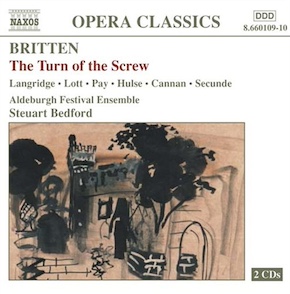
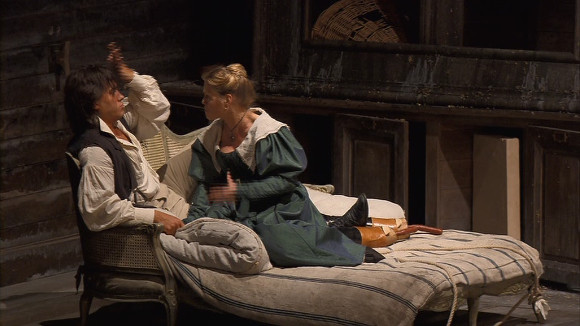
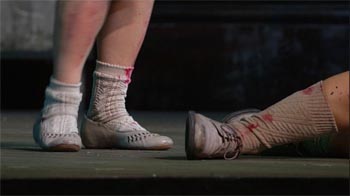
The death last week of Dame Felicity Lott had me thinking about English singers of that generation who featured a lot in the first live opera and recordings that I experienced back in the 1970s. A bit of digging around led me to a 1993 recording of Britten’s The Turn of the Screw with Philip Langridge (who died in 2010) as Quint and Felicity Lott (not yet a Dame) as the Governess. It also, perhaps surprisingly, features American Wagnerian Nadine Secunde as Miss Jessel. Less surprisingly, it was recorded in Aldeburgh with Steuart Bedford conducting.
Tag Archives: langridge
Dancing with Death
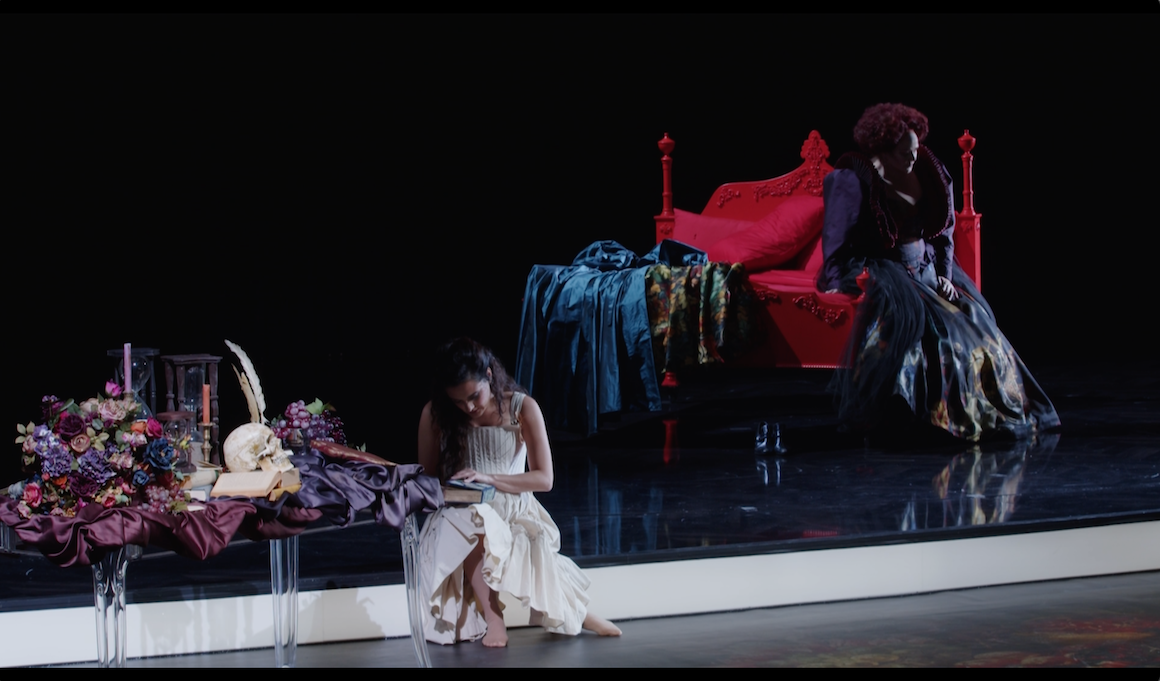
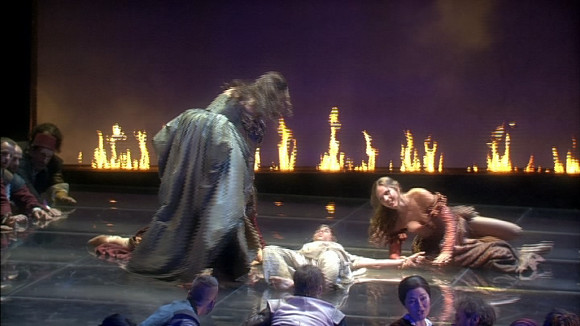
Stephen Langridge’s production of Donizetti’s Roberto Devereux recorded at the Donizetti Festival in Bergamo in 2024 is heavy on death symbolism. The general look of the sets is fairly abstract with a sort of light box with a gallery and a few bright red elements; the throne, the Nottinghams’ bed and so on, but there are skulls and other memento mori everywhere. Costuming is sort of operatic Tudor but Elisabetta’s dress is a print that includes skulls and she’s doubled by a human size, identically dressed, Death puppet. As seems to be the fashion, much of the time only the front of the stage is lit leaving characters lurking in the gloom upstage.
Langridge’s Grimes revisited
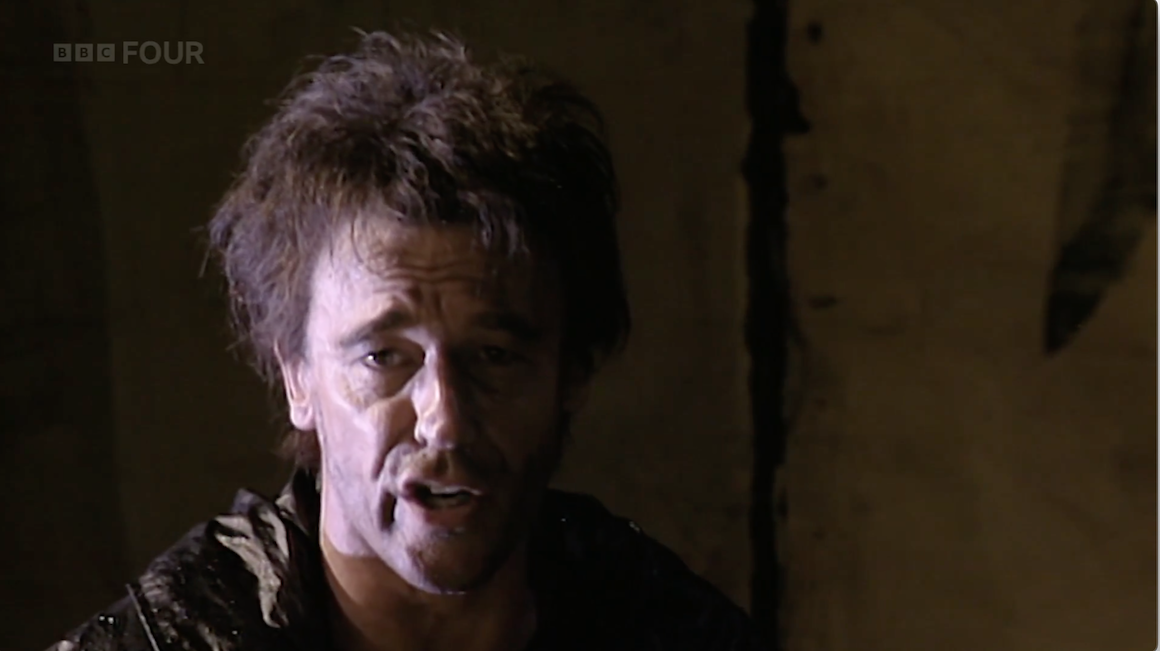
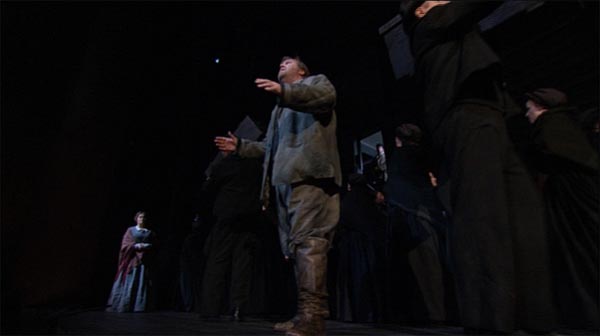
Almost fourteen years ago I reviewed the DVD of the 1994 ENO production of Britten’s Peter Grimes. The DVD was so bad technically that it was quite hard to decide much about the merits of the performance although it was obvious that Philip Langridge’s Grimes was something special. On June 1st this year the BBC rebroadcast the recording in HD on BBC4. I have a copy of that broadcast and it’s way better than the North American DVD release and so I wanted to clarify and, where appropriate, correct what I said in that earlier review.
Langridge’s Grimes
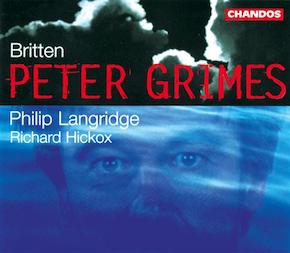
Earlier this month I was reviewing a new CD recording of Britten’s Peter Grimes for Opera Canada (you can read it in the Fall 2020 issue or here). It’s a rather good performance from the Bergen Philharmonic with Stuart Skelton in the title role. In digging into previous recordings while writing that review I came across a 1995 recording with Philip Langridge in the title role. I was familiar with his ENO performance which was brilliant and is captured on DVD but there are serious issues with that recording so I was delighted to be able to have another listen.
Grumpy Otello
Verdi loved Shakespeare and tried to reflect the psychological depth of his characters in the operas he based on the bard. You really wouldn’t know that watching the 2008 Salzburg Festival production of Otello. There’s a lot to like in both production and performance but the emotionally monochromatic performance of the title role by Aleksandrs Antonenko, who can do every mood from fairly grumpy to furious, and the moustache twirling Jago of Carlos Álvarez rather reduce the piece to pathologically jealous nutter with anger management problem kills wife.
Hands on Figaro
In the booklet accompanying David McVicar’s production of Le nozze di Figaro, recorded at the Royal Opera house in 2006, there’s an essay by the director in which he raises all kinds of questions about the rise of the bourgeoisie, the nature of revolution and romantic conceptions of love. He even appears to draw a parallel between Joseph II and Tony Blair. Then he declines to explain how he has embodied all these ideas on the stage and challenges us to “Watch, listen, participate”. Well I did and I’m none the wiser. What I see here is an essentially traditional approach; transferred cosmetically to 1830s France but so what? It’s darker than some Figaro’s but not nearly as dark as, say, Guth. Curiously, the main “extra” on the disks “Stage directions encoded in the music” tees this up much more clearly than the essay.
A Parsifal in three acts
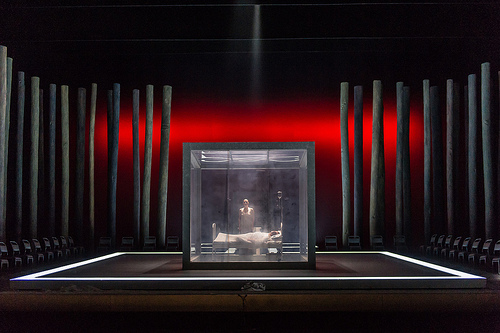
Yesterday, Easter Saturday, I got to see the Royal Opera House production of Wagner’s Parsifal. It was broadcast live to many locations of December 18th last year but hasn’t been seen in Toronto until now. It was very much a three act experience. At the end of the first and longest act I thought we were perhaps seeing greatness in the making. Stephen Langridge’s production concept supported by Alison Chitty’s fairly abstract modern designs were making all kinds of sense to me. At centre stage is a white, semi transparent cube serving as both grail shrine and Amfortas’ hospital room. Within it, various aspects of the back story are shown to us and it comes off as a place of knowledge; perhaps of a much deeper kind than has yet been revealed. This impression is reinforced with the unveiling of the Grail late in the act. It is a young, Christ like boy. The grail ceremony involves Amfortas cutting him to release the blood for the ceremony. There’s a lot of blood letting but it makes sense. We are seeing a very wounded and dysfunctional polity.
Traditional Wozzeck from Vienna
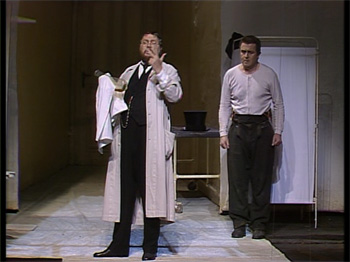
The 1987 recording of Berg’s Wozzeck from the Vienna State Opera is a bit of a mixed bag. Claudio Abbado’s reading of the score is incredibly intense and powerful and he gets great support from the orchestra, There’s also some very good singing. Dramatically it’s a bit of a mixed bag and the DVD production isn’t particularly good. Continue reading
Four decades of Peter Grimes
Having now had a chance to watch and review all seven currently available (as of June 2025 only the Oke and Graham-Hall performances seem to be available) video recordings of Peter Grimes I thought I might do a summary of the strengths and weaknesses of each. All of them have some merit and I doubt that there would be consensus on a “winner”. Anyway, here goes…
BBC film 1969
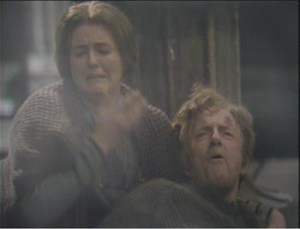
Grimes – Peter Pears
Conductor – Benjamin Britten
Director – Joan Cross & Brian Large
This is an essential historical document with both composer and the creator of the role involved. The production is straightforward and naturalistic. The sound and video quality is surprisingly good for the period. It does, though, leave one with the feeling that there is more to the role of Grimes than Pears finds.
Royal Opera House 1981
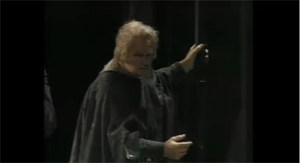
Grimes – Jon Vickers
Conductor – Colin Davis
Director – Elijah Moshinsky
Also a historical landmark being the first major production where Grimes wasn’t sung by Peter Pears. It has the excellent Heather Harper as Ellen Orford. The production is quite dull and very dimly lit. Vickers’ Grimes is controversial. In places he sounds fantastic and in others sorely taxed. His acting is oddly stilted. Norman Bailey fails to convince as Balstrode. Sound and picture quality are OK.
English National Opera 1994
Grimes – Philip Langridge
Conductor – David Atherton
Director – Tim Albery
This is the production with most sense of the sea as a character brought out through innovative use of video projection. Langridge’s Grimes is intense, convincing and beautifully sung. Alan Opie is a very strong Balstrode. Unfortunately the orchestra and chorus aren’t up to rival versions and all aspects of the DVD; video direction, sound quality and picture quality are rather poor. This recording was rebroadcast on June 1st 2025 by the BBC with dramatically better sound. See my thoughts here.
Opernhaus Zürich 2005
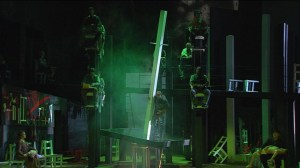
Grimes – Christopher Ventris
Conductor – Franz Welser-Möst
Director – David Pountney
This is a very fine and thought provoking production with any number of magical moments. Ventris is a first class Grimes combining power and sensitivity and the supporting performances all have merit, save perhaps for Alfred Muff’s sub-par Balstrode. The orchestra and chorus are quite superb. The performance gets a thoroughly sympathetic treatment on DVD with good video directing backed up by quite excellent sound and picture quality.
Metropolitan Opera 2008
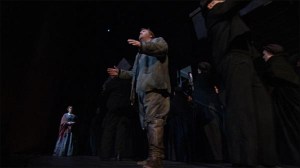
Grimes – Anthony Dean Griffey
Conductor – Donald Runnicles
Director – John Doyle
This is a rather dull and dark production given a very eccentric treatment by the video director. Dean Griffey is a lyrical and sympathetic Grimes well backed up by the supporting cast, especially Anthony Michaels-Moore as Balstrode and Teddy Tahu-Rhodes as Ned Keene. The orchestra and chorus are excellent and Runnicles is fairly convincing though the first act drags a bit. The sound and picture quality is excellent.
La Scala, 2012
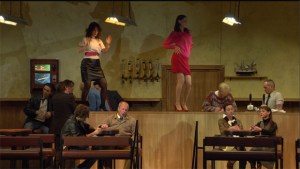
Grimes: John Graham-Hall
Conductor: Robin Ticciati
Director: Richard Jones
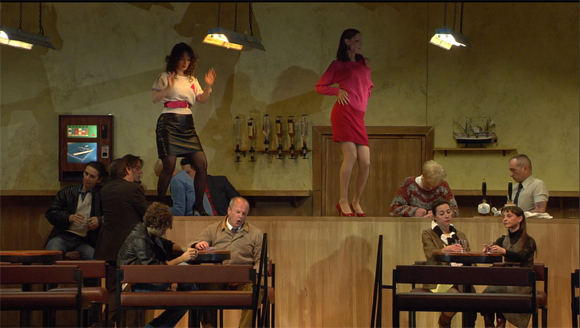
Richard Jones’ production, updated to the 1980s, is quirky. John Graham-Hall is quite lyrical as Grimes but slips into pseudo speech a lot. Susan Gritton fails to convince as Ellen Orford. The supporting cast, the orchestra and the conducting are first rate but the chorus is decidedly sub-par. The Blu-ray sound and picture outclasses all previous versions but, overall, this recording fails to convince.
Peter Grimes on Aldeburgh Beach, 2013
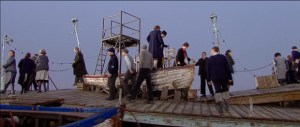
Grimes: Allan Oke
Conductor: Steuart Bedford
Director: Tim Albery/Margaret Williams
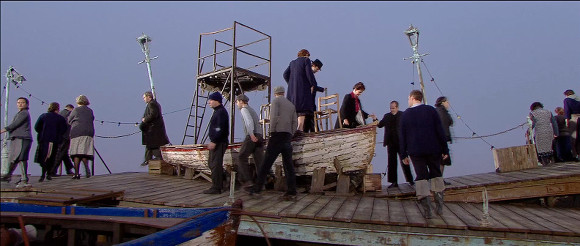
This film is a record of the unique production staged on Aldeburgh beach by Tim Albery and filmed by Margaret Williams. It’s highly atmospheric and features a brilliant performance by Alan Oke but conditions were not ideal for the singers and musically this cannot match the best available recordings from the theatre.
Starvation, drugs and child abuse? It must be Christmas
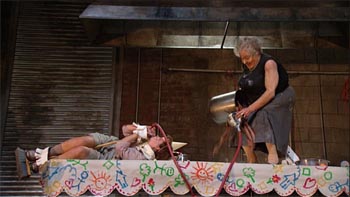
Humperdinck’s Hansel and Gretel was one of the earlier “Live in HD” broadcasts from the Metropolitan Opera and has been out on DVD for some time. The newness of the concept is immediately apparent in Renée Fleming’s almost awed tone as she introduces the work. She certainly sounds more blasé these days. Hansel and Gretel, given here in David Pountney’s English translation is an odd work. The libretto is much more than a Disney fairy tale. There is poverty, hunger, drunkenness, threats of beatings and murder. There is also a layer of religious sentimentality so thick it could only be 19th century and German. The score is astonishingly heavyweight given the subject matter. Humperdinck worked with Wagner and that is very, very apparent in this piece.
Unsurprisingly, modern directors have tended to emphasize the darker side of the work and Richard Jones is no exception. Hunger is the driving force here and each act is set in a kitchen. A poor peasant cottage in Act 1, a dream like banquetting facility in Act 2 and the Witch’s nightmarish cake factory cum kitchen in Act 3. Much food is thrown around and smeared over people. It’s pretty succesful as a concept if a bit one dimensional.
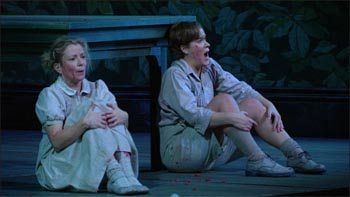
The performances are spectacular and based on some serious luxury casting. Alice Coote and Christine Schäfer as Hansel and Gretel are terrific, especially Schäfer. It’s a wonder to me that a beautiful and elegant woman like her can do grubby so well but she nails it every time (Cherubino in Salzburg, Lulu at Glyndebourne) and this is no exception. Alan Held is a booming father; as big in voice as he is in stature. Rosalind Plowright doesn’t sing prettily but she is utterly convincing as the depressed, shrewish, drug addled mother. Then there is the much missed Philip Langridge camping it up as the Witch. He’s like an incredibly messy Julia Child on speed. He’s hilarious. Sasha Cooke plays the Sandman and Lisette Oropesa plays the Dew Fairy complete with washing up joke. Vladimir Jurowski conducts the Metropolitan Opera Orchestra as if he was conducting The Ring and they play beautifully for him. The very well drilled Met Children’s Chorus also get a look in in the final scenes. Overall, the performance has a high degree of integrity and very high musical values. It’s a good bet for this work which I still can’t really bring myself to like.
Technically this is what you would expect from a Met “Live in HD”. No video director is credited (so far as I can tell) but it’s got about the usual quota of super close ups, including a completely gratuitous foot shot, which is actually a bit odd as the sets for Acts 1 and 2 are basically confined to a thirty foot cube so it would be easy to encompass the whole picture. The picture quality is good, not stunning, DVD standard. The DTS 5.1 soundtrack is excellent and is particularly good at bringing out the very precise orchestral playing. There is also LPCM stereo. It has the usual HD Broadcast extras. There are English, French, German, Spanish and Italian subtitles. The documentation (English only) includes track listings, a synopsis and a short essay. There is additional information in English, French and German in a PDF on the disc itself.