There are a couple of rather unusual shows coming up on the weekend of May 22nd to 24th.
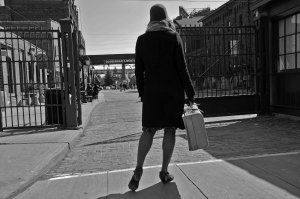 A new group, The Friends of Gravity, are putting on Weill’s Die Sieben Todsünde ~ The Seven Deadly Sins. Projected photography and film stand in for the original production’s ballet. Silent film-style title cards will translate the German text and illuminate the dramatic back-story. Stephanie Conn sings the role of Anna I on stage and acts as Anna II in the pre-taped footage. The other singers include Christopher Wattam, Charles Fowler, David Roth and James Levesque. A seven piece band will play Scott Gabriel’s arrangement of the score. It’s on on May 22nd and 23rd at 8pm at St. Bartholomew’s Anglican Church, 509 Dundas Street East. Tickets are $25 ($15 for students) and are available at https://www.universe.com/7sins or http://thefriendsofgravity.org
At more or less the same time The Toronto Consort are putting on a fully staged version in English translation of the 13th century Latin work The Play of Daniel. David Fallis directs the Consort medieval players with a cast that includes Kevin Skelton in the title role, Olivier Laquerre as King Belshazzar, Derek Kwan as King Darius, Michele DeBoer as the Queen, and John Pepper as Habakkuk. This one runs at Trinity St. Paul’s on the 22nd and 23rd at 8pm and the 24th at 3.30pm. Tickets and info at torontoconsort.org.


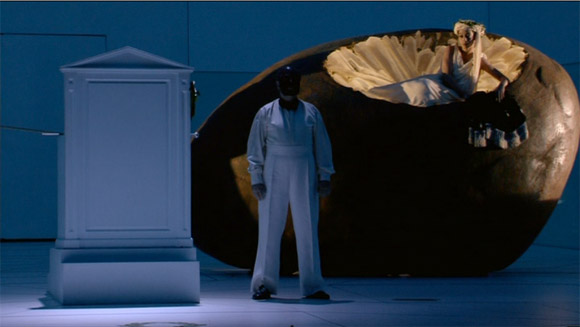
 Well not strictly baroque. I wanted a category for pre-Mozart rep since so many houses (and audiences) ignore it and there are some very odd ideas about performing it. So we are going to cover ground from the earliest days of opera to the late 18th century here, including staged versions of oratorios, because I rather like them. Here, in rough order of composition, then are my picks; from Monteverdi to Rameau.
  The opera video recording is in some ways a rather recent phenomenon. Before the DVD there really wasn’t a very satisfactory way of distributing a product with a decent sound though there were TV broadcasts and some have been preserved in the catalogue. Most of the extant recordings are “made for TV” and tend to show the limitations of the technology of the time. Interestingly, most pre 1980 recordings are of films made in the studio and lip synched to a pre-recorded track. There are only a handful of recordings of live performances in the opera house plus some pioneering BBC recordings of Britten works where the singers are “live”.