Hearing Anita Rachvelishvili sing Carmen on the main stage of the Four Seasons Centre, it was obvious that she had a huge voice with really interesting colours. The full scope only became apparent to me hearing her in recital in the RBA today. It’s an extraordinary instrument that can go from a very delicate pianissimo to very loud indeed without any obvious change in quality. There’s no steeliness or squalliness as the volume ramps up. Just the same colours and rich tone. A blow by blow account of a concert that included music in Georgian by Tabidze, Russian by Rachmaninov, French by Fauré and Spanish by de Falla seems superfluous. There was delicacy. There was drama. There was humour. There was playfulness. All in less than an hour. And to cap it off there were encores; Mon cœur s’ouvre à ta voix from Samson et Delilah and, perhaps inevitably, the Seguidilla from Carmen. Stephen Hargreaves was at the piano. One wonders if he actually lives at the hall. He covered a wide range of material from the delicate to the impressively percussive with his customary skill.

Photo credit: Lara Hintelmann



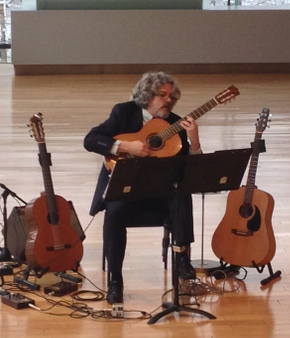 A vocalist accompanying himself on the guitar (or one of it’s predecessors) is one of the oldest and most prevalent tropes in western music. From Blondel to Billy Bragg it’s always been with us but it’s quite rare in the world of modern art music where the roles of singer and accompanist are trades as rigidly delineated as anything in a Clydeside shipyard. Doug MacNaughton breaks the rules by playing a variety of kinds of guitar and singing in a range of styles. For that question of style is vital too. The mechanics of doing two jobs simultaneously affect singing style and centuries of performance history offer a bewildering range of stylistic choices. It’s an issue I examined once before when reviewing a Bud Roach CD for Opera Canada.
 operaramblings