 Talisker Players latest show, High Standards, was a bit different from previous efforts of theirs that I have attended. This was all about the music. There were no prose or poetry readings. The music was a selection from what might be considered the “golden age” of the Broadway musical. The time period covered being the four decades from 1933 to 1973 or, roughly, Showboat to A Little Night Music. I’m not an expert in Broadway theatre but I was struck by how the music remained remarkably similar over that period while the lyrics got, generally, more sardonic. That’s pretty curious when one reflects on the changed in classical music, and even popular music over that time period. Where the music did seem to be rather different was when there was an “intervention” from someone with a foot in another camp. There were selections here from Gershwin and Bernstein that did sound different. The latter in particular playing with tonality in a way that seemed very daring by comparison, though tame of course by classical music standards. I’m sure proper musicologists would have much more to say about this. Continue reading →

 This concert was the culmination of several days of workshops involving Wallis Giunta, Jordan de Souza and eighteen emerging artists; both singers and pianists. It’s a comparatively unusual opportunity to focus on contemporary repertoire for a while and the results were fun. As usual with these multi-participant efforts I’m not going to attempt to be exhaustive but just concentrate on my personal highlights.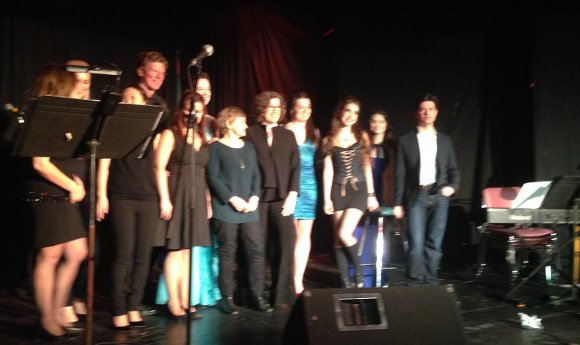
 The Glenn Gould School Vocal Showcase at Mazzoleni Hall last night was a chance to see twenty of the school’s singers in action. It was a curious mix actually; one bass, one baritone, a handful of tenors and mezzos and a lot of sopranos. There was a huge range of age and experience too from 18 year old first years to quite seasoned post-grads. As usual with these things I’m not going to attempt to be comprehensive but instead focus on the highlights as I saw them.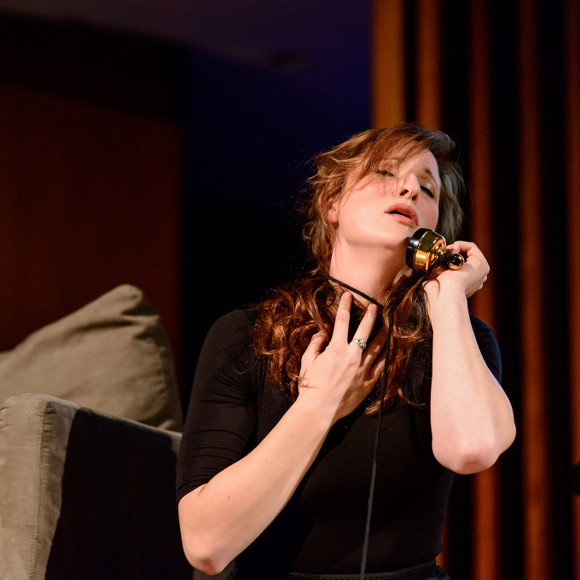
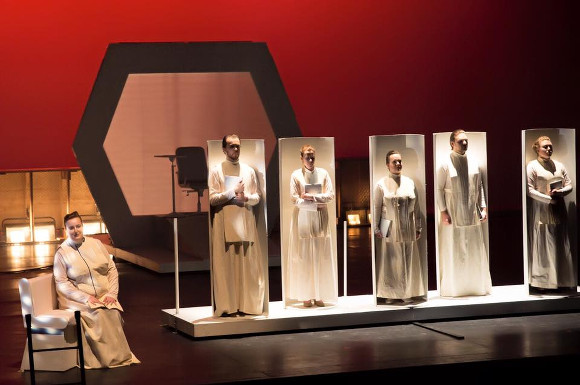
 FAWN Chamber Creative’s latest project is an opera called The Harvester. The libretto is adapted by Paul van Dyck from his own play of the same name and the music is by Aaron Gervais. The genesis (and we’ll come back to that) of the piece lies in the mind of soprano Stacie Dunlop who wanted a reduced orchestration version of Schoenberg’s Erwartung and a one acter that could be performed with the same band to form a double bill with it. Van Dyck’s play seemed to have the right stuff and Aaron was up for both parts of the project. Co-opting Kevin Mallon and his Aradia Ensemble and Amanda Smith to direct rounded out the project.
 I’ve spent a fair chunk of time this week following Barbara Hannigan’s stint as Stratton Visiting Artist in Music at the University of Toronto. I went to a lecture on Tuesday, a masterclass on Thursday and a concert yesterday. Twice already I have sat at the keyboard to try and document my impressions and failed miserably. It’s rare that I’m lost for words but Ms. Hannigan is really hard to describe. This time I shall apply myself with the sort of iron will that she exudes.