
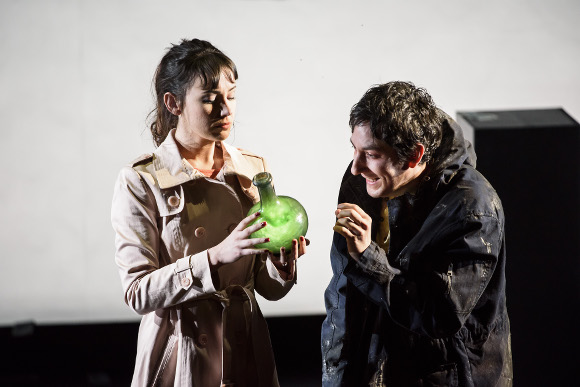
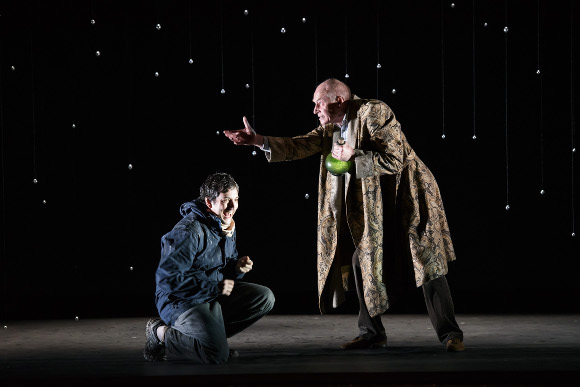
Now that the run is over I can deal with issues that would have been spoilers for anyone going to see the show later in the run. I think what is most striking about how Welsh has reconstructed Stevenson’s story really comes out in the ending but it’s there all the way through as she constructs different relationships between the three main characters and the bottle. In the original story only Keawe has any complexity as a character and the ending is something of a cop out; a character who considers himself already damned just shows up and makes the, fatal, final purchase. Louise Welsh handles this quite differently.

 Last night I braved the storm to catch an intriguingly curated show at Trinity St. Paul’s. Talisker Players’ Spirit Dreaming was a selection of music in which “western” composers explore the ideas of colonized peoples through the medium of vocal chamber music. The music was interspersed with readings from creation myths from around the world. It was very interesting to see how changing ideas of “cultural appropriation” and different cultural contexts; French and British colonies, Brazil, northern Finland, influenced works which range in time from the 1920s to the 2010s.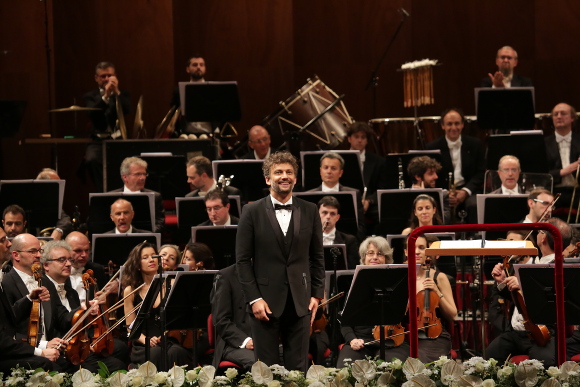
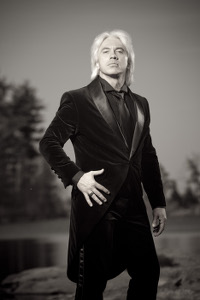 A packed out Koerner Hall just saw something half way between an art song recital and a revivalist meeting. To say that Mr. Hvorostovsky has a fan club would be a gross understatement. He was greeted by cheers, every song got prolonged applause (alas for those of us who prefer some continuity in a set), there were more flowers than at Princess Di’s funeral and about the only thing missing was that, mercifully, no underwear got thrown on stage. Oh, and, despite the requests to the contrary, the whole show was “artfully” lit by the constant flashes from phone cameras. He also sang some songs. In fact it was a nicely chosen mixture of Glinka, Rimsky-Korsakoff, Tchaikovsky and Strauss. Full details are
 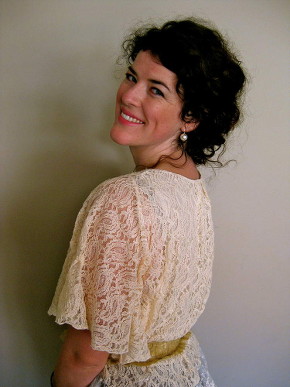 So, my second DMA recital of the week. This time that fine collaborative pianist Lara Dodds-Eden. Walter Hall was alive with sound before the recital proper started with Ben McCarthy’s electronic piece menagerie playing over the speakers; birdsong, rainforest and crackly vinyl. The first piece on the program proper was Fauré’s La chanson d’Ève sung by Danika Lorèn. These songs are a good showcase for Danika’s many excellent qualities. It was all there. The diction, the easy upward extension, the beautiful and varied colours. Nice! And a good start for Lara showing her sympathetic qualities in classical artsong.
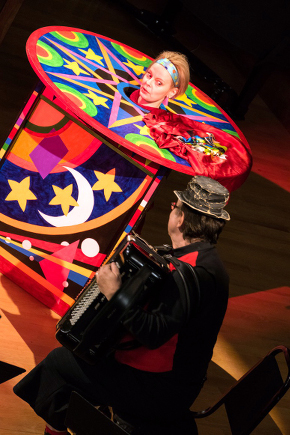 A concert of contemporary works for accordion? Why not! Well it was more of a concert of contemporary works for fixed reed instruments with, ironically, Trinity St. Paul’s most impressive fixed reed instrument forming an unused but imposing backdrop to the proceedings. Things started off conventionally enough with Soundstreams’ Artistic Director Lawrence Cherney on stage with three players of different instruments describing their histories and properties and then mild Hell broke loose as a curiously clad Joseph Macerollo burst into the auditorium, ejected Lawrence and friends and launched into R. Murray Schafer’s performance piece La Testa d’Adriane; the tale of a head mystically preserved between life and death. At this point the purpose of the rather bizarre contraption on stage was unclear but soon enough the cloth was pulled back to reveal Carla Huhtanen, or her head at least. More accordion and speech from Macerollo and a bizarre collection of grunts, squeaks, shrieks and gurning from Carla followed. Madness or genius? It’s Schafer. The question is unanswerable.
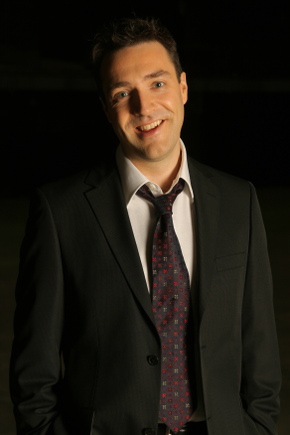 Most people in the Toronto opera world know Dean Burry principally as a composer of operas for children. He’s written several and a couple have been mainstays of COC school tours. It’s perhaps understandable then if his music is seen as approachable and maybe, even (sotto voce), a little unsophisticated. Last night, a recital of Dean’s works in Victoria College Chapel; part of his DMA program at UoT, provided a chance to hear a number of works in a much broader range of styles.
