Unknown's avatar

About operaramblings

Toronto based lover of opera, art song, related music and all forms of theatre.

Rossini… with goats

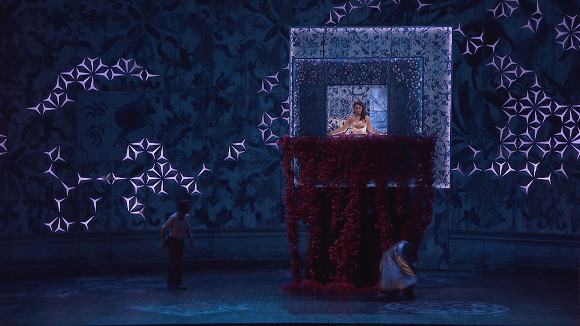
Rossini’s Aureliano in Palmira is a rarity for a whole host of reasons.  There’s no definitive edition.  Many of the extant scores have much easier versions of the main arias for the tenor titular character.  Quite a bit of the music was reused for Il barbiere di Siviglia, often in ways that seem quite odd after hearing it in its original context.  Finally, the plot is a bit thin.  Not that that usually worries bel canto aficianados.

1.temple

Continue reading

News, news, news

nataly gennadiThis just in.  Ukrainian Canadian soprano Natalya Gennadi will replace Ambur Braid in the title role in Tapestry’s Oksana G.  I should have seen that coming as I know that Ambur is singing in a Krenek’s The Secret Kingdom at Oper Frankfurt until May 21st and Oksana G. opens on the 24th!  I’ve only seen Ms. Gennadi sing once but she was impressive and she’s a protégée of Sondra Radvanovsky.

Sadder, Talisker Players are shutting up shop at the end of the season after eighteen years.  Likely another example of there only being so long any one person or team can keep up the funding grind.  Talisker’s concerts were an often interesting mix of music and related readings and no-one else really operates in that niche.

Later this week and beyond

1617-Baroque-Diva-updatedThursday 23rd at 8pm, Karina Gauvin is performing with Tafelmusik at Koerner Hall in a concert called The Baroque Diva.  Details are here.  This will be repeated on Friday and Saturday evenings and on Sunday at 3.30pm.  Sunday at 3.30pm Voicebox are presenting Mussorgsky’s Khovanshchina.  I’m not sure where it will fall on the semi-staged to concert spectrum but it’s definitely piano accompaniment (Narmina Afandiyeva) and the cast is headed up by Andrey Andreychik.  This is a piece that played in full runs over three hours so it will be interesting to see what they choose to include, or not.

Continue reading

Completing the Bechtolf trifecta – Le nozze di Figaro

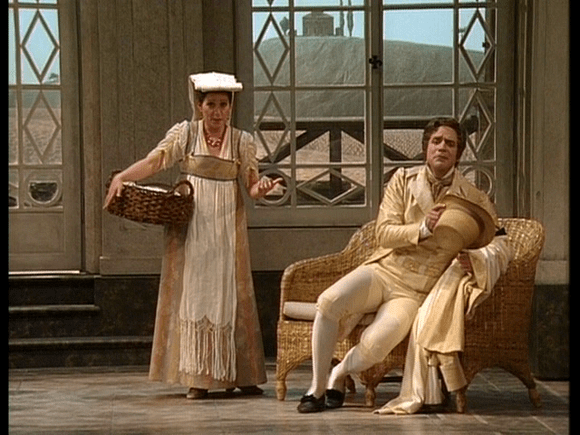
Sven-Eric Bechtolf’s stagings of the Mozart/da Ponte operas in Salzburg concluded in 2015 with Le nozze di Figaro.  I think it’s the most successful of the three.  Bechtolf’s strengths lie in detailed direction of the action rather than bold conceptual statements and Nozze is probably the least in need of, and the least amenable to, the big Konzept.  There aren’t any real dramaturgical problems to solve.  It just works as written.  I don’t think that’s so true for Don Giovanni or Così.

1.sketch

Continue reading

Howard and Haji

Yesterday afternoon’s Mazzoleni Songmasters concert featured local tenor Andrew Haji and Welsh baritone Jason Howard in a program somewhat loosely linked to England.  Neither singer was, I think, 100% well (Haji’s cold was announced, Howrad’s merely obvious!) but both battled through manfully and gave us some fine singing.  There were some interesting contrasts especially in the first half of the program.  Andrew kicked off with Francesco Santoliquido’s I canti della sera.  I’m no expert on Italian art song but these did sound like songs rather than opera arias, at least in the hands of Andrew and Rachel Andrist.  In contrast, Jason’s set (Tosti’s L’ultima canzone, Respighi’s Nebbie, Tosti’s L’ideale and Verdi’s In solitaria stanza), with Robert Kortgaard sounded distinctly operatic and suited Jason’s darkish voice rather well.

Continue reading

UoT’s Imeneo

Imeneo is one of Handel’s less well known operas; perhaps deservedly so.  The plot and the libretto are weak and the music pretty variable.  Charles Jennens, the librettist for Messiah, descibed it as “the worst of all Handel’s compositions”.  It does have the merit of being short.  Most recent recordings come in around two hours and this UoT Opera production, rearranged and cut by Tim Albery, comes in at 100 minutes spread over two acts.

ship

Continue reading

La Cecchina

Niccolò Piccinni’s La Cecchina or La buona figliuola is an opera buffa in two acts written for the Teatro delle Dame in Rome where it premiered in 1760.  The libretto is by Carlo Goldini and, while said to have been inspired by Richardson’s Pamela, is actually a fairly straightforward masters and servants story of a similar nature to Pergolesi’s La serva padrona or even Mozart’s La finta giardinera; all, of course, firmly rooted in the conventions of the commedia dell’arte.  Being written for Rome it was, originally, played by an all male cast.  Last night at Koerner Hall the Glenn Gould School Opera presented it with female singers in the high roles.

Photo: Nicola Betts

Kendra Dyck as Sandrina and Asitha Tennekoon as the Marchese

Continue reading

All the Schoenberg

calfThere was a sort of mini Schoenberg Fest at the TIFF Lightbox yesterday.  First up we got Topher Mokrzewski and Adanya Dunn with Claude Vivier’s Hymnen an die Nacht and five pieces from Schoenberg’s Pierrot Lunaire.  The Vivier was a very apt choice; a piece of CanCon in the spirit of the Schoenberg.  Topher may not like Schoenberg but he certain;y knows how to play it and Adanya, in my opinion, is at her considerable best in music of this type.  Good start.

Continue reading

Kaufmann’s Cav and Pag

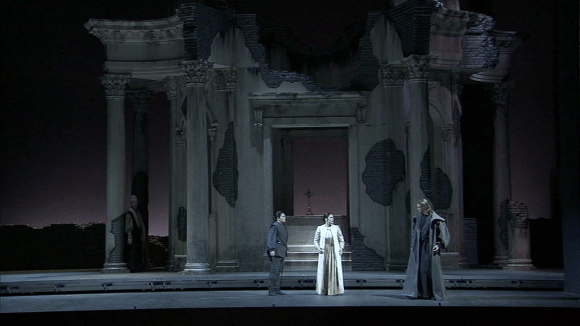
Jonas Kaufmann made a double role debut as Turiddu and Canio in the classic verismo double bill of Mascagni’s Cavalleria Rusticana and Leoncavallo’s Pagliacci at the Salzburg Easter Festival in 2015,  The productions were directed by Philipp Stölzl and Christian Thielemann conducted with the Staatskapelle Dresden in the pit.

1.church

Continue reading

Bechtolf Round Two – Don Giovanni

Sven-Eric Bechtolf’s second Mozart/daPonte for Salzburg was Don Giovanni which premiered in 2014.  There are some similarities with his Così fan tutte.  He uses a symmetrical unit set again and shows a fondness for creating symmetrical tableaux vivants but there the similarities pretty much end.  I could find a consistent, believable set of humans in Così but not so much in Don Giovanni.  The problem is really the man himself.  Bechtolf, in his notes, seems to be arguing that Don Giovanni can make no sense in an age of pervasive accessibility and exposure to all things sexual.  Da Ponte’s Don requires a climate of sexual repression for his essence; to Bechtolf a kind of Dionysian force (he cites Kierkegaard), to make any sense as a human.  I think I get that but then, I think, the challenge becomes to create a Don Giovanni who does make sense to a 21st century audience as, in their different ways, do Guth and Tcherniakov.  Bechtolf seems to treat the character not so much as a human rather than as a kind of energy focus who exists by igniting aspects of the other characters; whether that’s lust or jealousy or hatred.  He caps off this idea at the end by having Don Giovanni reappear during the final ensemble as a kind of mischievous presence still chasing anything in a skirt, even if it’s, perhaps, from another world.  It’s an idea that I could not really buy into.

1.stab

Continue reading