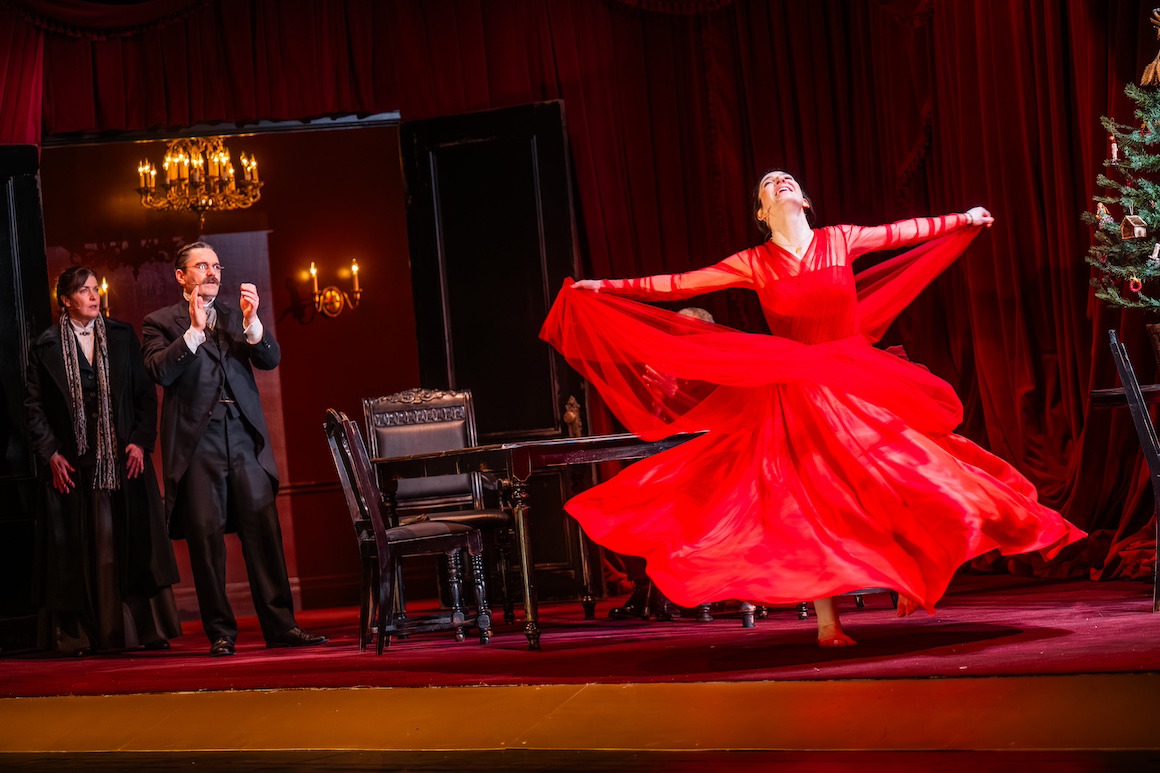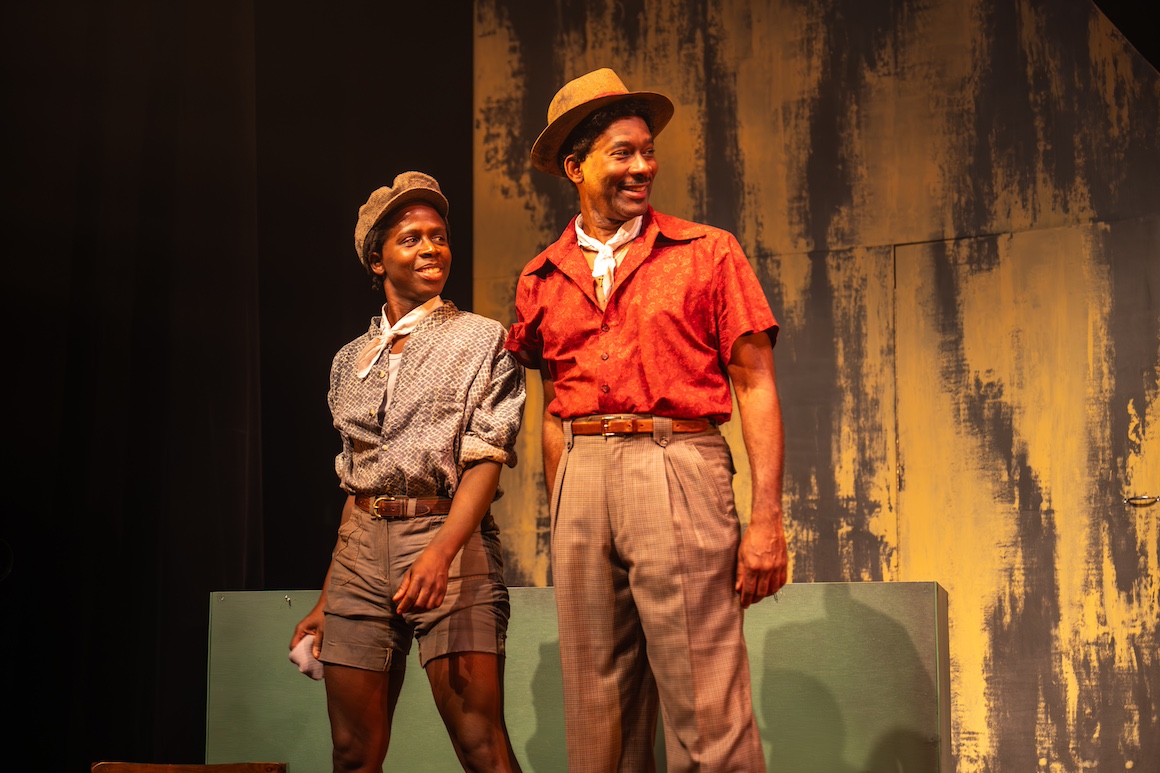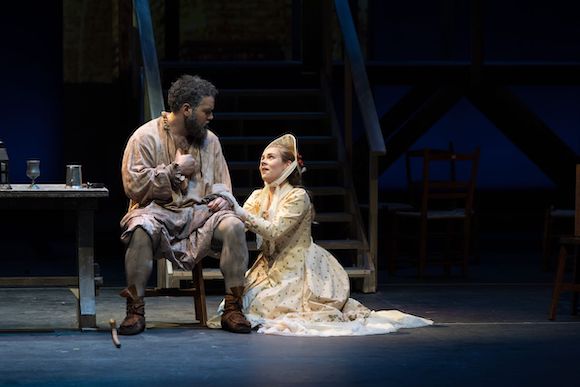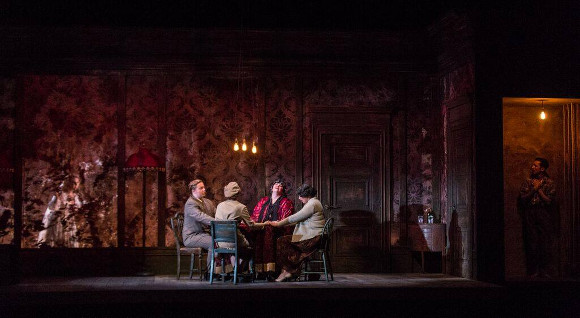
Moonlight Schooner, by Kanika Ambrose, is currently playing at the Berkeley Street Theatre in a production directed by Sabryn Rock. It’s set on May Day 1958 and a group of Black sailors have been stranded on St. Kitt’s by a storm. It being a holiday they decide to have a night on the town.
Tag Archives: robinson
Skelton as Grimes
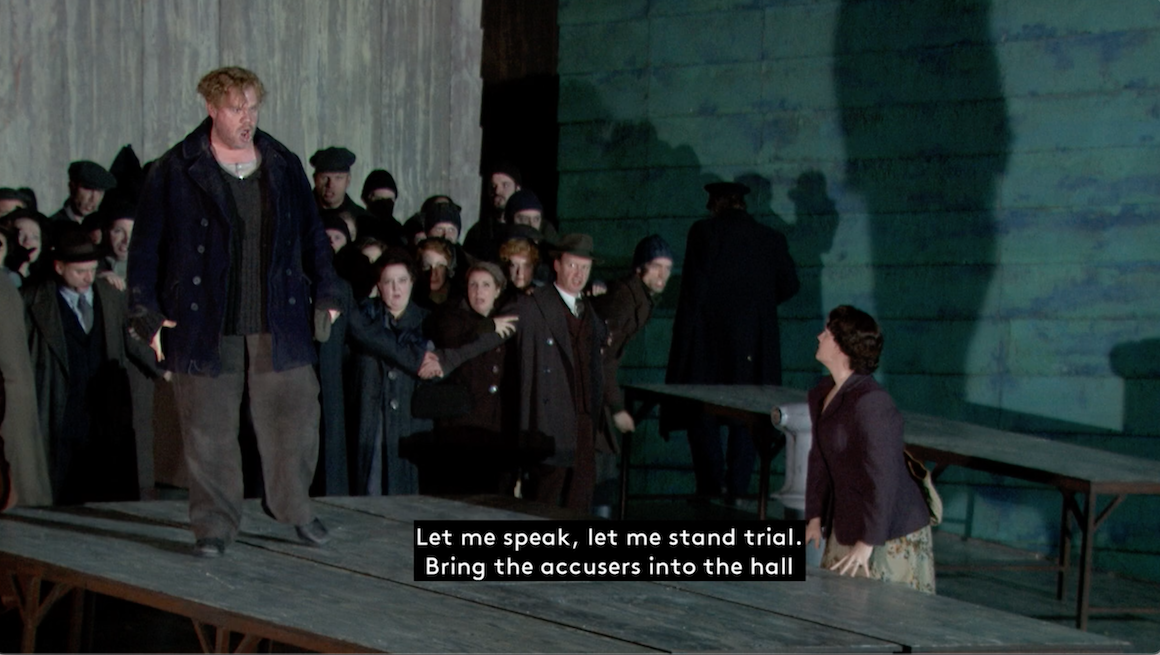
Continuing the theme of all Grimes, all the time… The only commercially available recording of Britten’s Peter Grimes with Stuart Skelton in the title role is a Chandos SACD recorded in Bergen in 2019 with Edward Gardner conducting and it’s really good. These two though had been captured on video in 2015 in a David Alden production at ENO. That had formed part of the ENO Live series of cinema transmissions but it was rebroadcast in August last year on Sky Arts in the UK. That version (at least my copy) is 720p video and AAC 2 channel 48kHz audio; so not quite Blu-ray standard but very tolerable.
Ecstatic Voices
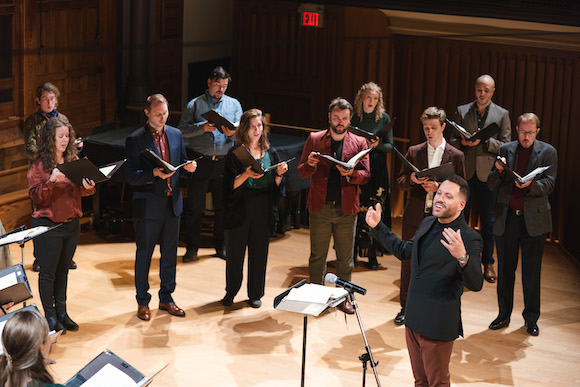
This year’s West End Micro Music Festival opened on Friday night at Redeemer Lutheran with a programme titled Ecstatic Voices. It was a mix of works for eight part a cappella vocal ensemble and a couple of solo tuned percussion pieces.
There’s something a bit special about unaccompanied polyphony.that has fascinated composers ever since the (probably apocryphal) debate on the subject at the Council of Trent. I think a good chunk of it is the sheer versatility of the human voice which can do so much more than sing a tone. It can laugh, whistle, speak, grunt, chatter and all manner of other things and if the composers of the Renaissance were happy to stick to tonal singing more recent composers certainly haven’t been. Both were in evidence n Friday.
The ensemble was made up of eight singers (Sydney Baedke, Reilly Nelson, Danika Lorén, Whitney O’Hearn, Marcel d’Entremont, Elias Theocharidis, Bruno Roy and Graham Robinson with Simon Rivard conducting) all well capable of singing major solo roles. This was no semi-pro SATB group!
McGill interns Turn the Screw
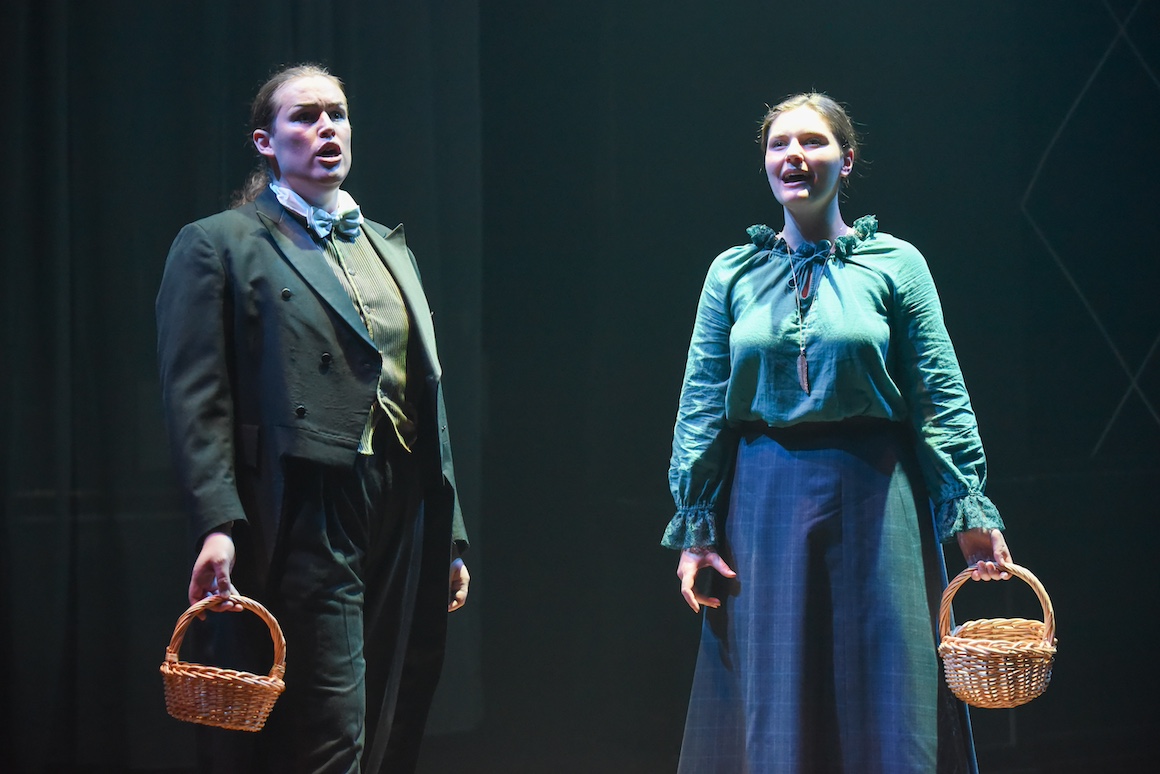
The second performance of Opera 5’s production of Britten’s The Turn of the Screw on Thursday night was sung by the “apprentice” cast drawn from Opera McGill. Curiously, it was an all female cast with women singing both Miles and Peter Quint.

It was the best of times…
UoT Opera Division’s production of Arthur Benjamin’s A Tale of Two Cities, currently playing at the MacMillan Theatre, is really rather good. Its partly the work itself which surely deserves to be better known. It’s a 1950 work to a libretto by Cedric Cliffe. It was written for the Festival of Britain and was considered a success at the time. It is in many ways typical of mid 20th century English opera (though Benjamin was a peripatetic Australian rather than a Brit). It’s colourful and uses a large orchestra with lots of brass and percussion and combines lyricism with some fairly heavy dissonance. It also includes a few good arias, notably one for Lucie Manette, the romantic female interest.

Dr. Manette (Burak Yaman), Lucie Manette (Emily Rocha)
The Pilgrim’s Way
Saturday night saw the inaugural concert of the Toronto Mendelssohn Singers; the professional core of the much larger Toronto Mendelssohn Choir, at Trinity St. Paul’s with Jean-Sébastien Vallée conducting. There were four pieces on the programme; one very substantial and three shorter works. Things kicked off with a pleasant but essentially conventional arrangement by Dierdre Robinson of Steal Away. This was followed by an Arabic piece by composer-in-residence Shireen Abu-Khader called I Forgive where the choir was joined by soloist Raneem Barakat. This dealt with the short life and death of Egyptian LGBTQ activist Sarah Hegazi and was rather beautiful with intriguing Arab influences especially in the solo part. Then came Elgar’s Lux Aeterna arranged for choir by John Cameron.

Five star Elektra
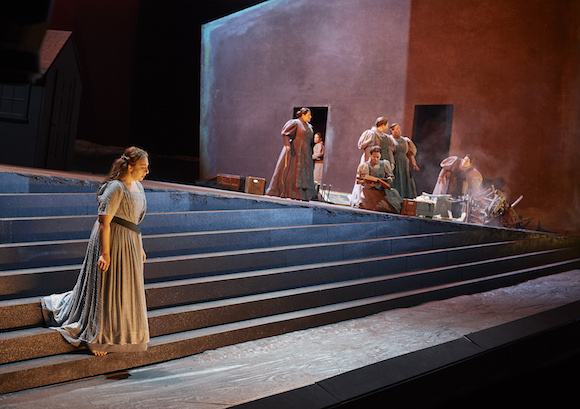
Richard Strauss’ Elektra opened last night in a revised version of James Robinson’s 2007 production. The setting is fairly straightforward and a bit drab; vaguely Victorian, or perhaps Gormenghast, which seems about right for the hagridden House of Atreus. The stage is severely raked; back to front. and stage left to right. There are a couple of walls with entrances. There’s a strange little hut which, it turns out, forms a sort of trap door to the palace. Costumes are either shapeless (ladies) or vaguely reminiscent of evening wear (gentlemen). In this setting the action plays out convincingly enough with even difficult scenes like Elektra’s “death dance” well handled. The tricky scenes between Elektra and Klytämnestra and Elektra and Orest have the appropriate degree of tension and suspense.

Elixir in Niagara?
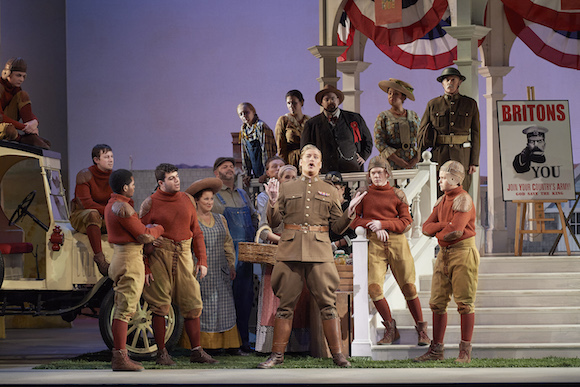
James Robinson’s production of Donizetti’s L’elisir d’amore was designed for various American regional houses. It has been updated to 1914ish and been given “regionalization” tweaks in the towns in which it has appeared. The version that opened at the COC last night has been transported to small town Ontario, Niagara on the Lake perhaps, during a Fall Fair. There’s a bit of a problem. The iconography; Kitchener recruiting posters, steel helmets etc, clearly place the action during, rather than before, WW1. Maybe an American director just doesn’t get, or doesn’t care about the implications but Adina buying Nemorino out of the army for example would hardly have been seen as virtuous in the white feather infested British Empire of 1914. Fortunately most of the audience either didn’t get it or didn’t care either and frankly even persnickety me was prepared to let it go and just enjoy the rather silly romp that we got. After all, this is not the other opera about love potions!

The Telephone and The Medium
UoT Opera’s fall production opened last night at the MacMillan theatre. It’s a double bill of Menotti works; The Telephone and The Medium. The former was cleverly updated by Michael Patrick Albano to reflect the age of the smartphone. It actually seems more relevant than ever and, slight as it is – an extended joke about a girl who won’t get off the phone long enough for her fiancé to propose – it was wryly amusing. The Medium I’m not so sure about. It’s a contrived piece written in the 1940’s but set a few years earlier about a fake medium and her deluded clients. It seems dated, not so much in the sense that seance attendance is pretty unusual today, but in the extent to which the characters are clichéd, cardboard cut outs even. The medium herself is bad enough but her sidekicks are her rather dippy, if kind, daughter and a boy who is mute (k’ching), Gypsy (k’ching) and “found wandering the streets” (k’ching, k’ching) “of Budapest” (k’ching, k’ching, k’ching). The first act in which the fake seancery goes on isn’t bad but then the medium gets a shock; a real or imagined cold hand on her throat (probably imagined as she is a raging alcoholic) and decides to go straight. The second act is pure bathos. I can see why it was a Broadway hit in the 1940s but I think tastes have moved on. And who the heck calls their daughter “Doodly”?
Calgary Opera announces 2015/16 season
Calgary once again offers three main stage performances. The season opens with Delibes’ Lakmé. It’s a Tom Diamond production so probably not very Regie. Aline Kutan, seen as Queen of the Night in Toronto not so long ago, sings the title role with Andrea Hill as her sidekick Mallika. Lakmé’s paramour, the handsome British officer Frederic, is sung by Canadian opera’s current answer to Rudolph Valentino, Cam McPhail. Gordon Gerrard conducts. There are three performances on November 21st, 25th and 27th.