Dido and Aeneas in Trinity College Chapel

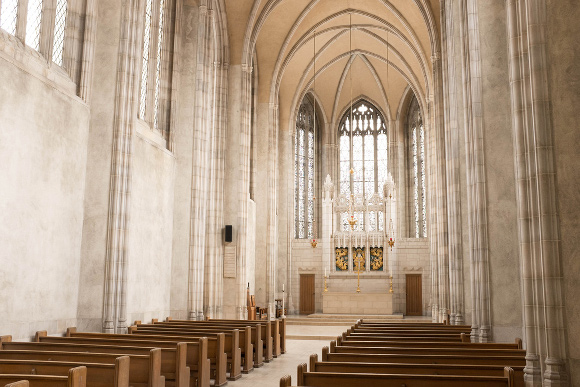
Last night the UoT’s early Music program presented Purcell’s Dido and Aeneas in the chapel at Trinity College.  It was a bit of a strange experience.  The work was semi-staged with dancers doubling Dido and Aeneas and a few extra as “chorus dancers”.  With a twelve person chorus and all the soloists plus the small band this made for a lot of people in the space.  Trinity College Chapel is long, narrow and high with traditional pew seating and a minimally raised platform for the altar.  All of which meant that only the first few rows and , maybe, people on the aisle had much of a view of anything.

tcc Continue reading →

Brush Up Your Shakespeare

charles-sy-headshot-WEB-217x300

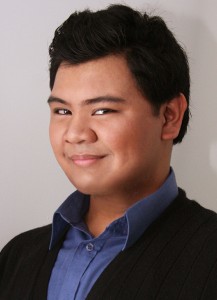
Charles Sy

Today’s free concert in the Richard Bradshaw Amphitheatre was given by the University of Toronto’s Opera Program.  It was a semi staged assortment of songs and excerpts from operas, operettas and musicals based on the works of Shakespeare with a distinct leaning to the operetta/musical theatre side of things.  That’s understandable enough with young singers but it does make the game we all play (at least I do) of trying to guess who the next Jonas Kaufmann or Anna Netrebko is that much harder.  Not that I’m very good at it.  I’m far more able to predict what a newly bottled Bordeaux will taste like in ten years time than whether the young soprano I’m listening to might go on to sing Siegfried or Turandot at the Met!

Continue reading →

Roots

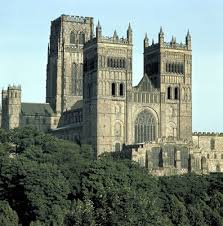
durhamcathedralI was talking to Leslie Barcza of barczablog at a concert yesterday.  He asked me what I was most looking forward to in the upcoming season and I was a bit stumped for an answer because there’s lots of good stuff in Toronto this season but nothing that really sets my pulse racing.  Finally I answered with the TSO’s Dream of Gerontius, which, it turns out, is not exactly high on Lesley’s bucket list.  This led to a brief discussion about how origins affect our reactions; that is until the actual concert interrupted our talk.

Continue reading →

Upcoming events

There’s quite a lot happening before the COC season kicks off again with the opening of Handel’s Hercules on April 5th.  Here are some of the highlights including several rarities.

On March 22nd at 7:30pm and 23rd at 3pm the Cantemus Singers are putting on a concert performance of Purcell’s The Fairie Queene at the Church of the Holy Trinity. The cast includes Iris Krizmanic, soprano (Juno); Maria Soulis, soprano (Mopsa); and Michael Pius Taylor, tenor (Phoebus).  Tickets are $20; $15(sr/st); $10(child).

Continue reading →

Lunchtime with Tracy Dahl

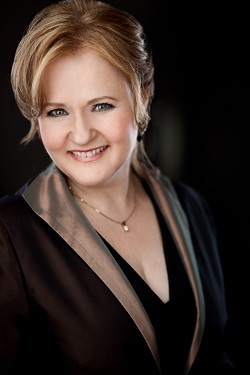
Dahl, Tracy (c)Kevin ClarkI’ve attended many very good concerts in the Richard Bradshaw Amphitheatre but I’m not sure I’ve ever attended one as intense as Tracy Dahl and Liz Upchurch’s Songs from the Heart recital today.  Tracy really is a rather extraordinary artist.  She is the antithesis of the lieder singer who stands demurely by the piano and Schuberts mellifluously.  She throws every fibre of her being into the performance.  It’s not campily histrionic but voice, facial expression and gesture are all used to the full whether she’s  hiccupping a drunken Harlequin or sibilantly suggesting a slithery singing snake.

Continue reading →

Intense Dido and Aeneas

Deborah Warner’s entry point to Purcell’s Dido and Aeneas is the, almost certainly apocryphal, story about it premiering in a girls’ boarding school.  At various points in the action we get a chorus of schoolgirls in modernish uniforms commenting silently on the action.  They are on stage during the overture, are seen in dance class during some of the dance music and queue up for the Sailor’s autograph.  It’s quite touching and adds to the pathos of the basic, simple, tragic story.  Warner also adds a prologue (the original is lost).  In Warner’s version Fiona Shaw declaims, and acts out, poems by Ovid/Ted Hughes, TS Eliot and WB Yeats.  These additions aside the piece is presented fairly straightforwardly in a sort of “stage 18th century” aesthetic.  The witch scenes are quite well handled with Hilary Summers as a quite statuesque sorceress backed up by fairly diminutive (and, for witches, quite cute) Céline Ricci and Ana Quintans.  Their first appearance is quite restrained but they go to town quite effectively in their second appearance.

1.entrance Continue reading →

Schade rocks

Today’s summer second thought is the 2004 Salzburg festival production of Purcell’s King Arthur.  I really enjoyed this first time around and I think it stands up extremely well to repeat viewing.  I pretty much stand by my original review but certain aspects of the production did stand out on repeat viewing.  The first thing that struck me is how these English 17th century works are very much a blend of the vulgar and the sublime (one could argue that that is the defining characteristic of English culture; from Chaucer to Trooping the Colour).  This production, like Jonathan Kent’s The Fairy Queen, successfully blends the two elements.  There’s a really good example at the very end where Michael Schade’s panty strewn rock star “Harvest Home” is followed by a gorgeous and dignifieed “Fairest Isle from Barabara Bonney but there’s lots more; much of reinforced by the sort of special effects that a Restoration audience would have loved.  There’s also some real depth in how it’s done.  First up I found the Merlin dressed as banker’s wife episode very funny but just that.  On rewatching I realised that much more is going on as the scene segs into Merlin explaining to Arthur that everything around him is an illusion.

1.scene Continue reading →

Fairest Isle

Toronto Masque Theatre’s latest effort is a Purcell show called Fairest Isle.  It’s semi-staged performance of excerpts from Purcell works, mainly the four stage works; Dido and Aeneas, The Fairy Queen, The Indian Queen and King Arthur (Wot! No Diocletian you cry) interspersed with readings from the plays and a narrative about Purcell’s life performed by actors Derek Boyes and Arlene Mazerolle.  The staging involves frequent short dance pieces, in a recognisably period style (heels, long skirts, arms never above the shoulder) by Marie-Nathalie Lacoursière.  The six singers, costumed throughout in dark suits or dresses, mostly sang from music stands though some pieces were blocked.  There was an eight piece ensemble; two violins (Larry Beckwith/Kathleen Kajioka), viola (Karen Moffat), two oboes (John Abberger/Gillian Howard), cello (Margaret Gay), lute/guitar (Lucas Harris) and keyboards (Christopher Bagan) directed by Beckwith.  Continue reading →

War in opera

As November 11th comes around for the 94th time since the guns were, very temporarily, silenced I thought it might be interesting to look at how war has been seen by librettists and composers over the years. Very early on we get a very gritty take on the subject in Monteverdi’s extremely compact Il combattimento di Tancredi e Clorinda but not so long after the path for the next three centuries is set with Purcell’s broadly comic King Arthur.  As far as I can see from Purcell to 1945, with very minor exceptions, the message is largely “war is fun”.  War is an excuse for a big parade (Aida; unless Tim Albery is directing!), an excuse for a drinking song (Faust), just plain comedic (La Fille du Regiment), a plot device (Cosí fan tutte) or a background event (Tosca, various versions of the Armida story).  The only opera, pre 1945, that I can think of that deals with the horror of war is Les Troyens, and that of course takes place in a distant, mythical, past.

Continue reading →

Time is a funny thing

A series of blog posts discussing time, perceptions of time and historically informed performance (HIP) plus seeing Opera Atelier’s Der Freischütz got me thinking along some curiously convergent lines and arriving at the conclusion that HIP isn’t and can’t be what it is often purported to be; a fairly faithful attempt to reproduce a work as it would have been seen by its first viewers or “as the composer intended” or something like that.  Not, of course, that even if it was, we would see and hear it as the original audience did but that perhaps is a topic for another day.

Continue reading →