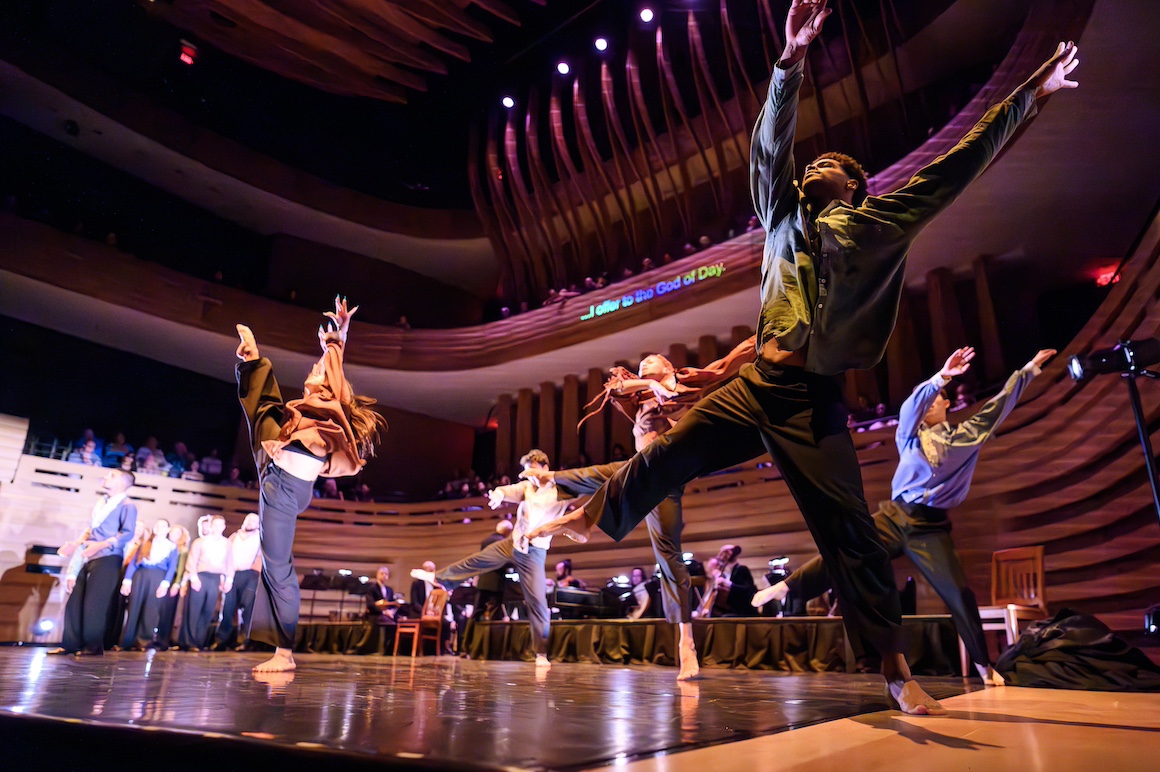
My review of William Christie and Les Arts Florissants’ Charpentier double bill that opened TSM 2026 on Thursday evening at Koerner Hall is now available at bachtrack.com.

Photo: Lucky Tang
#bachtrack

My review of William Christie and Les Arts Florissants’ Charpentier double bill that opened TSM 2026 on Thursday evening at Koerner Hall is now available at bachtrack.com.
Photo: Lucky Tang
#bachtrack
William Christie and Les Arts Florissants kicked off Toronto Summer Music on Thursday evening at Koerner Hall with a version of Purcell’s The Fairy Queen which is currently on a sort of world tour. This production, conceived by Christie and Paul Agnew is quite radical. Let’s look at what they have done.
Jean-Joseph Cassanéa de Mondonville’s Titon et l’Aurore is another member of that rather long list of operas that were well received in their day and then totally disappeared from the rep. It’s interesting as an example of what was happening on the French opera stage between the retirement of Rameau and the revolution (it premiered in 1753) and because it played an important role in the “querelle des bouffons”.

Rameau’s Platée is a rather cruel satire on appearance and perception. Jupiter woos the unattractive swamp nymph Platée in order to prove to Juno how ridiculous her jealousy is. Platée is led to think that she is so beautiful that Jupiter will marry her only to be mocked and deflated when the crowd turns on her.

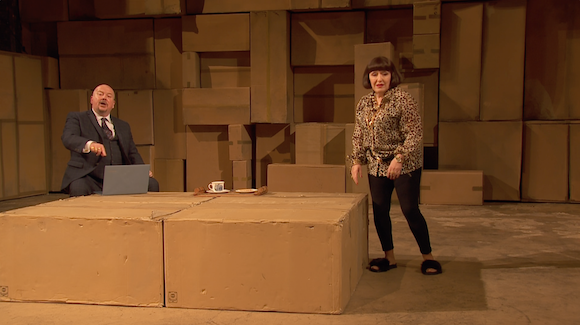
John Gay’s The Beggar’s Opera has been around since 1728 and is revived with some regularity but has never quite made into the opera canon. The latest incarnation is a version heavily rewritten by Robert Carsen and Ian Burton with a musical concept by William Christie. It first saw light at the Théâtre des Bouffes du Nord in 2018 before touring extensively.
Here’s another fine example of how well Handel’s oratorios can work when staged. It’s a recording of Hercules made at Paris’ Palais Garnier in 2004. The staging is by Luc Bondy and William Christie and Les Arts Florissants are joined by a youngish cast of extremely good singers. It’s compelling stuff. I think what, for me, makes the oratorios much more interesting than most of Handel’s opera seria is structural. The operas tend to alternate recit and da capo aria with maybe a duet or chorus to close an act but they are pretty predictable. In the oratorios Handel makes much more use of ensembles and the chorus and, for me, that’s vastly preferable.
Monteverdi’s L’incoronazione di Poppea was the “shabby, little shocker” of the 17th century. It’s about lust, obsession, murder and revenge. So, it’s a bit surprising that all too often it comes off as elegant but deadly dull. That’s rather the case with Pierre Luigi Pizzi’s production filmed at the Teatro Real in 2010. Despite having Danielle di Niese, something of a specialist Roman sex kitten, in the title role it’s all rather bloodless. It starts off OK with the gods and goddesses of the prologue being wheeled about on platforms but after that he gets rather static. Sets and costumes are almost unrelieved grey/silver tones (including a rather fetching pair of silver lamé booty shorts for Damigella) although Nerone himself seems to be dressed as a giant black chicken in Act1 (know you of such a bird, Baldrick?). The only real breaks in the (literal) monotony are the bright red robe Ottone borrows from Drusilla for the attempted murder and the sparkly gold outfits that appear for Nerone and Poppea at the end. It’s also rather dark most of the time.
Deborah Warner’s entry point to Purcell’s Dido and Aeneas is the, almost certainly apocryphal, story about it premiering in a girls’ boarding school. At various points in the action we get a chorus of schoolgirls in modernish uniforms commenting silently on the action. They are on stage during the overture, are seen in dance class during some of the dance music and queue up for the Sailor’s autograph. It’s quite touching and adds to the pathos of the basic, simple, tragic story. Warner also adds a prologue (the original is lost). In Warner’s version Fiona Shaw declaims, and acts out, poems by Ovid/Ted Hughes, TS Eliot and WB Yeats. These additions aside the piece is presented fairly straightforwardly in a sort of “stage 18th century” aesthetic. The witch scenes are quite well handled with Hilary Summers as a quite statuesque sorceress backed up by fairly diminutive (and, for witches, quite cute) Céline Ricci and Ana Quintans. Their first appearance is quite restrained but they go to town quite effectively in their second appearance.
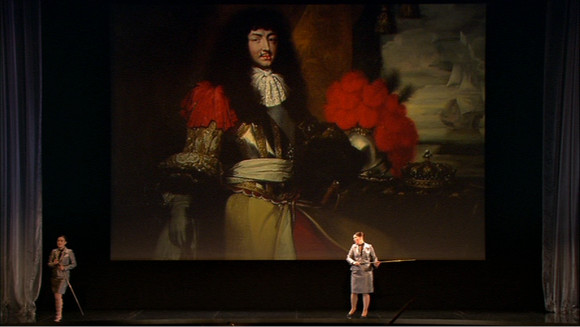
Lully’s Armide is pretty much the archetypal tragédie en musique. It features an allegorical prologue praising Louis XIV’s multiple virtues, delivered as a dialogue by La Gloire and La Sagesse followed by five acts based on the Armida/Rinaldo story from Tasso. There are also, of course, lots of ballet interludes. As such, it isn’t all that easy to stage for a modern audience. Robert Carsen and William Christie’s approach for their 2008 Paris production is to frame the story in the context of Versailles.
William Christie and Les Arts Florissants recorded Monteverdi’s Il ritorno d’Ulisse in patria in Aix-en-Provence, five years before their Madrid recording. The Aix production was directed by Adrian Noble and featured real life couple Kreśimir Śpicer and Marijana Mijanović as Ulisse and Penelope.