Art nouveau Requiem

anrequiemSlightly off the usual Operaramblings track perhaps, but my attention was recently drawn to a book publishing project that may be of interest.  It’s a bilingual Latin/English text of the Mozart Requiem illustrated by artist Matt Hughes in art nouveau style.  It’s going to be a 60pp edition with 15 full colour illustrations including gold ink.  It’s hard cover bound with the edition size yet to be finalized but quite small.  Right now it’s at the Kickstarter phase with a still a little way to go to meet target and allow publication.  The book will include an introduction to the piece and the various stories/legends about its completion by the Guardian‘s music critic Erica Jeal and an essay on art nouveau by art blogger and gallery owner Olga Harmsen.  There are more details and samples of the art work on Matt’s website or you could just go straight to the Kickstarter page.
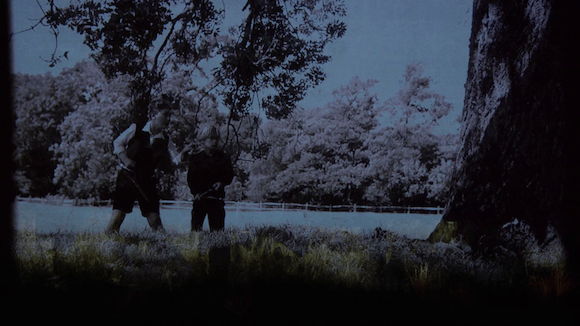
Lucio Silla moda grunge

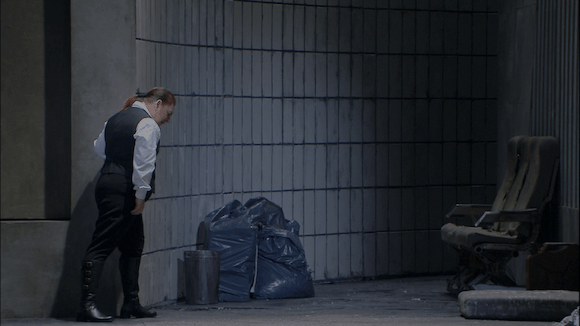
Claus Guth has a way with Mozart.  At his best; with his Salzburg productions of the da Ponte operas for example, he’s superb while I was unconvinced by his Glyndebourne Clemenza, despite its ambition.  I was really keen to see what he would do with an opera like Lucio Silla which, despite some lovely music, is formulaic and potentially very boring.

1.bins

Continue reading

Guth’s Clemenza

Claus Guth’s Salzburg da Ponte cycle is certainly my favourite trifecta and they are right up on my list for top picks for all three operas so I was intrigued to see what he would do with the much less recorded La clemenza di Tito which he directed at Glyndebourne in 2017.  Bottom line, I’m not at all convinced by it.

1.video

Continue reading

60s Figaro from Glyndebourne

No opera says Glyndebourne like Mozart’s Le Nozze di Figaro.  It opened the first season in 1934 and inaugurated the new theatre in 1994.  Michael Grandage’s production which opened in 2012 was, I think, Glyndebourne’s fifth.  In any event it’s a fairly traditional affair though with the setting updated to the 1960s (though still set in a palace in Seville and I’ve got a nagging feeling that late Franco era Spain didn’t have much in common with the Haight and Carnaby Street but there you go).  The updated setting does allow for some visual gags with ridiculous 1960s dance moves but otherwise it could pretty much be anywhere, anytime.  There’s no concept and Grandage’s focus is on the interactions between the characters and the way they can be expressed in a relatively intimate house.

1.austinhealey

Continue reading

Hytner’s Così

Nicholas Hytner’s production of Mozart’s Così fan tutte, seen at Glyndebourne in 2006, is about as traditional as it gets.  The story is straightforwardly told and the settings and costumes are 18th century Naples, or at least some operatic approximation of it.  That said, it’s immensely enjoyable and, just occasionally, goes beyond the superficial.  The strength lies in the casting and in the director’s decision to allow his young singers to behave like young people.  Miah Persson as Fiordiligi and Anke Vondung as Dorabella are close to perfect in their exuberant girlishness.  Naturally Vondung gets to be a bit ditzier than the angstier Persson because that’s how the thing is written.  Both of them sing extremely well too and there’s nothing lacking in the big solos or duets.

1.officers

Continue reading

McVicar’s Entführung

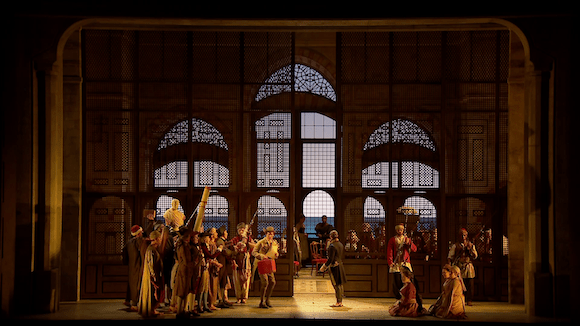
I think I’ve got used to David McVicar productions or, at least, what he’s produced in the last ten years or so.  The director’s notes will sound erudite and convey the impression that he’s gained some vital new insight into a well known work.  The actual production on stage will be almost entirely conventional with maybe the odd visual flourish but nothing to start the synapses firing.  This is very much the case with his 2015 production of Die Entführung aus dem Serail from Glyndebourne.  The “big idea” is that Bassa Selim is caught between two worlds; the ‘west” and the “east”.  Well duh!  This is as revelatory as pointing out that Mimi has TB.  This “revelation” is the reason/excuse for presenting the work with dialogues unaltered and uncut.  This is very much a mixed blessing.  Yes, it does allow some character development that’s otherwise missing but on the other hand it emphasises the fact that without some interesting new angle Entführing is basically dramatically a bit feeble.  Is she faithful?  How dare he doubt it?  Please forgive me.  Why should I?  Lather, rinse, repeat.  Enter Osmin.  Hang them.  Impale them. Daggers and poison.  Over and over.

1.baumeister

Continue reading

Muddled Figaro from La Scala

The 2016 production of Mozart’s Le nozze di Figaro from La Scala had me really puzzled after three acts.  There’s nothing to help with the production in either the booklet or on the disk so I went looking on line.  According to the Financial Times, Frederic Wake-Walker’s production replaced a much revered version by Girgio Strehler and is a sort of homage to him filled with references to other of his productions.

1.susannabasilio

Continue reading

Multi-layered Così

What’s Mozart’s Così fan tutte about?  I doubt there’s a good answer to that question but one element of what it’s about is artifice.  That appears to be Jan Philipp Gloger’s jumping off point for his Royal Opera House production filmed in 2016.  I have pages of notes on how the setting changes and who is singing to whom about what at which point in the opera.  It starts with the “cast”, in 18th century dress, taking a curtain call during the overture but it soon turns out to be a bit more complex.  Dorabella, Fiordiligi, Ferrando and Guglielmo appear in the auditorium in smart modern dress as late comers taking their seats.  Soon the boys are on stage in front of the curtain with Don Alphonso (for some reason dressed as a 17th century divine) while the girls hide in embarrassment behind their programmes.

1.opening

Continue reading

Brisk and attractive Figaro

This recording of Mozart’s Le nozze di Figaro was made in 2004 and released on DVD, which won a Grammy.  It’s now been remastered and released on Blu-ray.  It was recorded at the Théâtre des Champs Elysées in Paris and directed by Jean-Louis Martinoty.  The production is visually attractive and well thought out but not concept driven in any way.  The sets are largely made up of 16th century paintings while the costumes are the operatic version of the 17th or maybe 18th century; low necklines, full skirts, breeches etc.  There are a few interesting touches.  Act 3 is set in the count’s curio room with dead reptiles, skulls and so on and it seems somehow to provoke extreme nostalgia in the countess during Dove sono.  For the most part it’s a highly competent, well paced effort though with nothing new or different to say.

1.figarosusanna

Continue reading

If you are going to be crazy, do it properly

In 1884 Ludwig II of Bavaria put on a spectacular outdoor show for his guests at Herrenchiemsee.  It featured perhaps the first use of electric light outdoors in a spectacular lighting plot designed by Edison trained Alois Zettler.  That’s the jumping off point for Des Königs Zauberflöte.  So now imagine, as was not uncommon in the 19th century, that the aristocratic guests had decided to put on a spectacular amateur performance of Die Zauberflöte.  Ok, it’s not that probable that Emperor Franz Joseph and his wife, let alone Otto von Bismarck,would have performed but hang in there.  Now suppose, through some warp of time, space and imagination that the “real” Papageno had shown up and pointed out loudly, and at length, that’s not really what happened.  And so we get Enoch zu Guttenberg’s reimagining of Mozart and Schikaneder’s iconic work that played at Munich’s Prinzregententheater in 2013.

1.ladies

Continue reading