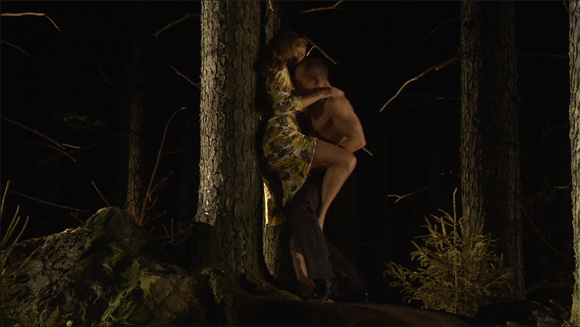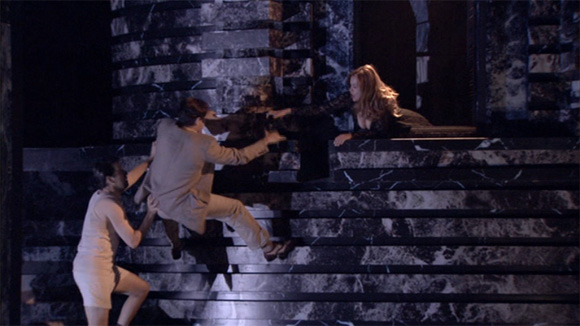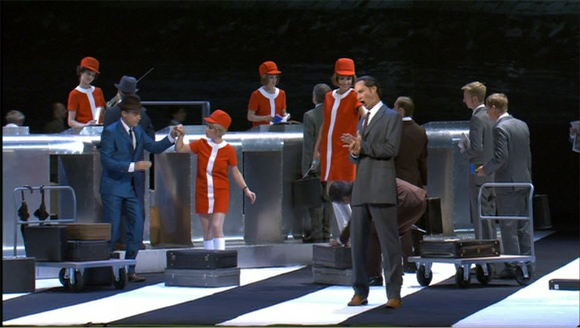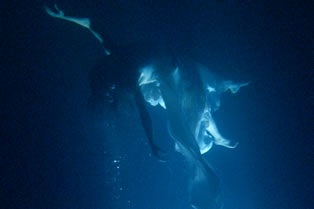
Claus Guth’s 2008 Salzburg production of Don Giovanni divided the critics along entirely predictable lines. It’s a very unusual treatment of Don Giovanni but the concept is stuck to with real consistency and it works to create a compelling piece of music theatre. The treatment on video too is not straightforward and, in a sense, the DVD/Blu-ray version is as much the work of Brian Large as it is of Claus Guth.
Tag Archives: mozart
‘Tis the season to speculate
With a month or so to go before the Canadian Opera Company officially announces its 2013/14 season it’s surely time for some uninformed speculation.
There are three big anniversaries in 2013; the bicentenaries of Verdi and Wagner and the centenary of Benjamin Britten. One would think all would be represented but maybe not. We know Verdi will be. Gerald Finley announced at the Rubies that he would make his role debut in the title role in Falstaff at COC in 2013/14 so we can ink that one in. Britten seems probable. There’s a Houston/COC co-pro of Peter Grimes, directed by Neil Armfield that is due to to come to Toronto. I think we can pencil that one in. No idea on casting but I would love to see Stuart Skelton myself. Wagner, I’m not so sure. Maybe February’s run of Tristan und Isolde will be COC’s sole nod to Wagner. Certainly the next most likely candidate; the Lyon/Met/COC Parsifal is, apparently, not expected before 2015.
Get your tickets now
Word on the street is that there are only “a few hundred” tickets left for the COC’s February run of the Peter Sellars/Bill Viola Tristan und Isolde. It’s a fair bet that most of the available tickets will be for nights when Burkhard Fritz is singing rather than Ben Heppner. If you want to see Heppner I’d plan on buying now rather than expecting something last minute to turn up. I’d expect there to be horrific line-ups for the same-day nosebleeds and standing room tickets (and I don’t have the stamina to stand through Tristan!).
Christopher Alden’s production of Mozart’s La Clemenza di Tito apparently isn’t selling so well, despite a stellar cast and a production that got very good reviews in Chicago. This makes me a sad panda. Unfashionably, perhaps, I regard Clemenza as one of Mozart’s best operas, perhaps his very best, so the chance to see it with a wonderful cast is one I would not miss. My current plans call for me to see it twice; with the principal cast and with the Ensemble Studio, but I shall be sorely tempted to get in for an extra look earlier in the run than my current tickets!
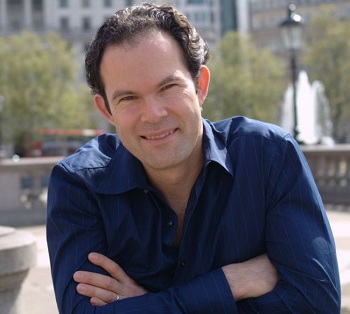
Gerry Finley’s Don Giovanni
Jonathan Kent’s 2010 Glyndebourne production of Don Giovanni has a great cast and high ambitions but, ultimately, doesn’t really come off, largely because the relationships between the characters too often fall short of anything interesting. The concept, as explained in the two short bonus segments, is that Don Giovanni is set in a society in transition and that the title character is a sort of harbinger of the new mores. The “society in transition” chosen by Kent is a sort of hybrid of Fellini’s La Dolce Vita and the last years of Franco’s regime in Spain. He might have done better to just pick one as the Fellini elements get pretty much reduced to the costumes and the Franco elements really don’t go anywhere.
Not a potato in sight
Today’s MetHD broadcast was Mozart’s last, and arguably best, opera La Clemenza di Tito. J-P Ponnelle’s production has been around for a while and offers nothing to offend traditionalists. There’s not a baked potato, muscle suit or child sacrifice in sight. The set, maybe more Italian Renaissance than Imperial Rome is elegant, undistracting and very singer friendly. The costumes are a rather eclectic mix of late 17th century and Republican Rome with a bit of Lady Capulet thrown in but only the black number with the big panniers that Vitellia gets in Act 2 would excite much comment. Direction then focuses rather on the characters and their relationships.
Against the Grain Theatre’s season announcement
The following just in from arguably Toronto’s most exciting opera company; Against the Grain Theatre. So a party, György Kurtág’s Kafka Fragments and Leoš Janáček’s The Diary of One Who Disappeared (with the brilliant Jacquie Woodley) and Figaro’s Wedding; a Toronto centred reworking of the Mozart classic with an orchestra for the first time. Following on from successes like their Tranzac based La Bohème and a brillian The Turn of the Screw, this looks very exciting.
Full details, links for tickets etc, below the fold.
Chill out dude
The problem with reviewing Doris Dörrie’s 2002 Berlin production of Così fan tutte is that pretty much everything that can be said about it already has been. It’s like trying to write about Willy Decker’s “red dress” Traviata. So I’ll try and be brief and to the point. On the surface the idea is a bit outlandish. Mozart and da Ponte’s satire about sexual fidelity is updated to the 1970s though to me, who grew up in the 70s, it seems much more like the 60s. That said, it works. It’s lively, funny, musically top notch and the presentation on DVD is very decent.
Almost ideal Idomeneo
The 2006 Salzburg production of Idomeneo seems to me to be just about ideal. The production is clean and consistently interesting without ever getting too far away from the core story and the pretty much unbeatable cast is backed up by the period sensibilities of Roger Norrington and the Salzburg Camerata and Bachchor. The only fly in the ointment is the utterly heinous video direction.
Time is a funny thing
A series of blog posts discussing time, perceptions of time and historically informed performance (HIP) plus seeing Opera Atelier’s Der Freischütz got me thinking along some curiously convergent lines and arriving at the conclusion that HIP isn’t and can’t be what it is often purported to be; a fairly faithful attempt to reproduce a work as it would have been seen by its first viewers or “as the composer intended” or something like that. Not, of course, that even if it was, we would see and hear it as the original audience did but that perhaps is a topic for another day.
Chav Giovanni
Calixto Bieito’s 2002 production of Don Giovanni from Barcelona’s Liceu theatre is a drink and drug fuelled nightmare. The general atmosphere will be familiar enough to anybody who has been around the “entertainment district” of a large city around chucking out time. Besides chemical stimulants and a great deal of enthusiastic bonking there’s also lots of violence, some of it quite disturbing, and buckets of blood but, as far as I could tell, only one rape. It’s bold and never dull but I think it stretches the libretto to its very limits and perhaps beyond.