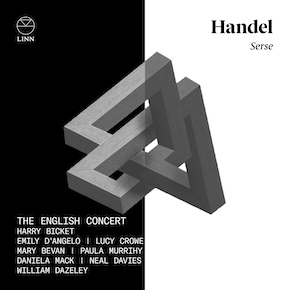
 I don’t review a lot of full length audio only recordings of mainstream operas. Generally I think video makes more sense but sometimes something comes along that attracts my attention. The recent recording of Handel’s Serse by the English Concert with Harry Bicket was one such. This time it’s the cast that caught my attention. There’s Emily d’Angelo (are we allowed to call her “young” or “emerging” any more?) in the title role but also such fine Handel singers as Lucy Crowe as Romilda and Mary Bevan as Atalanta. As it turns out there’s not a weak link in the cast and while these three turn in fine performances so do Daniela Mack (Amastre), Paula Murrihy (Arsamene), Neal Davies (Ariodata) and William Dazeley (Elviro). Continue reading
Handel’s Serse from the English Concert
Reply
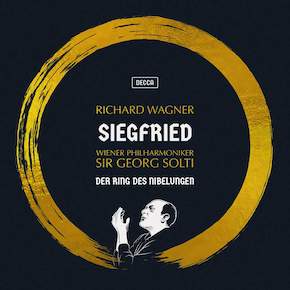 The remastered SACD release of Siegfried from the Solti Ring cycle is now out. There’s only so much I can add to my reviews of
 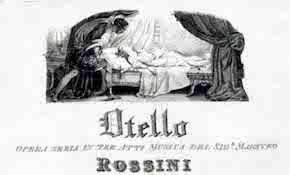 Rossini’s Otello is an interesting piece with a completely different plot to the Shakespeare/Verdi version. It’s entirely set in Venice for a start. For more details on the plot and the not insignificant casting demands you might find the first few paragraphs of
  Soundstreams has announced the line up for the 2023/24 season. First up, and very exciting, is The Bright Divide, which will play Nov 10th and 11th at the TD Music Hall (the new performance space at Massey Hall). It’s a staged show, directed by Tim Albery and featuring two works inspired by the work of Mark Rothko. There’s Morton Feldman’s Rothko Chapel for viola, timpani and choir and a new work by Cecilia Livingston; mark for viola and voice.
 It was National Indigenous People’s Day so what better way to celebrate/commemorate than go listen to an Indigenous artist perform in the music garden ; where the trees almost stand in the water.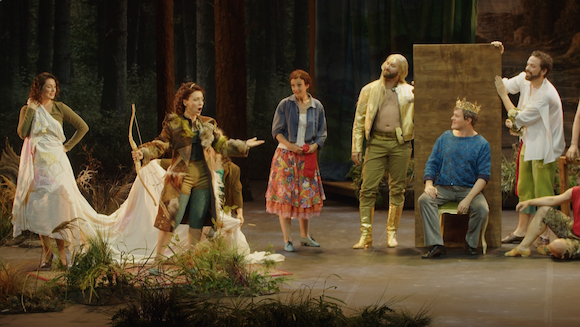
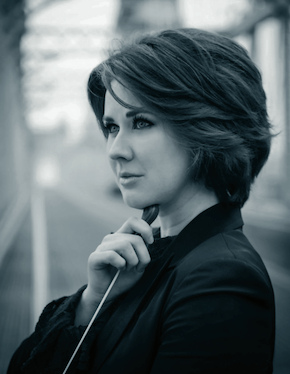 Just another Saturday in Toronto? Not really. I was at two shows/events a few blocks apart; one in the morning, one in the evening, and the experiences were very different. In the morning I was at Roy Thomson Hall for a “conducting masterclass” under the auspices of the Women in Musical Leadership programme. I don’t think such events are at all common and it was certainly a first for me. The set up was that four young women conductors (Maria Fuller, Jennifer Tung, Naomi Woo and Juliane Gallant) got to rehearse the TSO in standard repertoire with principal conductor Gustavo Gimeno providing feedback and suggestions. Two of the ladies worked on Brahms’ First Symphony and the other two on Tchaikovsky’s Fifth.