
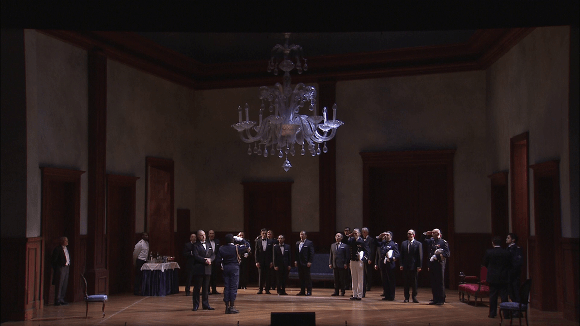
Just as Rossini’s version of Il barbiere di Siviglia completely eclipsed Paisiello’s version, so Verdi’s Otello sounded the death knell for an earlier version; ironically enough by Rossini. It’s a bit surprising as the Rossini version is not bad at all despite having a rather patchy libretto and being hard to cast. The first thing one notices is that the story isn’t even close to Shakespeare/Verdi. This is because the libretto was based on a French play by Jean-François Ducis that was popular in the 18th century. I don’t know whether the plot’s weaknesses are due to Ducis or the librettist but there are a few. There’s no Cassio so the motivation for Jago’s plotting is unclear. All the Venetian notables (bar perhaps the Doge) hate Otello but Jago doesn’t seem to have any special reason for animosity. Between the end of Act 2 and the beginning of Act 3 Otello is exiled. There is no explanation. The finale is abrupt and weak. Immediately after Otello kills Desdemona the gang of notables burst in to the room and appear to be completely reconciled to Otello and to him marrying Desdemona, despite having spent the rest of the opera chewing chips about this. In fact one could argue that the happy ending variant (yes, there was one) is the more plausible as it would only take the guys to arrive about ten bars sooner for that to be the logical outcome. As it is, Otello listens with incredulity to the change of heart and, not unreasonably, kills himself.
 Sorry if, after the preview listing, anyone was expecting a review of Karina Gauvin and Tafelmusik last night. I was scheduled to go but, for only the second time ever, I had to bail. I have a cough that should not be inflicted on any concert venue or audience. If things improve in the next 48 hours I’ll try and catch one of the later shows.
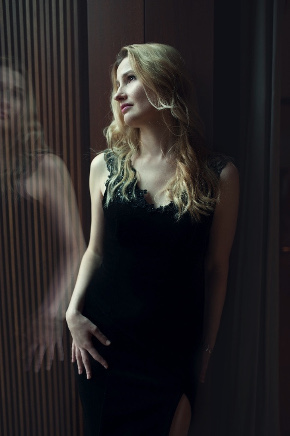 This just in. Ukrainian Canadian soprano Natalya Gennadi will replace Ambur Braid in the title role in Tapestry’s Oksana G. I should have seen that coming as I know that Ambur is singing in a Krenek’s The Secret Kingdom at Oper Frankfurt until May 21st and Oksana G. opens on the 24th! I’ve only seen Ms. Gennadi sing once but she was impressive and she’s a protégée of Sondra Radvanovsky.
 Thursday 23rd at 8pm, Karina Gauvin is performing with Tafelmusik at Koerner Hall in a concert called The Baroque Diva. Details are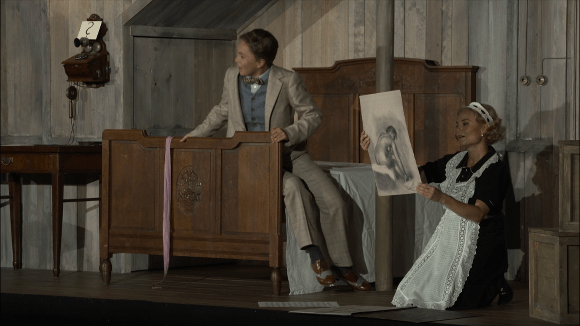
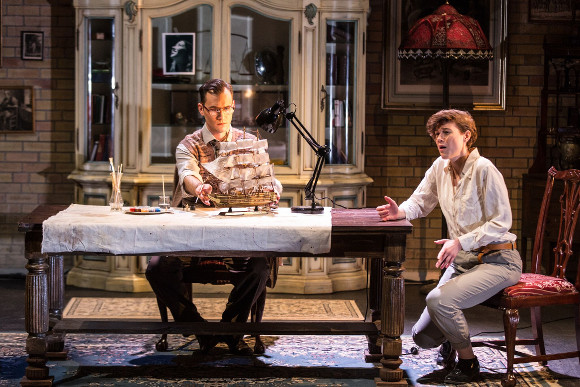
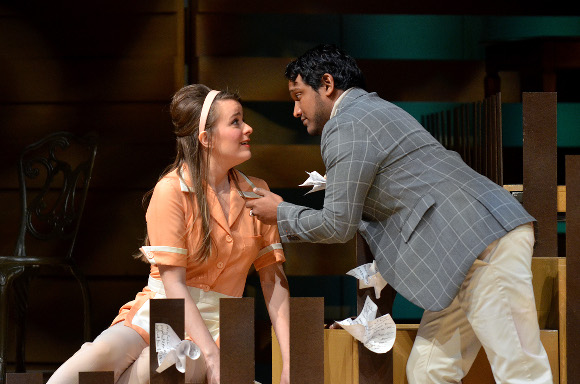
 There was a sort of mini Schoenberg Fest at the TIFF Lightbox yesterday. First up we got Topher Mokrzewski and Adanya Dunn with Claude Vivier’s Hymnen an die Nacht and five pieces from Schoenberg’s Pierrot Lunaire. The Vivier was a very apt choice; a piece of CanCon in the spirit of the Schoenberg. Topher may not like Schoenberg but he certain;y knows how to play it and Adanya, in my opinion, is at her considerable best in music of this type. Good start.
 operaramblings