
I’m never quite sure what I really think about an operetta like Lehár’s Das Land des Lächelns. I quite like the music, even if it can be a bit cheesey but I’m put off by the casual cultural appropriation (though it’s not nearly as bad as Puccini!). I’m not sure what the best directorial approach is either. Does one play it for froth? Does one try and mine some deeper meaning? Interestingly Andreas Homoki’s approach for his Zürich production filmed in 2017 is to play it straight and let whatever is there appear or not. It works rather well. It;s a typically lavish Zürich production with lots of colour and movement and he creates some spectacular visual effects. But he also allows for a sinister element to appear in the Chinese scenes. It may be over-interpreting but I think one can see shades of proto-Fascism here. It’s reinforced by the score that really has some rather sinister elements that I hadn’t noticed before. I think there’s even a nod to Siegfried’s Funeral March. All in all, quite interesting without being wildly unconventional.

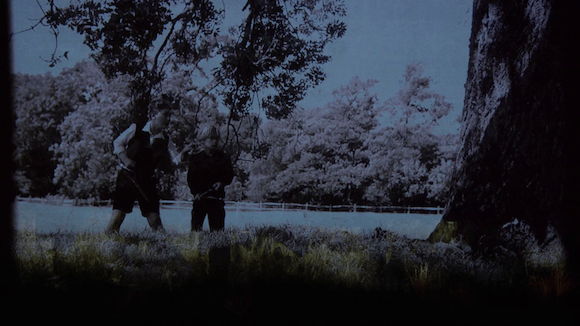

 The 2018/19 free concert series in the RBA has been announced. It includes the 1000th concert in the series which is pretty amazing. There’s the usual mix of vocal, chamber/instrumental, jazz, world music and dance. Concerts that particularly caught my eye include:
 At the U of T’s School of Continuing Studies
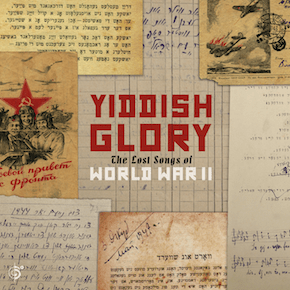 OK so it’s a bit off the Operaramblings beaten path but there’s a concert coming up at Koerner Hall on August 28th that intrigues me. It’s called Yiddish Glory and it resurrects anti-fascist music that documents Nazi atrocities and Jewish resistance/partisan activities in the Soviet Union after the German invasion of 1941.
 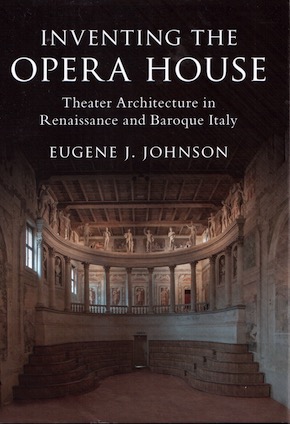 Inventing the Opera House: Theatre Architecture in Renaissance and Baroque Italy by Eugene J. Johnson is a scholarly but readable account of the prehistory and early history of the form we know today as an “opera house”. It’s fair to say that the road to the horseshoe shaped auditorium with ground floor seating and tiers of boxes looking over an orchestra pit to a deep stage was far from straightforward, perhaps even tortuous, and Professor Johnson lays out that journey in some detail.
 Tapestry Opera has announced participants for this year’s LIBLAB. This year’s librettists participants include playwright Colleen Murphy, Kanika Ambrose and Guildhall artist-fellows Lila Palmer and Daniel Solon. Composers joining the 2018 program are: Rene Orth, composer in residence at Opera Philadelphia, Benton Roark, composer of last season’s Dora-nominated Bandits in the Valley, Ian Cusson August Murphy-King. The 2018 LIBLAB ensemble will be led by musical directors Jennifer Tung and Andrea Grant and director Michael Hidetoshi Mori. Singers include soprano Teiya Kasahara, mezzo-soprano Stephanie Tritchew, tenor Keith Klassen, and baritone Peter McGillivray.
 So no Last Night of the Proms style extravaganza this year (Probably
 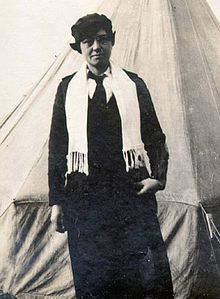 Your Daughter Fanny is a 45 minute long chamber opera with music by Alice Ho and libretto by Lisa Moore based on letters written by WW1 Newfoundland VAD nurse Frances Cluett (which can also be found in
