
Covid fan tutte is the best opera thing I’ve seen come out of the pandemic yet. It’s from Finnish National Opera and it uses the music of Così fan tutte (mostly) and a new libretto (in Finnish natch) to poke fun at every aspect of the current situation. To quote the blurb:
On stage, singers are rehearsing Die Walküre, when they are suddenly interrupted. As management has been laid off and the news of a global virus spreads rapidly, the Wagnerians are suddenly instructed to perform a modern satire on the situation.
It’s fully staged with a socially distanced orchestra and a virtual chorus. There appears to have been some sort of live audience in the house. They weren’t mucking about here. Both Karita Mattila and Esa-Pekka Salonen are involved. Bottom line; it’s very well done and genuinely funny with a few really sad bits like where a man sings an aria to his mother to the closed window of the old people’s home. There are subtitles for those whose Finnish isn’t up to it.
You can find it on Youtube on the Operavision channel. Brexit supporters should stay away as Operavision is funded by those nasty cultured foreigners, the EU.

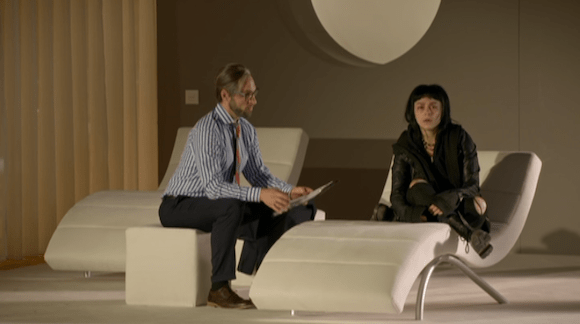

 The death of Canadian soprano Erin Wall at the far too young age of 44 from complications due to metastatic breast cancer was announced a couple of days ago. She was a regular performer in Toronto with both the TSO and the COC, as well as internationally, and a well respected colleague respected for her supportive attitude to younger singers.
 And now, as they say, for something completely different. Take the Dog Sled is a short piece in eight movements by Canadian composer Alexina Louie scored for instrumental ensemble and Inuit throat singers. The movements have titles like Bug Music and Sharpening the Runners on the Dog Sled. The style is mostly a kind of high energy playful minimalism with quite a lot of percussion and percussive effects from other instruments. It’s often quite onomatopoeic. There are also some quite beautifully, hauntingly evocative passages. The throat singers are used sparingly but to good effect.
 The official press release announcing the cancellation of the balance of the COC’s “in person” season just arrived in my mailbox. My initial reaction was “this is news?” and then I realised that, yes, this was the first time the official decision had been announced although it was pretty obviously coming when I interviewed Alexander Neef back in July. So there it is. No live opera at the COC until fall 2021. The previously announced
 I’m quite disturbed by some of the things I’ve been reading in the wake of Alexander Neef’s departure from the COC.

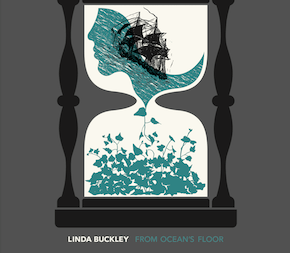 Linda Buckley is an Irish composer whose music combines, among other things, traditional Irish vocals, classical instruments, of more or less conventional form, and electronics to create an entirely unique sound world. This new album starts off with the most substantial and, to my mind, most interesting, piece; Ó Íochtar Mara (From Ocean’s Floor). The four movements combine Iarla Ó Lionáird singing in the traditional sean nós style with string quartet (Crash Ensemble) and Buckley herself on electronics. Each movement sets a poem in Irish with an accompaniment that is quite sparse and never overwhelms the vocalist. It’s mostly electronic drones with the strings kicking in in similar vein. It’s very beautiful and quite haunting. The vocals are sung with a great sense of the proper style and it’s an object lesson in how to combine folk vocals with classical instruments without making it sound like Victorian parlour music.
 I’ve listened to a lot of music for voice and piano and a lot of music by Shostakovich but it was only on listening to this new album by Margarita Gritskova and Maria Prinz that I realised that I had hardly heard any of Shostakovich’s art songs; except for a few with orchestra. So I was glad to discover the interesting collection on this CD. There are twenty songs taken from twelve different works. (most of DS’ song cycles seem to require multiple voice types. I guess labour was cheap in the USSR). The pieces are drawn from right across Shostakovich’s career from Op.4 to Op.145. The evolution of style is as clear as in his chamber or orchestral music.

