Yesterday’s concert in the RBA was dedicated to the late Stuart Hamilton, founding director of the COC’s Ensemble Studio. Current members, mezzo Emily D’Angelo and baritone Bruno Roy, each gave us two sets of French songs accompanied respectively by Hyejin Kwon and Stéphane Mayer. Ms. D’Angelo gave us Débussy’s Chansons de Bilitis and the curiously Débussy like Trois Mélodies by Messiaen. Both sets are quite meditative and impressionistic and Ms. D’Angelo’s very beautiful voice suited them well. There’s more there than beauty of tone. She’s showing some interesting, very mezzoish, colours in the voice now and there’s clearly plenty of power in reserve as she showed on a couple of occasions. It’s so easy to forget how young she is when a performance is this accomplished. Ms. Kwon was a sympathetic accompanist.
And so to the boys who gave us Poulenc’s La fraîcheur et le feu and Ravel’s Don Quichotte à Dulcinée. The Poulenc piece rather races along with the piano part, impressively played by Mayer, often much more interesting than the vocal line. Roy was at his best in the more hectic passages where his diction and command of French were at a premium. When the music became more expansive he didn’t quite seem able to expand with it; the voice lacking bloom in both upper and lower registers and with no real sense of some underlying power. This was more of a handicap in the Don Quichotte songs. Roy managed some decent physical and vocal acting, especially in the drinking song, but there just wasn’t enough heft to put in the swagger required in these pieces.
Prior to the performances, the COC’s Janet Stubbs made a short speech in memory of Stuart which managed, in a very brief span, to convey both the impact he had on the Canadian and wider opera scene and a sense of his more endearing eccentricities.
Photos if and when.


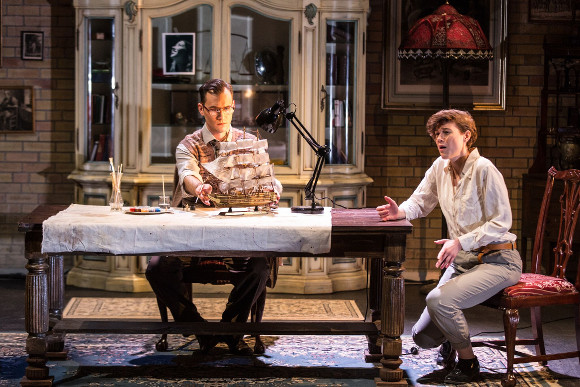
 There was a sort of mini Schoenberg Fest at the TIFF Lightbox yesterday. First up we got Topher Mokrzewski and Adanya Dunn with Claude Vivier’s Hymnen an die Nacht and five pieces from Schoenberg’s Pierrot Lunaire. The Vivier was a very apt choice; a piece of CanCon in the spirit of the Schoenberg. Topher may not like Schoenberg but he certain;y knows how to play it and Adanya, in my opinion, is at her considerable best in music of this type. Good start.
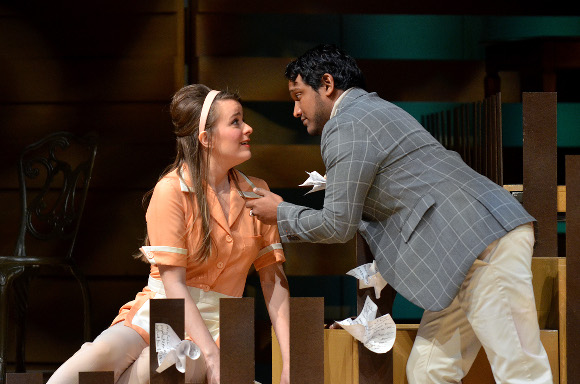
 The current Canadian Children’s Opera Company show; Brundibár, represents something of a new direction from the company. Previous shows, at least those I’ve seen, have been quite light and based, typically, on fantasy, fable or popular history. The current offering is altogether more serious. At its core is Brundibár, a children’s opera written by Hans Krása for a Prague orphanage in 1939 and subsequently performed over fifty times in the “showcase” concentration camp at Terezin.
  Tapestry Songbook is the culmination of New Opera 101; a week long masterclass where young singers get to work with established performers on repertoire from Tapestry’s extensive collection of recent Canadian work. This year the “masters” were Krisztina Szabó, Keith Klassen and Steven Philcox. The week culminates with a series of concerts of :scenes”; some performed by the “masters” and some by the students. As there were fourteen pieces performed and a cast of thousands I’m just going to report on my personal favourites with due apologies to anyone who got left out.
 Schubert’s Winterreise is sometimes described as the Everest of lieder singing and, as such, is something of a rite of passage for baritones. It’s much rarer to hear it sung by a soprano but today, on a day when there was more snow in Toronto than one encounters these days on the Hillary step, Adrianne Pieczonka, accompanied by Rachel Andrist, offered it up in the intimate Mazzoleni Hall. It took me two or three songs to get into it. The colours of the soprano voice are so not baritonal that the music sounded unfamiliar and disconcerting. By Der Lindenbaum though I was won over. Here was singing of a limpid beauty few baritones could match and from then on I was revelling in the new perspectives that hearing a soprano sing this music brings. I think it was greatly helped by Adrianne’s approach which definitely favoured bringing out the drama and the emotion of the text rather than wallowing in beautiful tone. That was there when she wanted it but there was much else besides. It was an emotional roller coaster from the (relative) optimism of Die Post through to the devastating last couple of numbers. By the end of Der Leiermann I was a puddle but possibly not quite as damp and deep as the critic sitting next to me (whatever Twitter might report). Rachel’s work at the piano was equally illuminating. This is a show they need to take to a much larger audience.
 operaramblings