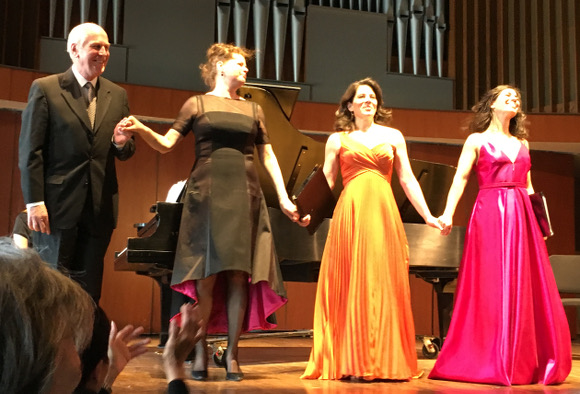
I went to see Whitney Mather sing yesterday afternoon. It was her second masters degree performance at Walter Hall with David Eliakis at the piano. (Probably the first time I’ve heard David play a proper piano!)

It was an interesting and well chosen program that allowed Whitney to demonstrate her musicianship and sensitivity to text. For the most part it avoided overly obvious territory, starting with Purcell’s rarely heard The Blessed Virgin’s Expostulation which was followed by the obligatory CanCon. In this case John Greer’s The Red Red Heart; settings of poems by Marianne Bindig. The Purcell allowed some tasteful decoration and an opportunity to display appropriately baroque style. The Greer, like so many modern songs, perhaps had more of interest in the piano line than for the voice but it did allow a brief coloratura flourish.
Next up were Respighi’s Quattro Rispetti Toscani to texts by Arturo Birga. These are rather beautiful songs and should be heard more often. Whitney brought out both the pathos and humour in the rather rustic (Tuscan dialect?) texts.
After the interval we were on more familiar ground with Schubert’s Der Hirt auf dem Felsen. Tiago Delgado played the clarinet part quite beautifully and Whitney managed the crazy pace of the piece very well, managing to maintain a clear sense of shape and line. She wrapped up with Milhaud’s Chansons de Ronsard. These are a bit of a tour de force. Some passages are really fast and much of the music lies high in the soprano range. Whitney may not have the easiest, most beautiful, high notes ever but she does have all the notes and she hit them here with accuracy and without sense of strain. She was particularly impressive in the crazy fast Tais-toi, babillarde.
All in all not a bad way to spend a late Saturday afternoon!

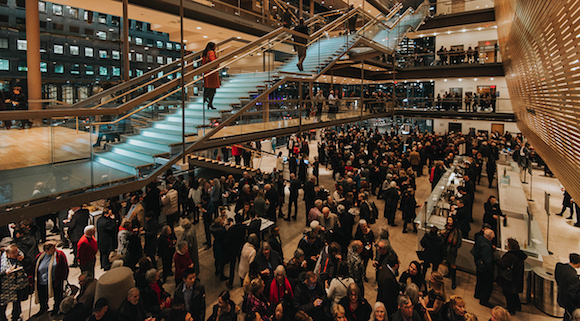

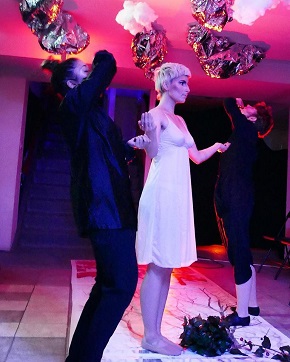 FAWN Chamber Creative presented a new piece last night at Kensington Hall. It was called Belladonna and was billed as a “queer, techno opera” to a libretto by Gareth Mattey who apparently specialises in this genre. “”Queer, techno pastoral” might have been nearer the mark. Basically, sheep tending person of uncertain gender/orientation meets another such. A supernatural being of some sort intervenes. There are hallucinogenic berries (“tripping hither, tripping thither?”). “Exploration” ensues. I was unclear on whether or not it had a happy ending. I’m not sure it matters.


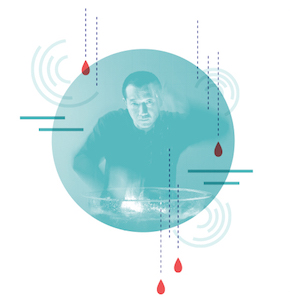 Tan Dun’s Water Passion After St. Matthew, given last night by Soundstreams at Trinity St. Paul’s is very Tan Dun. The work is in nine movements and scored for chorus, soprano and bass-baritone soloists, violin, cello, electronics and lots of percussion. And bowls of water and rocks. The texts broadly follow the Passion story finishing with a final Resurrection movement in which water is the symbol of rebirth, recycling and spiritual completeness. There are also ritual elements. Bowls of water laid out in a cruciform pattern are lit from beneath. The musicians change position and the players, especially the percussionists, perform hieratic gestures with the water bowls and their contents. It also involves a complex and dramatic lighting plot.
 operaramblings