Fernand Cortez

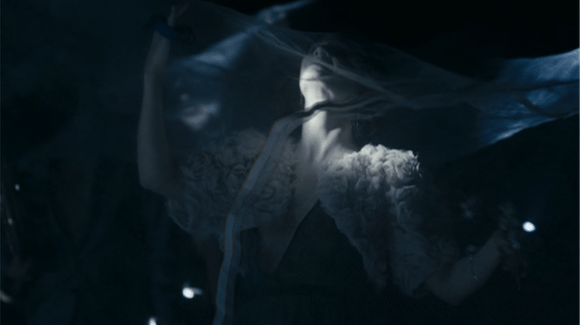
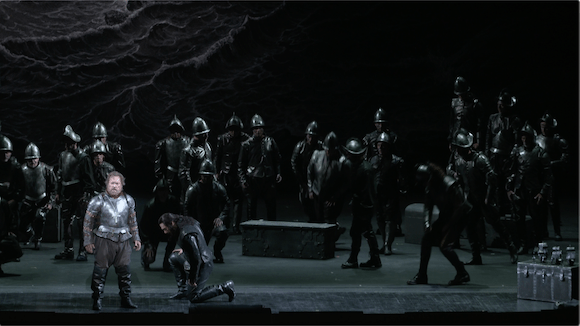
For probably the first time in almost 200 years the 1809 original version of Gaspare Spontini’s Fernand Cortez ou la conquête de Mexique got a theatrical run last October.  It was at the Teatro del Maggio Musicale Fiorentino in a new edition by Paolo Petazzi where it was recorded for video release.  There’s tons to unpack here because few people will be familiar with the work and if they are it will likely be in the very different 1817 version.  It’s also a far from straightforward production.
1.leadsoldiers

Continue reading →

What is this anguish that each of us carries inside?

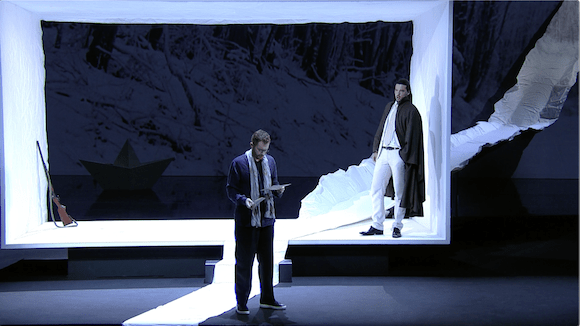
What is this anguish that each of us carries inside?  That’s the central question of Thomas Larcher’s chamber opera Das Jagdgewehr that premiered at the Bregenz Festival in 2018.  It’s based on a 1949 novel by Yasushi Inoue about a hunter, the three women in his life and the poet to whom he sends the women’s letters.  It’s a stark, intense tale of love, death, secrecy, loss and betrayal told in a prologue and eleven scenes over about an hour and a quarter.

1.letter

Continue reading →

Another fifties Falstaff

Directors seem to see the 1950s as the logical time period to stage Verdi’s Falstaff though they come up with very different 1950s.  Robert Carsen set his in a rather dark world that pits the nouveau riche against a declining gentry.  Richard Jones went for a sort of Carry on film aesthetic that was entirely English.  Laurent Pelly in his production filmed at the Teatro Real in Rome in 2019, despite some overtly English elements in the set design,  gives us a distinctly continental European feel.  Indeed Falstaff, Pistola and Bardolfo might easily be hangovers from the more criminal end of the French resistance.  There’s much less of “class struggle” in Pelly’s rather straightforward production.  In fact it seems like a fairly light comedy with the darker aspects emerging only rarely.

1.gang

Continue reading →

Double dwarf

The Deutsche Oper’s production of Zemlinsky’s Der Zwerg, recorded in 2019 in Berlin, is directed by Tobias Kratzer who seems to be the rising star among young German opera directors.  I can see why.  This is a thoughtful and clever production that really does have something to say without being unduly gimmicky.

1.piano

Continue reading →

War and Peace

No, not the opera by Prokofiev but Robert Carsen’s rather brilliant take on Mozart’s Idomeneo recorded last year at the Teatro Real in Madrid*.  It’s a contemporary Mediterranean setting.  Crete is a completely militarised society.  Everyone is uniformed and carries weapons.  The Trojans are refugees living in a camp with all the pathetic accoutrements of refugee camp life.  Idomeneo and Elettra stand for the traditional “Make Crete Great Again” kind of nationalism while Idamante and Ilia look forward to a world where “Us” and “Them” dissolve in our common humanity.  Carsen, Neptune, this writer and, I think, listening closely to the music, Mozart side with the young lovers.

1.refugees

Continue reading →

King Arthur in Berlin

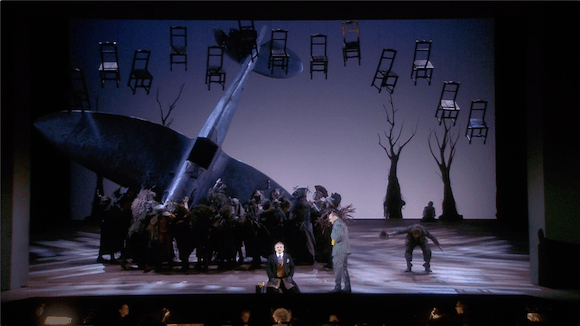
Purcell’s King Arthur contains some wonderful music but it also poses real staging issues.  How much of the play that the music supports does one include?  How to contextualise the unfamiliar version of the King Arthur story?  How to deal with the rather crude nationalism?  Sven-Eric Bechtolf and Julian Crouch come up with a very interesting approach for their 2017 production at the Staatsoper Berlin.

1.spitfire

Continue reading →

Respighi’s Sleeping Beauty

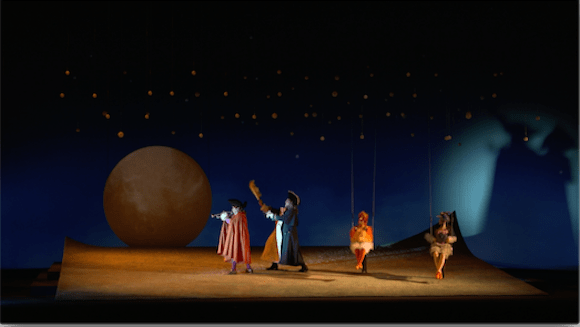
Resphigi’s La bella dormente nel bosco (libretto by Gian Bistolfi) is a take on the Charles Perreault fairy story.  It was originally written for a puppet theatre and later adapted for human performers.  Its heritage shows in it that it’s very much a numbers opera and it’s quite short.  The three acts come in at around eighty minutes.  Musically it’s a bit of a hodge podge.  It’s mostly quite atmospheric and colourful (similar to Resphigi’s better known orchestral works) with elements of parody.  One can sort of hear echoes of Debussy, Stravinsky and Strauss.  It finishes up with a cakewalk and a Broadway style finale which is decidedly odd.

1.birds Continue reading →

The Salzburg Festival: A Brief History

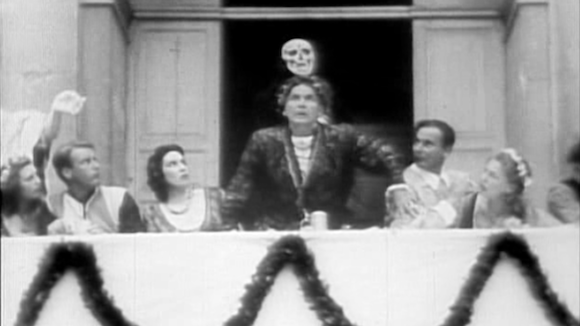
Tony Palmer’s 2006 documentary about the Salzburg Festival is over three hours long and uncomfortable to watch in the way the best films are.  He combines interviews with performance and other documentary footage to extremely good effect to go beyond telling the “Salzburg story ” to explore fundamental questions of the arts and the state and the very purpose of art.

salzburg1 Continue reading →

Traviata – Vous méritez un avenir meilleur

Traviata – Vous méritez un avenir meilleur is a theatre piece that combines elements of Verdi’s La Traviata with elements of the source material for it; Dumas fils’ La Dame aux camélias (both the novel and the play).  There is also some newly written and composed material.  The creators; Benjamin Lazar (director), Florent Hubert (arrangements and musical direction) and Judith Chemla (who sings Violetta) aimed to create a work that goes further than the source material in exploring the inner psychology of the main character.

1.openingparty

Continue reading →

Grim Trovatore

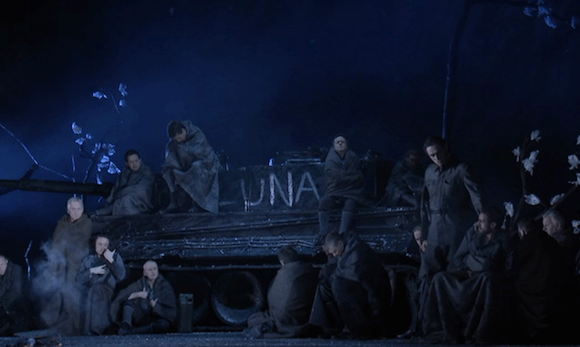
Verdi’s Il Trovatore is always pretty grim.  It’s hard to lighten up an opera with multiple executions, suicide and babies being barbecued.  David Bösch in his Covent Garden production (remounted and recorded in 2017 with Julia Burbach directing), probably wisely, doesn’t even try.  This is as grim as Grimsby on a wet Sunday in February with extra gratuitous violence.  The setting is some roughly contemporary civil war.  The Conte di Luna’s troops are a scruffy lot but they have a pretty cool looking tank.  The gypsies are a bit gayer though Azucena’s caravan is disturbingly plastered with baby dolls reflecting her obsession.  It’s all quite dark.  Really only Leonora (and her maid) stand out as they wear white in contrast to the greys of pretty much everyone else.  The story is told straightforwardly enough and the sets and costumes do provide some kind of moral differentiation between the two camps with Leonora sort of standing above and apart from the violence.

1.soldiers

Continue reading →