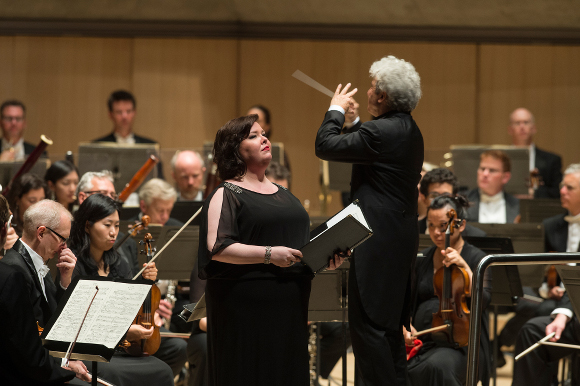
I’ve seen opera in a lot of venues in Toronto, including several pubs, but last night was my first time at the Amsterdam Bicycle Club; the occasion being the first pub night hosted by Against the Grain Theatre. There was a pretty decent crowd and, somewhat to my surprise, a couple of decent beers on tap. There was also singing with Topher Mokrzewski at the keyboard of a piano almost as grotty as the one he made his AtG debut on. Perhaps unsurprisingly the line up was pretty impressive; Clarence Frazer, Stephanie Tritchew, Aaron Durand, Cait Wood and John Brancy plus a bonus drop in by no less than Krisztina Szabó. Rossini, Puccini, Donizetti, Bernstein and others all got a look in. It was loud, it was fun and the audience, not all of whom I suspect knew what they were in for, stayed. Further sessions are planned for the first Thursdays in November and December at the same venue.

More images under the cut… Continue reading
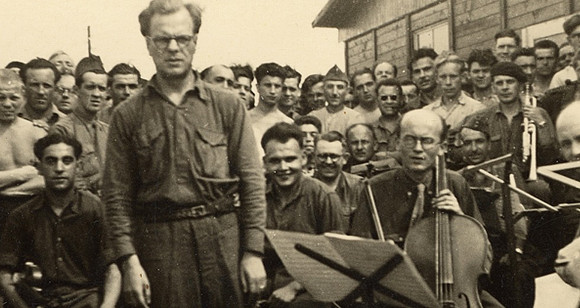
 Last night’s Soundstreams Koerner Hall presentation; Magic Flutes was an interesting experience. Aside from interesting (mostly) contemporary flute pieces it was very much an experiment in different ways of staging a concert. I’m all for breaking down the conventions of Mahlerian solemnity and I think experimentation is great. It’s in the nature of taking risks though that some things don’t quite work.
 Last night Christina Haldane gave her first DMA recital at Walter Hall. The inspiration was a painting by Manet and the programme was almost entirely made up of chansons from the late 19th and early 20th centuries; Offenbach, Charpentier, Duparc, Debussy and Berlioz. The exception was the cycle The Living Spectacle by Erik Ross which closed out the first half. I could have used more variation of mood and style.
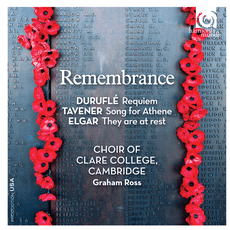 Remembrance is a new CD, on the Harmonia Mundi label, from the Choir of Clare College and their director Graham Ross to be released October 21st in time for poppy season. The main event is a performance of Duruflé’s Requiem given here in the composer’s organ reduction. It’s recorded in Lincoln Cathedral with its great Father Willis organ. It’s a very polished performance with a fair bit of drama. There’s some lovely singing and cello playing from mezzo Jennifer Johnston and cellist Guy Johnston in the Pie Jesu and bass Neal Davies also makes a couple of trenchant contributions. It’s not one of the most performed requiems but definitely worth a listen.
 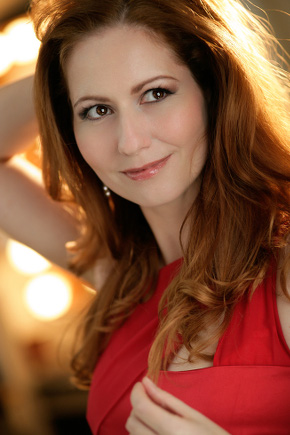 Considering we begin with a holiday weekend it’s a busy week. Tuesday sees Dimitry Ivashchenko and Rachel Andrist in recital in the RBA at lunchtime with a program of Russian song that, inevitably, includes Mussorgsky’s Songs and Dances of Death and works by Rachmaninov, Borodin, and Tchaikovsky. At 7.30pm that evening Christina Haldane is giving a DMA recital in Walter Hall. This isn’t your usual student gig. Christina has covered at Salzburg and the Royal Opera and made main stage appearances in several European countries. Both recitals are free.
 VOICEBOX:Opera in Concert has announced details of their upcoming season. There are four shows: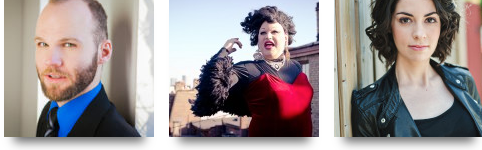
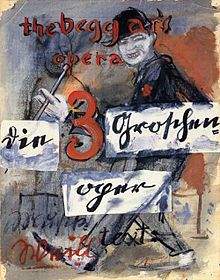 Things are still a bit slow on the Toronto opera front. That said, today Soup Can Theatre are doing a concert version of The threepenny Opera at the Monarch Tavern. Three actors; Christine Jeffries, Sarah Thorpe and Scott Garland, will sing all the roles. There are three performances at 4pm, 6.30pm and 9pm. Tickets are $13. More details at