

It’s an odd quirk of opera broadcasting that relatively few video recordings of operas get made in North America and those that do are almost all recorded at the Met. This means that works that are standard rep on the west side of the pond but rarer in Europe may be very slow to get a video release, if they get one at all. Now Carlisle Floyd’s Susannah is just such a work. It’s the second most performed US opera after Porgy and Bess but has only just appeared on video for the first time.

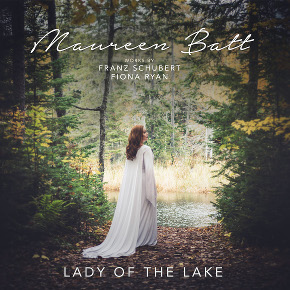 This is an interesting CD. It couples the rather rarely performed Schubert cycle to texts by Sir Walter Scott with a new Fiona Ryan cycle on the same theme. The reason the Schubert is a bit of a rarity is that, besides high and low voice and piano, one number requires a female chorus and another a TTBB quartet. In fact here those two pieces were recorded separately in different locations but I don’t think it’s apparent listening to the disc. The Schubert also includes the well known Ave Maria, the sixth song in the cycle, given here in the German originally used by Schubert rather than the Latin version usually heard. It’s a very decent performance. Maureen Batt is the soprano (and the evil genius behind the whole enterprise). Her voice is light and clear and her diction is excellent. Even a piece like the Ave Maria sounds fresh. Jon-Paul Décosse is the baritone. It’s a firm, confident voice, again with every word clearly audible. Simon Docking provides excellent accompaniment. The Bootgesang is performed by Leander Mendoza and Justin Simard; tenors with Robert O’Quinn and James Levesque; baritones, again with Docking at the piano. This might be the most fun piece of the cycle. For the elegiac Coronach we get The Halifax Camerata Singers conducted by Jeff Joudrey with Lynette Wahlstrom at the piano. They sound very pleasant.
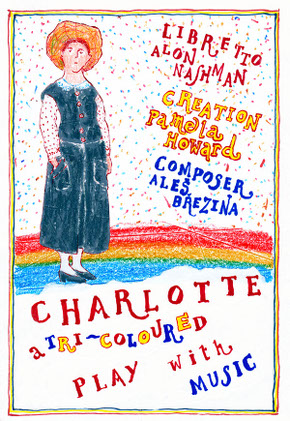 I didn’t actually see anything much in the Luminato line up that got my juices flowing but my attention has now been drawn to CHARLOTTE: A Tri-Coloured Play with Music. It’s a Singspiel about a young female Jewish artist struggling with her identity and art during the early 1940s. She ends up in Auschwitz. You get the picture. The title role is being played by Adanya Dunn and the musical director is Peter Tiefenbach which, frankly, are reasons enough to go see it. It plays June 16th to 18th at the Theatre Centre on Queen Street West. More details
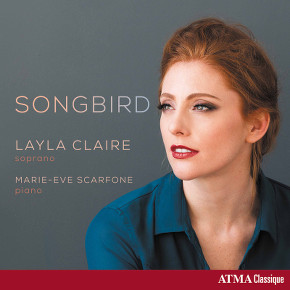 Layla Claire is one of a handful of young Canadian singers making something of a splash on both sides of the Atlantic with major roles in Glyndebourne, Zürich, Toronto and Salzburg and an upcoming Pamina at the Met. Her debut recital CD Songbird, with pianist Marie-Eve Scarfone, was recently issued on the ATMA Classique label. It’s an interesting and varied collection of songs though never straying very far from familiar recital territory. It’s tilted towards French (Gounod, Chausson, Debussy, Fauré, Bizet) and German (Wolf, Strauss, Brahms, Liszt) repertoire but there’s also Quilter, Barber, Argento and Britten (the comparatively rare Seascape which is, oddly, omitted from the CD liner).
 operaramblings