

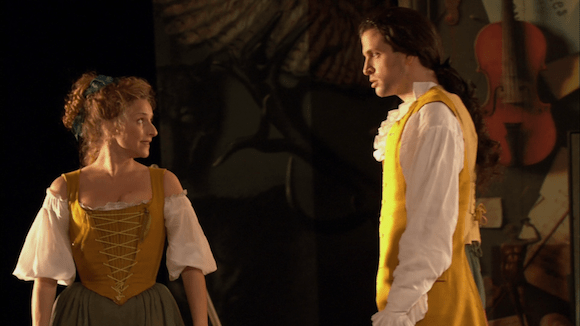
This recording of Mozart’s Le nozze di Figaro was made in 2004 and released on DVD, which won a Grammy. It’s now been remastered and released on Blu-ray. It was recorded at the Théâtre des Champs Elysées in Paris and directed by Jean-Louis Martinoty. The production is visually attractive and well thought out but not concept driven in any way. The sets are largely made up of 16th century paintings while the costumes are the operatic version of the 17th or maybe 18th century; low necklines, full skirts, breeches etc. There are a few interesting touches. Act 3 is set in the count’s curio room with dead reptiles, skulls and so on and it seems somehow to provoke extreme nostalgia in the countess during Dove sono. For the most part it’s a highly competent, well paced effort though with nothing new or different to say.
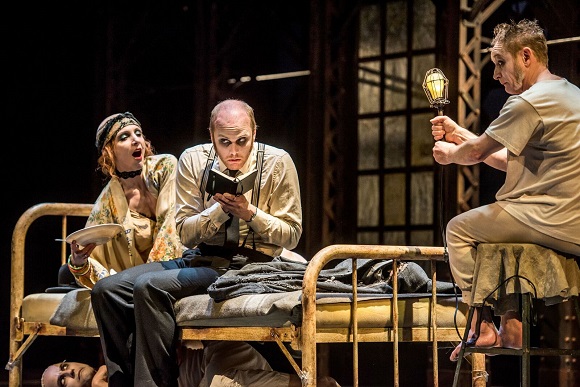


 In my April Round up I inadvertently omitted Toronto Operetta Theatre’s upcoming production of Offenbach’s La Belle Hélène which plays April 27th to 29th at the Jane Mallet. It’s a good looking cast including Beste Kalender, Adam Fisher and Lynn Isnar. Guillermo Silva-Marin directs and Peter Tiefenbach conducts. Those few days at the end of the month are insane but it’s probably worth trying to fit this one in.
 VOICEBOX:Opera in Concert announced their 2018/19 season last night. There are three main stage shows. Two of them, alas, I can’t muster much enthusiasm for; Massenet’s Werther (November 25th 2018) and Schubert’s Fierabras (February 3rd 2019). The first features Goethe’s version of Fotherington-Thomas and the latter is one of the most confused and implausible messes ever to “grace” an opera stage. I’m much more up for the third show; Weill’s The Rise and Fall of the City of Mahagonny (March 30th/31st 2019). No details on casting or anything else but I assume the first two will be piano score and the last a chamber ensemble. There are also two shows at Gallery 345; Little Mahagonny: a Tribute to Weill (September 25th 2018) and Viva Verdi (April 3rd 2019).
 April is a busy month for fully staged opera. Canadian Opera opens two productions and there are shows from Opera Atelier, Against the Grain and Essential Opera. First up is the COC’s revival of Robert Lepage’s production of Stravinsky’s The Nightingale and Other Short Fables. This opens on April 13th and runs to May 13th. In 2009 it sold out so this time there are nine performances. Also at the COC there’s Donizetti’s Anna Bolena completing the Tudor trilogy. It opens on April 28th with nine performances closing May 26th.
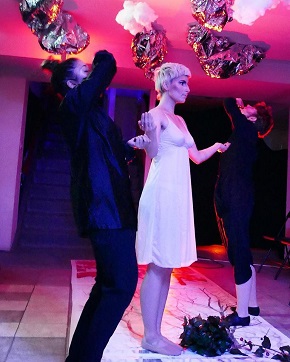 FAWN Chamber Creative presented a new piece last night at Kensington Hall. It was called Belladonna and was billed as a “queer, techno opera” to a libretto by Gareth Mattey who apparently specialises in this genre. “”Queer, techno pastoral” might have been nearer the mark. Basically, sheep tending person of uncertain gender/orientation meets another such. A supernatural being of some sort intervenes. There are hallucinogenic berries (“tripping hither, tripping thither?”). “Exploration” ensues. I was unclear on whether or not it had a happy ending. I’m not sure it matters.
 operaramblings