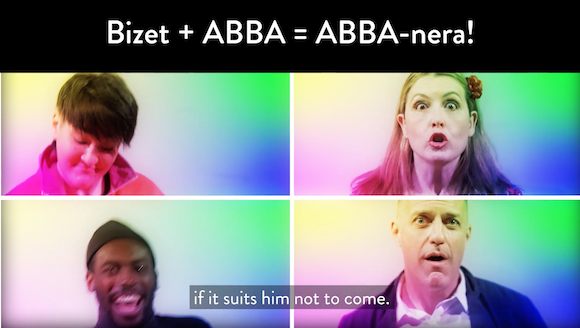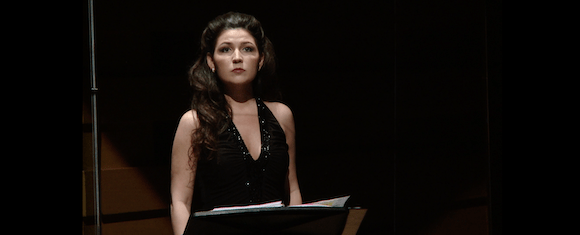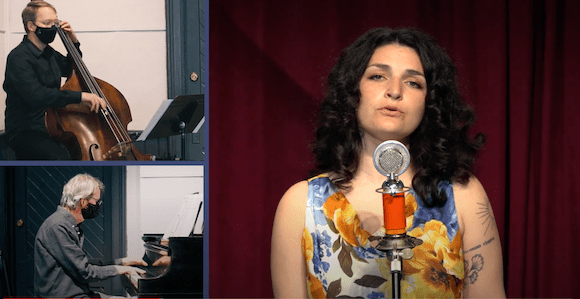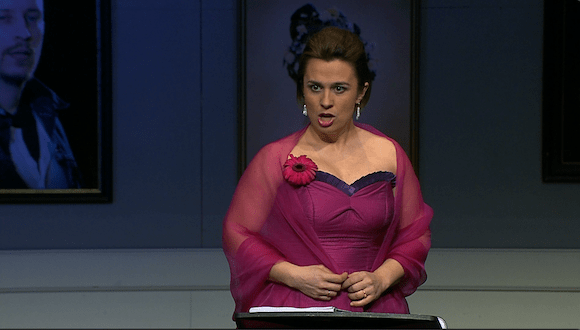
Mandala – the Beauty of Impermanence is the latest on-line offering from Confluence Concerts. It’s curated by Suba Sankaran and should have seen the light as a live show last May. The programme is as eclectic as one has come to expect from Confluence and lots of fun. In the spirit of impermanence it will be available on the Confluence channel on Youtube only until February 10th.
Author Archives: operaramblings
Disruptors
There was a really interesting announcement from the COC earlier today. To cut a long story short it announced that the four principals of Amplified Opera; Teiya Kasahara, Marion Newman, Asitha Tennekoon and Aria Umezawa, would become “Disruptors in Residence”. I think this is a very positive move. Many of us have been following the various conversations about evolving opera beyond being the preserve of (almost) dead white people to being an art form that more fully reflects the diversity of our communities. I have to admit to being somewhat sceptical about how much of the energy and goodwill that has been generated will survive the return to some sort of post-covid normality. It.’s surprisingly hard to make change in large, hierarchical organisations go viral.

The Passion of Simone
I’m rather suffering from “stream fatigue” right now but once in a while something really worth watching shows up. I’d put Royal Swedish Opera’s recent performance of Kaija Saariaho’s oratorio La passion de Simone in that category. It’s a 2006 work with a French libretto by Amin Maalouf dealing with the life and thought of philosopher, social activist and mystic Simone Weil.

The Fiery Angel
Once in a while an opera video comes my way that’s so bonkers that I hardly know how to describe it. Emma Dante’s production of Prokofiev’s The Fiery Angel; recorded at Teatro dell’opera di Roma in 2019 would be a candidate for the most bonkers of all!

Save the Foundry
The Dominion Foundry complex is a group of heritage buildings just to the north of Canary Village. They aren’t the prettiest buildings in Toronto but they are pretty much the last surviving remnant of the West Don Lands industrial heritage. There’s a study under way to assess the feasibility of turning them into an arts and community complex which is something the east end needs. More details on that proposal here. Today I learned that the province is planning on razing the whole complex without any kind of community consultation or input.
Check your dates
The latest set of “guidelines” from the Government of Ontario will no doubt be interpreted in various ways but one thing is clear they are affecting some organisations production schedules and there have been cancellations and postponements notably from the Royal Conservatory and Tapestry Opera. Frankly the situation is too muddy and too fluid for me to bother with updates to schedules right now. All I can suggest is that if you are planning to watch any Toronto produced streams keep checking the company websites for news on what is and isn’t happening.
Rod Williams sings Winterreise
Presto Classical lists over 100 recordings of Schubert’s Winterreise for (almost) every voice type accompanied on pianoforte, fortepiano, string quartet and probably more. It’s also frequently performed live and I’ve certainly seen it done multiple times in settings ranging from the most formal of Liederabend to staged with projections and all manner of things. So why bother with another new recording? Well it’s largely because I’m a fan of English baritone Roderick Williams who has just had a Winterreise recording, with Iain Burnside at the piano, released on the Chandos label.
The Tower and the Garden
The Crossing must be one of North America’s most interesting and accomplished choirs. They specialise in difficult contemporary music that is a million miles away from most of the new music that is being composed for the (lucrative) amateur choir market. Their latest CD; The Tower and the Garden, is due for release on the Navona label on February 12th. I really like it.
There are three pieces on the disk. The first is an a cappella setting of Walt Whitman’s A Child Said, What is the Grass? by Tolvo Tuley. It’s worth reading the text in advance because this piece builds up in layers like renaissance polyphony or, perhaps more aptly, a piece by John Tavener. There are certainly echoes of the Greek Orthodox tradition here but only echoes. What really strikes is that the tension that keeps building and really doesn’t resolve. It’s as uncomfortable and enigmatic as Whitman’s answer to the child’s question; “the beautiful uncut hair of graves”. Throughout the choir display an astonishing control of textures and dynamics.
Glenn Gould School double bill
The “postponed from the fall” double bill from the Glenn Gould School finally streamed on the Koerner Hall channel last night. The first piece was likely familiar to most viewers; Kurt Weill’s The Seven Deadly Sins given in piano score in a production by Amanda Smith. The concept here is that Anna 2, rather than being a dancer, is some kind of on-line celebrity exploiting dating sites to bring her fame and fortune. The production had originally been designed for an audience and used moveable plexi-glass shields to ensure social distancing. It also made extensive use of projected conversation bubbles, emojis and other social media effects. This seems to have been ramped up in post production to add picture-in-picture effects and maybe to make the lighting; already a sort of rave inspired blend of blues and pinks with touches of rather lurid green, even more dramatic. With on screen subtitles it was arresting but maybe just a little too busy to fully process!
Leonore (1805)
Opera Lafayette’s March 2020 production of Beethoven’s 1805 precursor to Fidelio; Leonore, was reviewed by Patrick Dillon in the Summer 2020 edition of Opera Canada. It’s now been released on DVD and Blu-ray. Watching it on video I think tends to highlight further the weaknesses described by Patrick. It can’t seem to make up it’s mind what it is; musically or dramatically. Is it a Singspiel or something grander? The dramatic focus drifts, somewhat bathetically, from the domestic comedy of the Leonore/Marcellina/Jacquino love triangle to the “faithful and virtuous wife” theme to, almost, entering more involved philosophical/political territory before relapsing into a sort of cop out ending. The (very real) strengths of the final version of Fidelio are not much in evidence here.